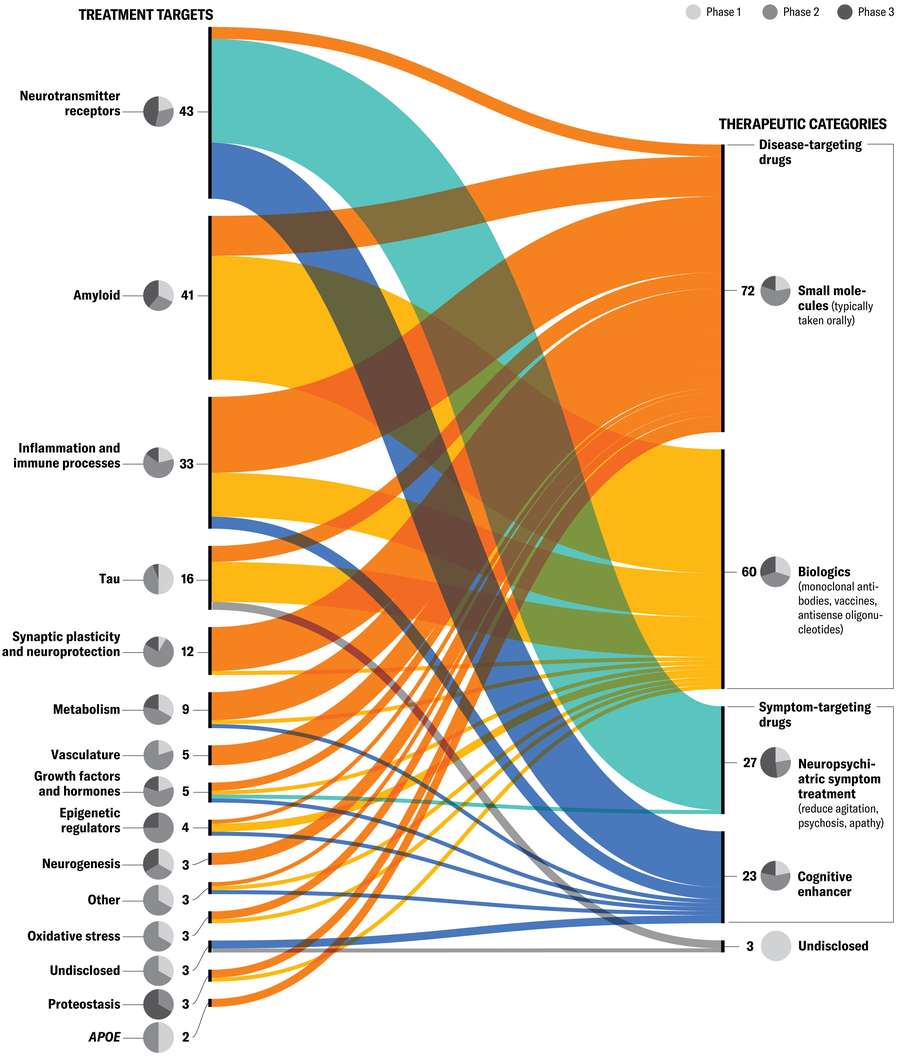
Recent FDA approvals of amyloid-targeting therapies like lecanemab and donanemab mark a significant milestone in Alzheimer's treatment, offering modest cognitive decline slowing by addressing biological roots. However, the field is rapidly diversifying beyond amyloid-centric approaches, with over 100 ongoing clinical trials exploring a broader range of mechanisms including inflammation, vascular health, metabolism, and genetic factors such as APOE variants. This shift reflects a growing recognition of Alzheimer's complex pathology, indicating a future of multi-target interventions and combination therapies, thus expanding the landscape for therapeutic development and investment opportunities.
The Alzheimer's therapeutic landscape is at a significant inflection point, moving beyond a singular focus on the amyloid hypothesis. While the recent FDA approval of amyloid-beta clearing therapies like lecanemab and donanemab represents a key milestone, the provided analysis underscores their limitations, namely their ability to only modestly slow cognitive decline. The article highlights compelling evidence that challenges the centrality of amyloid, citing studies that show a weak correlation between amyloid presence and dementia onset, with a 20- to 30-year lag and fewer than a quarter of amyloid-positive individuals developing the disease. Consequently, the research and development pipeline has broadened substantially, with over 100 clinical trials now investigating a diverse array of mechanisms. These include inflammation (targeted by firms like INmune Bio), metabolism, vascular integrity, and genetic factors such as the APOE gene (the focus of Lexeo Therapeutics). This strategic diversification suggests the future standard of care will likely involve combination therapies, creating a more complex but opportunity-rich environment that extends beyond established pharmaceutical giants to specialized biotechnology firms with novel approaches.
AI-powered research, real-time alerts, and portfolio analytics for institutional investors.
Overall Sentiment
moderately positive
Sentiment Score
0.40
Ticker Sentiment
