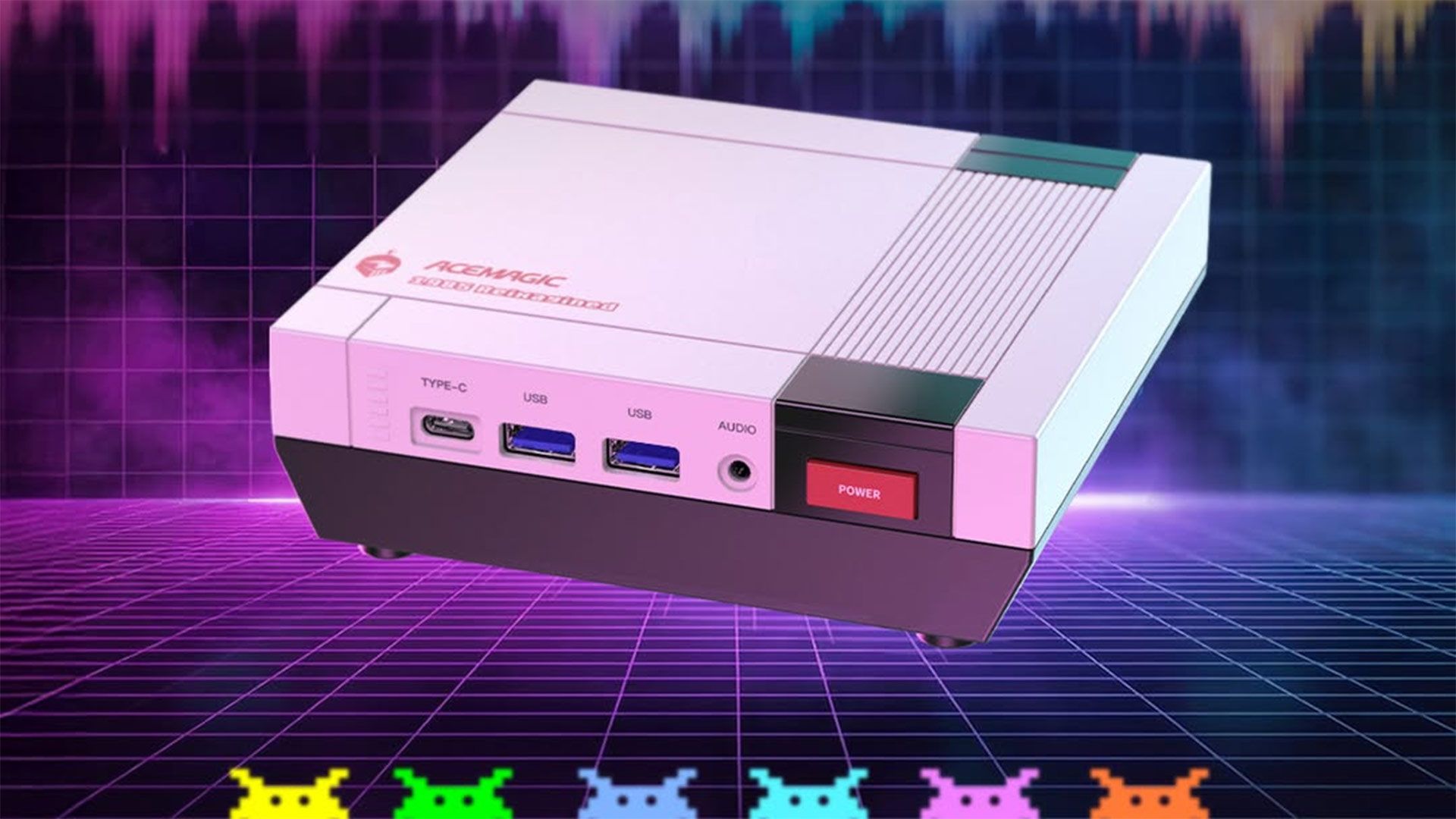
Acemagic has teased the Retro X5 mini PC built around AMD's Ryzen AI 9 HX 370 (12 cores / 24 threads: 4x Zen 5 P + 8x Zen 5c E, up to 5.1GHz) with a Radeon 890M RDNA 3+ iGPU (16 CUs, up to 2.9GHz) and an XDNA 2 NPU delivering ~50 TOPS. The compact, NES-inspired chassis appears to offer expandable memory/storage, multiple display outputs and front I/O (USB-C, 2x Type-A, 3.5mm), and will ship with a branded launcher “RetroPlay Box” with OS choice unclear (Windows 11, SteamOS or Batocera possible); Acemagic positions the device as a desktop-class retro gaming solution that could outperform handhelds like the Steam Deck due to fewer thermal constraints. The announcement is product-focused and unlikely to move markets materially but is relevant to consumer hardware and gaming segment competitive dynamics.
Market structure: Small OEMs (Acemagic, Ayaneo-like vendors) and AMD (AMD) are direct beneficiaries as Ryzen AI APUs (HX 370 class) lower cost-to-performance for desktop mini-PCs; DRAM (MU) and NVMe/NAND suppliers (STX, WDC) see modest upside from incremental BOM demand. Intel (INTC) and low-margin PC OEMs could cede share in value/retro segments where integrated RDNA 3+ iGPU meets most consumer needs. Macro impact is muted: semiconductor equities/SMH may rerate modestly (+1–3% idiosyncratic), bonds/FX/commodities see negligible demand shock.
Risk assessment: Tail risks include IP litigation from Nintendo (injunction risk within 0–6 months), Chinese export or manufacturing disruptions, or AMD supply constraints that could delay launches and depress sell-through; these are low-probability but high-impact. Near-term (days–weeks) drivers are product reviews and pre-order traction; short-term (3–6 months) is channel inventory and holiday sales; long-term (4–12+ months) is design-win cadence for AMD APUs across OEMs. Hidden dependencies: OS choice (Windows vs SteamOS) materially changes margin and Microsoft (MSFT) licensing exposure; NPU/AI marketing could misalign with actual user value.
Trade implications: Establish a 2–3% portfolio long in AMD (AMD) over 3–9 months to capture incremental APU design wins; size initial position 2% and add to 3% if AMD guidance or OEM design-win announcements lift revenue +2%+ yoy. Pair trade: long AMD vs short INTC equal-weight 1%/1% to express share shift in integrated graphics for value PCs. Options: buy a 6-month AMD call spread 15–25% OTM sized to 0.5–1% portfolio risk (debit spread) to limit downside while capturing upside into next two earnings/CES cycles.
Contrarian angles: The market may overstate headline buzz versus volumes — mini-PCs are niche so cap positions small and use options for asymmetry; conversely, the market may underprice longer-term structural wins for AMD if APUs capture +200–400 bps share, implying a potential 1–3% revenue tailwind over 4 quarters. Historical parallel: Valve/Steam Deck boosted AMD APU credibility without immediate stock rerating; catalytic events (positive reviews, multiple OEM announcements) are required to unlock value. Protect positions with a 12–15% stop or cut option losses at expiry; avoid oversized exposure until tangible channel sell-through is visible (target: >=50k units pre- or first-quarter sell-through signals).
AI-powered research, real-time alerts, and portfolio analytics for institutional investors.
Request DemoOverall Sentiment
mildly positive
Sentiment Score
0.28
Ticker Sentiment
