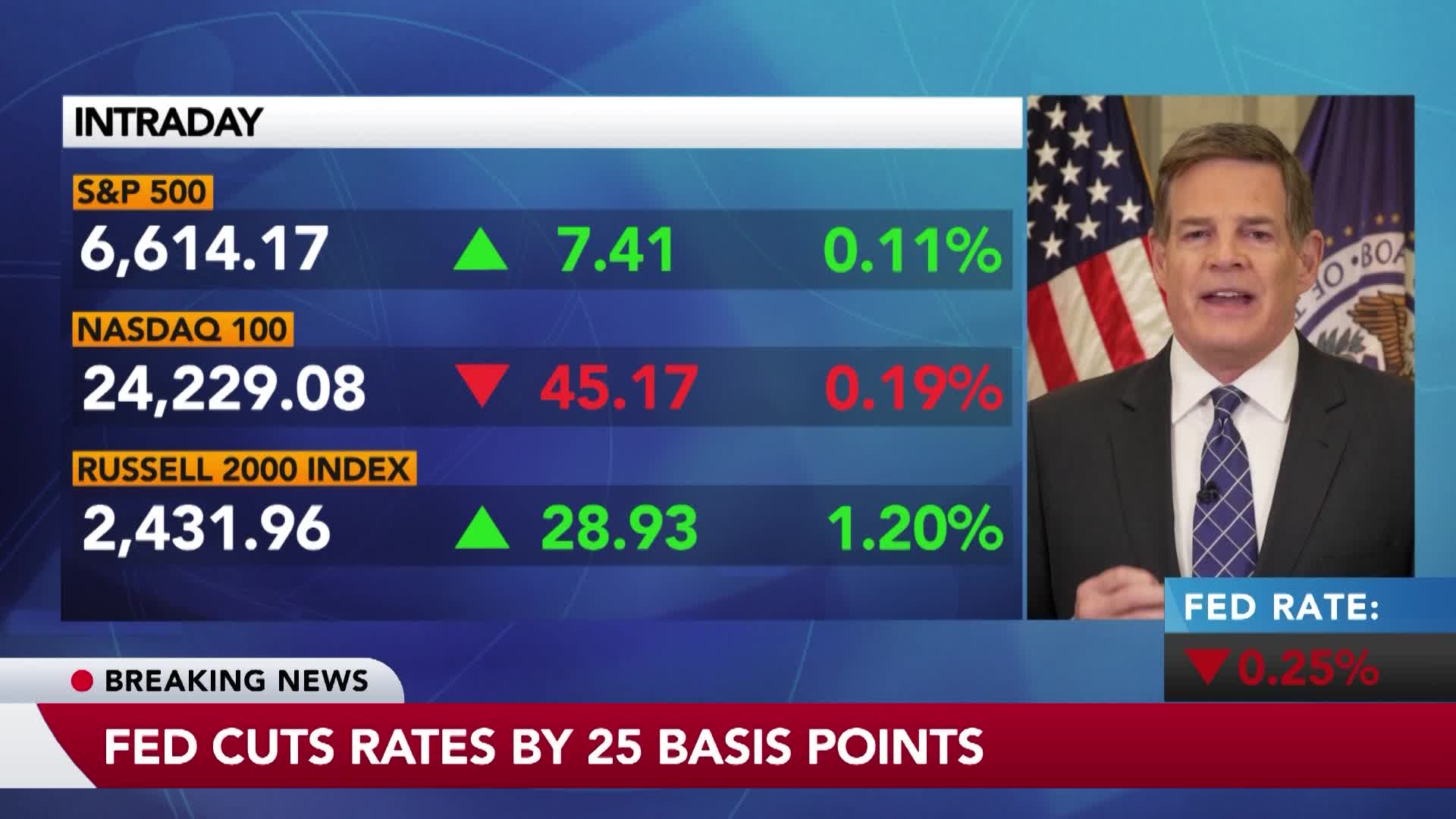
The Federal Reserve's Federal Open Market Committee (FOMC) has cut the federal funds rate by a quarter point to a new target range of 4%-4.25%, marking the first reduction after five consecutive holds. The committee, with an 11-1 vote, also signaled expectations for two additional rate cuts this year, indicating a dovish shift in monetary policy. This move, despite one dissent favoring a larger cut, suggests the Fed is proactively responding to economic conditions and could influence market outlooks for borrowing costs and asset valuations.
The Federal Reserve has officially initiated an easing cycle, cutting the federal funds rate by 25 basis points to a new target range of 4.00%-4.25%. This decision, which marks the first reduction after five consecutive meetings of holding rates steady, was passed with a decisive 11-1 vote by the Federal Open Market Committee. The Fed has also signaled a clear dovish trajectory by forecasting two additional rate reductions before the end of the year, reinforcing the high-impact nature of this policy shift. Notably, the single dissenting vote from Stephen Miran argued for a more aggressive 50-basis-point cut, indicating that the internal consensus is firmly tilted towards easing, with the debate centered on the pace rather than the direction of policy. This pivot towards a more accommodative stance is poised to lower borrowing costs and materially influence asset valuations across markets.
AI-powered research, real-time alerts, and portfolio analytics for institutional investors.
Request DemoOverall Sentiment
strongly positive
Sentiment Score
0.75
