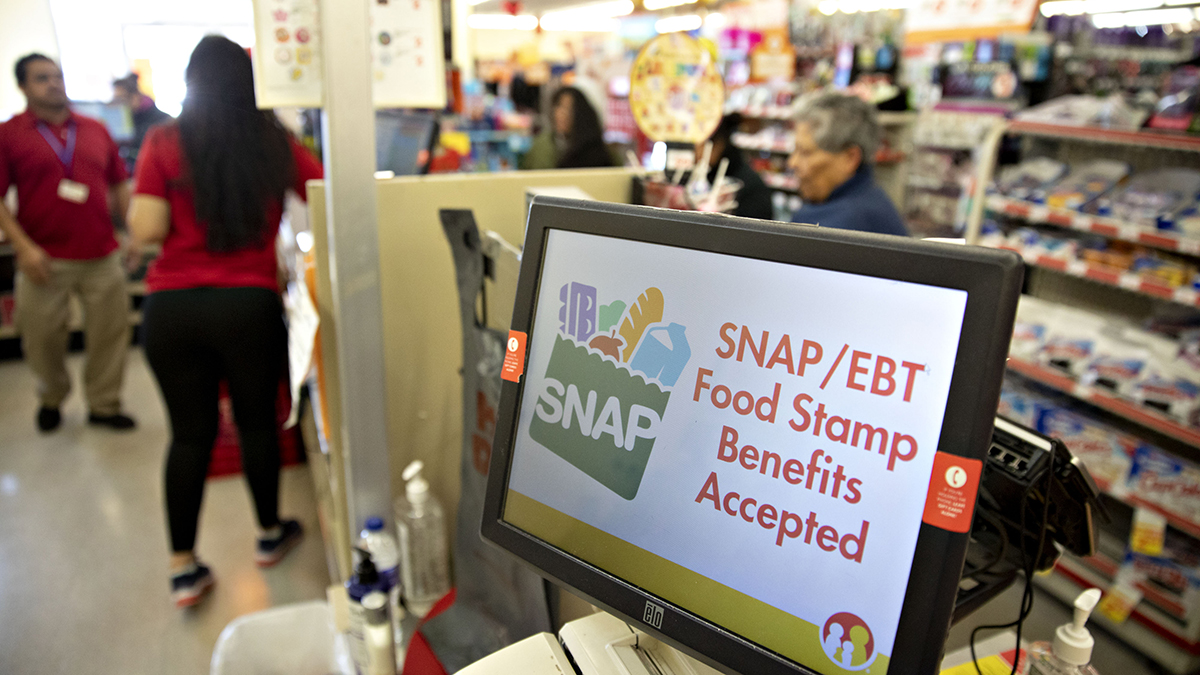
New federal SNAP work requirements could cause thousands of Illinois residents to lose benefits as soon as Friday, with more than 150,000 residents still not having filed exemption paperwork as of April 1. The rule requires ABAWDs ages 18 to 65 to work, volunteer, or train at least 80 hours per month unless exempt. The policy is creating uncertainty for food pantries and could modestly pressure lower-income consumer spending in the state.
The immediate market impact is less about direct SNAP economics and more about a near-term shock to low-income household cash flow in a high-marginal-propensity-to-consume cohort. If even a fraction of affected households lose benefits for several weeks, the first-order pressure is on discretionary baskets with high exposure to necessity trade-downs: value grocery, dollar, mass, and discount channels should see traffic mix improve while premium/FMCG volumes soften. The second-order effect is that pantry and municipal backstops may absorb some demand, delaying the full retail hit by weeks, not eliminating it.
The risk window is asymmetric over the next 1-3 months. Administrative remediation could restore benefits for a meaningful share of recipients, which makes this a timing trade rather than a structural earnings reset for most consumer names. The bigger medium-term issue is churn: repeated eligibility checks and work-reporting friction tend to depress recertification rates, which can create a slow bleed in food-at-home demand and increase volatility in monthly same-store sales prints, especially for operators with heavy low-income exposure.
Contrarianly, the market may underappreciate that reduced SNAP dollars do not disappear from the system; they migrate to smaller baskets, cheaper channels, and emergency food networks. That means the best shorts are not broad consumer staples, but retailers and processors with the weakest price-value perception and the highest dependence on SNAP-linked trip frequency. Any political reversal or waiver expansion would be the fastest catalyst to unwind the trade, likely within one earnings cycle.
AI-powered research, real-time alerts, and portfolio analytics for institutional investors.
Overall Sentiment
mildly negative
Sentiment Score
-0.35
Ticker Sentiment
