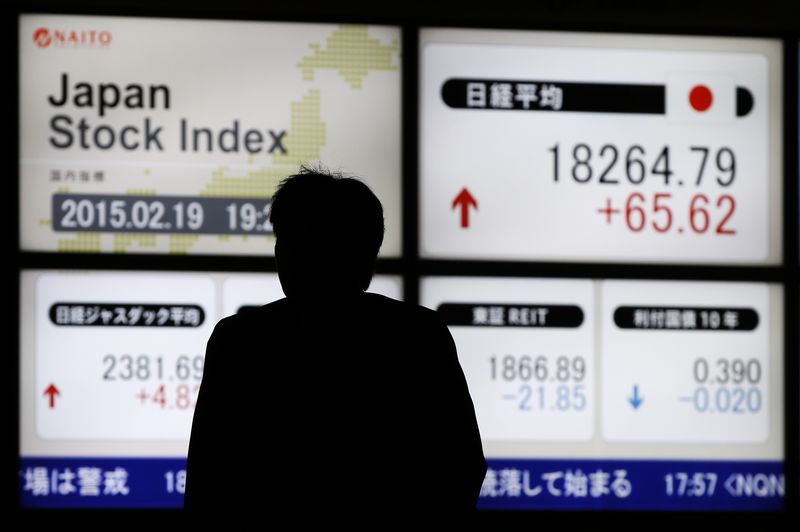
Japan's Nikkei 225 rose 2.74% at the close, with SoftBank Group up 11.89%, Taiyo Yuden up 11.75% to an all-time high, and Sumitomo Electric up 10.16%. Risk appetite improved as the Nikkei Volatility index fell 6.61% to 27.98, while USD/JPY edged up to 159.11 and crude and Brent were essentially flat. The article also cites U.S.-Iran deal hopes as a broader market driver, but the main content is a snapshot of Tokyo market performance rather than a major event.
The cleanest read-through is not “equities up on peace hopes,” but a sharp reversal in the market’s war-risk premium. That tends to hit oil-linked cash flows first, then filter into rates, FX, and cyclicals as realized volatility compresses; the VIX-equivalent move lower matters more than the index gain because it encourages systematic leverage re-entry over the next 1-3 sessions. In Japan, that setup is usually most supportive for domestic beta and balance-sheet-sensitive cyclicals, while defensive insurers underperform if the curve bull-flattens and near-term catastrophe/geopolitical hedging demand fades.
The second-order effect is on Japan’s import-sensitive sectors: a softer energy complex is effectively a margin tailwind for transport, chemicals, autos, and utilities over the next quarter if crude stays capped. The yen is still the swing factor; with USD/JPY elevated, any peace-driven risk-on could paradoxically extend Japan equity gains even if the currency weakens modestly, because foreign inflows often chase momentum before they hedge FX. That makes the move self-reinforcing in the short run, but also vulnerable to headline reversal risk because geopolitical de-escalation rallies usually fade fastest when the underlying negotiations are ambiguous.
The contrarian angle is that the market may be pricing “deal hope” rather than “deal reality.” If talks stall, energy and vol can retrace quickly, but the bigger asymmetry is that a successful easing would likely weigh on U.S. energy, defense-adjacent supply chains, and inflation hedges while supporting rate-sensitive growth and international cyclicals. For the U.S. names in focus, the higher-quality way to express the theme is not outright beta chasing, but buying volatility where a renewed headline shock would pay; for idiosyncratic winners like SMCI and APP, the broader risk-on tape can amplify flows, but they remain more dependent on positioning and momentum than this headline itself.
AI-powered research, real-time alerts, and portfolio analytics for institutional investors.
Request DemoOverall Sentiment
mildly positive
Sentiment Score
0.18
Ticker Sentiment
