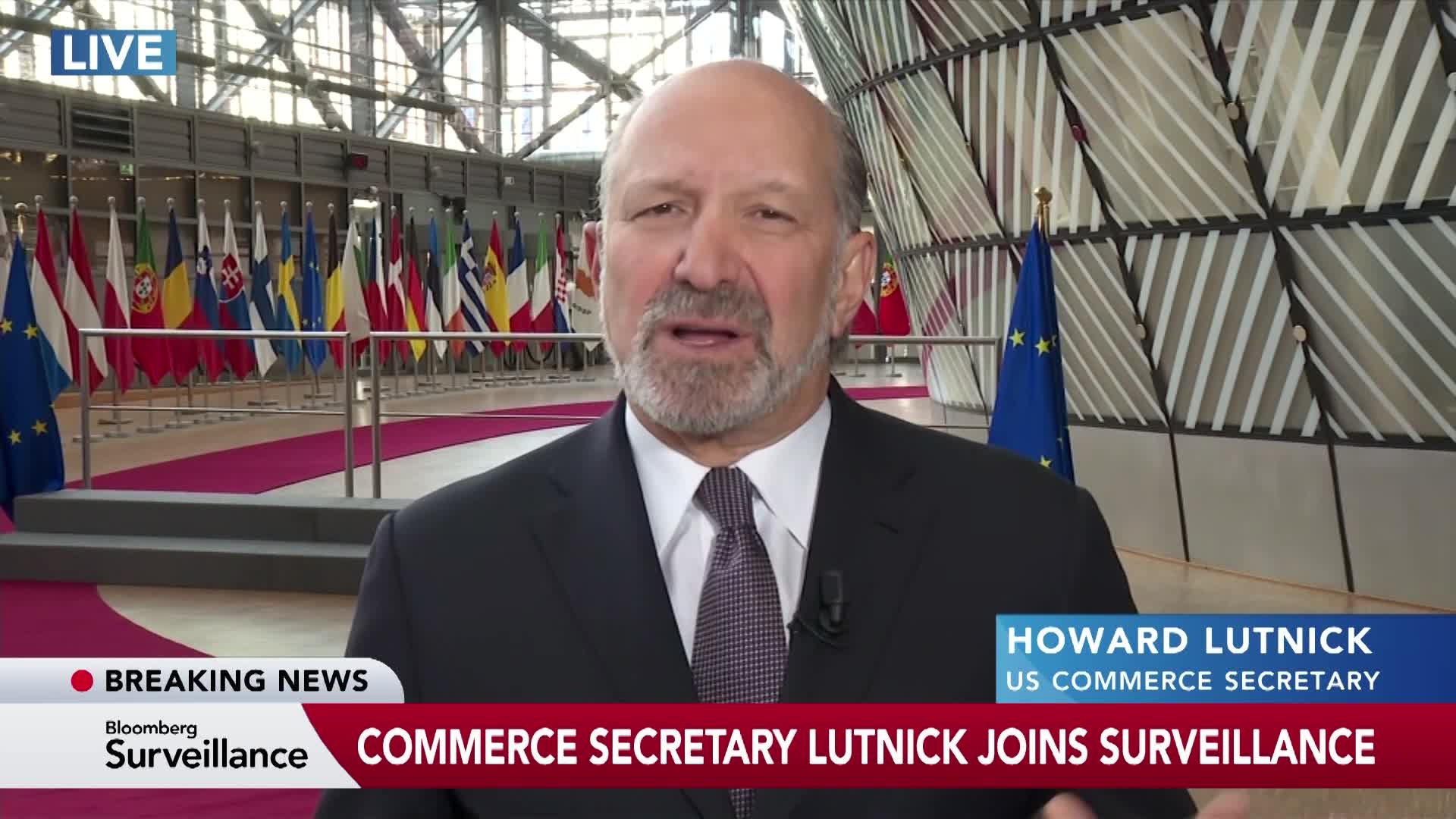
Bloomberg Surveillance highlights include Ed Yardeni urging non-AI companies to demonstrate competitive value, Morgan Stanley's Wilson warning that the Federal Reserve may be slow to act on policy, a potential presidential decision on allowing Nvidia H200 chip shipments to China, and calls from Lutnick for changes to EU digital rules to secure a steel tariff agreement. Collectively the items signal investor focus on regulatory and trade risks for technology and manufacturing sectors as well as continued uncertainty around Fed policy timing, which could influence sector rotation and event-driven positioning.
Market structure will bifurcate between firms that retain cross‑border access to the largest incremental AI demand pool and those fenced off by policy; incumbents with scale in datacenter silicon and fabs should see 10–20% revenue leverage over 12 months if access persists, while smaller OEMs and western software vendors face margin compression and loss of pricing power. Supply remains tight — order backlogs for leading GPU suppliers imply elevated ASPs and elevated implied volatility in options markets for 3–12 months, supporting skew and two‑way flow in derivatives.
Tail risks center on abrupt export/regulatory moves and retaliatory trade actions that could produce 15–30% shocks to affected semiconductors and 10–25% moves in industrial exporters; macro tail includes a Fed that delays easing, keeping 10‑yr yields >3.25% for quarters and pressuring growth multiples. Near term (days–weeks) volatility spikes dominate; medium term (months) is driven by policy clarity; long term (quarters–years) is secular re‑shoring and China’s internal substitution.
Trade implications: favor rate‑sensitive financials and selected industrial cyclicals if policy uncertainty keeps yields elevated, while hedging tech exposure with event options around policy dates is prudent. Cross‑asset: expect temporary CNY weakness on adverse rulings, support for dollar funding, and higher base and ferrous metal prices on tariff/trade noise — useful for commodity‑linked longs.
Contrarian view — consensus overprices permanent market closure. Historical export shocks (2018–20) caused sharp drawdowns but created multi‑quarter demand re‑routing that eventually benefited scaled incumbents and local supply partners; a tactical ban could therefore accelerate non‑US competitor wins but also create buying opportunities in incumbents once visibility returns, offering asymmetric payoff to event‑driven option strategies.
AI-powered research, real-time alerts, and portfolio analytics for institutional investors.
Request DemoOverall Sentiment
neutral
Sentiment Score
0.00
Ticker Sentiment
