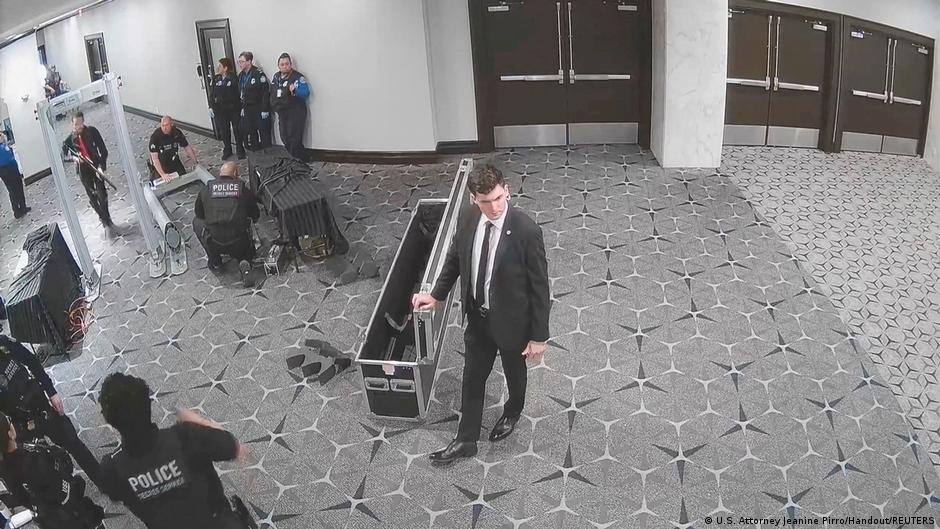
Federal prosecutors released video showing an armed suspect attempting to storm a security checkpoint near a White House correspondents' dinner, as authorities reiterated there was no evidence of friendly fire. The 31-year-old suspect has been charged with attempted assassination of the US president and agreed to remain in custody pending his case. The article is politically significant but has limited direct market impact.
This is not a direct market event, but it does create a short-lived volatility bid around the entire election/security complex. The immediate beneficiary is the federal security stack: the more the story reinforces a credible assassination attempt against a sitting president, the higher the odds of incremental appropriations for protective services, perimeter tech, K-9, screening systems, and event-security contractors over the next budget cycle. The second-order effect is reputational for the security agencies themselves: if the narrative shifts from friendly-fire confusion to a clean external-threat story, it reduces near-term political damage, but it also locks in a broader expectation of elevated protection costs for public events.
The more investable implication is not in defense primes, but in event exposure and risk-premium widening. High-profile public venues, political-adjacent hospitality, and DC-area operators face a modest demand overhang if planners start adding cancellation clauses, higher insurance deductibles, or more expensive protection for large gatherings. That pressure is likely to show up first in insurance pricing and venue costs rather than in attendance, so the trade is better expressed via margin compression rather than top-line collapse. Any move should be short-dated: this kind of headline tends to fade in days unless it feeds into a broader security-policy agenda or a live court/political escalation.
The contrarian view is that the market may overestimate the persistence of the effect. If the investigation stays clean and there is no copycat activity, the premium quickly mean-reverts because the private sector has already priced a permanent baseline of political chaos. The real catalyst would be a visible policy response: expanded Secret Service budgets, new screening mandates, or local-government requirements that force venues to spend more on security hardware and labor. Absent that, the trade becomes a fade after the initial news cycle, with the only durable winner being the most obvious government contractors already exposed to protective-security spending.
AI-powered research, real-time alerts, and portfolio analytics for institutional investors.
Request DemoOverall Sentiment
mildly negative
Sentiment Score
-0.15
