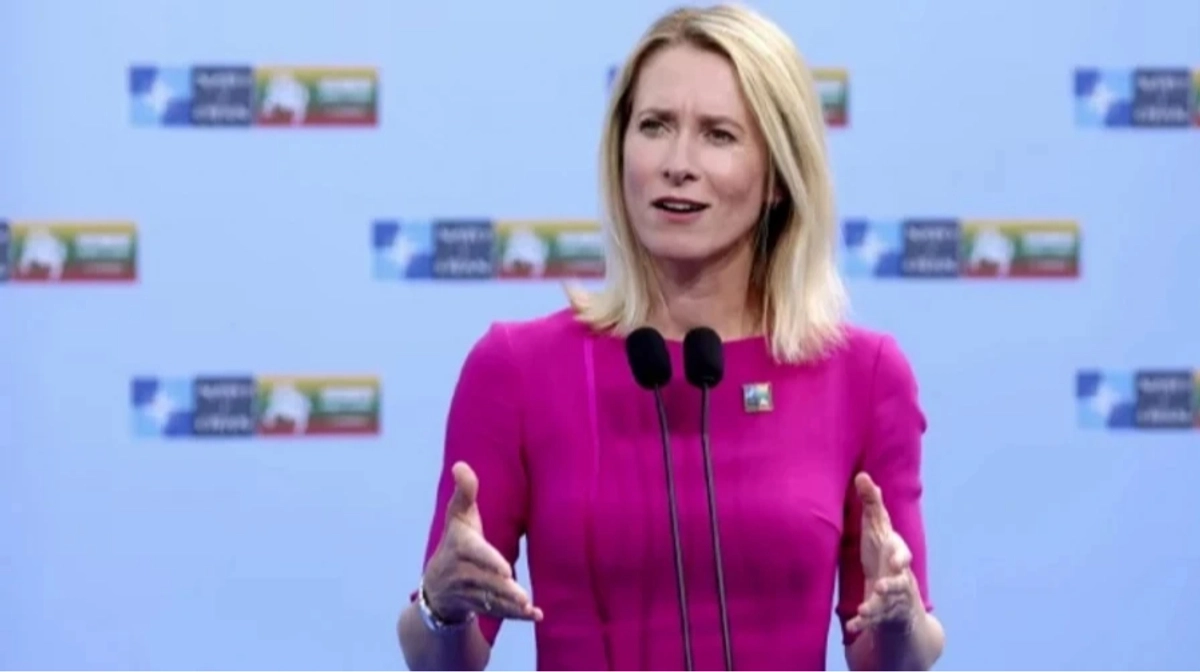
EU foreign policy chief Kaja Kallas said former German chancellor Gerhard Schröder cannot represent the EU in negotiations with Russia, rejecting a proposal tied to Vladimir Putin. She argued Schröder's long association with Russian state energy firms makes him an inappropriate negotiator, while also dismissing Putin's ceasefire proposal as cynical. The piece is mainly political commentary with limited direct market impact, though it reinforces ongoing geopolitical and energy-related risks.
The immediate market signal is not about negotiations per se; it is that Brussels is actively resisting any framework that would normalize a softer, Russia-friendlier channel into EU policy. That reduces the odds of a fast diplomatic off-ramp and keeps the war premium embedded in European risk assets, especially anything exposed to energy, defense, and regional credit spreads. In practical terms, the message is that any ceasefire headline now has a higher bar to be believed, which should prolong volatility rather than compress it.
Second-order, this is mildly bullish for European gas and LNG-linked names over the next 1-3 months because the market has to keep pricing in a longer tail of sanctions, infrastructure risk, and intermittent escalation. The bigger underappreciated effect is on German domestic politics: public rejection of a pro-Russia intermediary further weakens the legacy pro-energy-reconciliation faction, making a policy pivot back toward Russian molecules less likely even if winter prices soften. That is structurally negative for any “Europe resets with Russia” trade and supportive of non-Russian supply chains, US LNG, and EU defense procurement.
The contrarian point is that the market may already be broadly aligned with the hawkish narrative, so the incremental alpha is in timing rather than direction. If a ceasefire or negotiation headline emerges, the reflex move will likely be an energy/defense unwind for 1-3 sessions, but any relief rally should fade quickly unless it is paired with verifiable force posture changes. The real tail risk is that Moscow uses the diplomacy optics to delay sanctions enforcement or split EU consensus, which would pressure European cyclicals and widen sovereign spreads in peripheral Europe over a multi-month horizon.
AI-powered research, real-time alerts, and portfolio analytics for institutional investors.
Request DemoOverall Sentiment
mildly negative
Sentiment Score
-0.15
