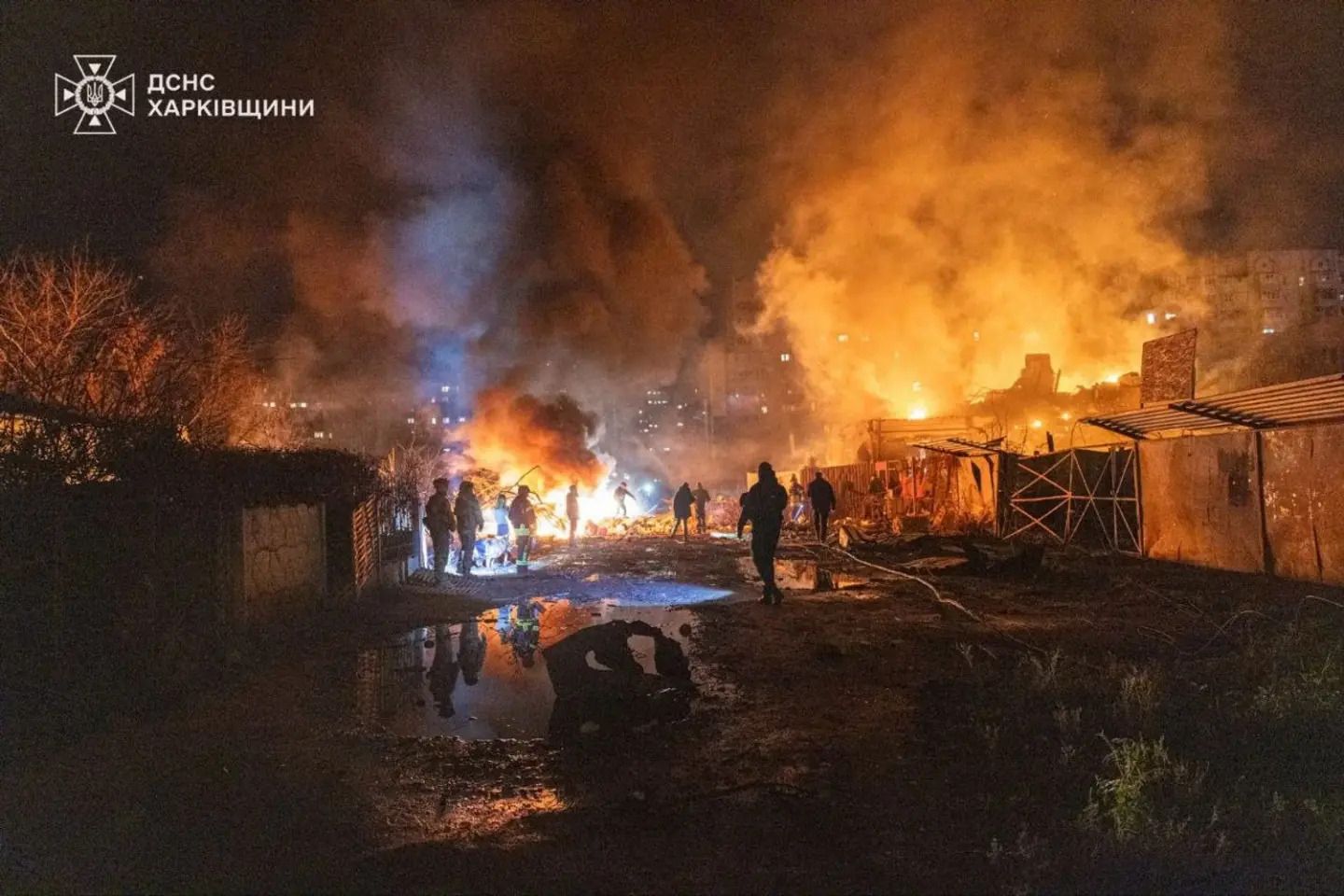
On Nov. 23 Russian forces launched a large drone attack on Kharkiv, killing four civilians and injuring 13 (initial reports of 17 injuries were corrected), with children among the wounded; three residential buildings and an infrastructure facility were set on fire and buildings were destroyed across two districts. The strike, part of an intensified offensive in Kharkiv Oblast, occurred as U.S., Ukrainian and European officials met in Geneva and follows a Nov. 18 missile attack that killed a 17‑year‑old and injured nine. The incident raises localized geopolitical and security risks that could sustain defense and humanitarian demand pressures in the region, though immediate broad market disruption is likely limited.
Market structure: Expect durable demand tilt toward large defense primes, munitions/air‑defense subsystem suppliers, and logistics/engineering contractors that can scale quickly; these firms gain pricing power for 6–18 months as backlogs lengthen. Regional insurers, small local contractors and Ukrainian sovereign credit absorb the brunt of losses, driving widening CDS and higher short‑dated yields. Cross‑asset: anticipate modest safe‑haven flows into USD and gold, shallow oil/gas volatility spikes on escalation (a short window +5–15%), and higher implied volatility on EM and defense equity options.
Risk assessment: Low‑probability/high‑impact tails include infrastructure strikes that disrupt European gas (can lift TTF/gas by 30–100% in weeks) or a sanctions regime that freezes liquidity for Russian counterparties; both would force rapid portfolio de‑risking. Immediate (days): headline volatility and CDS widening; short (weeks–months): procurement orders and budget reallocations; long (quarters): re-rating of defense-related margins and supply‑chain relocation. Hidden dependencies include winter heating demand, procurement calendar clustering (Q1 budgets), and munitions production lead times (3–12 months).
Trade implications: Tactical overweight defense via large-cap primes (see decisions) and a 1% tactical gold hedge to protect vs tail energy risk. Use 3‑month 25‑delta call spreads on RTX/LMT to capture upside with defined cost; trim or take profits at +15% or after 3 months. Reduce direct exposure to Ukrainian/Eastern European sovereign and banking credit by 50% near term and reallocate to developed market defensives.
Contrarian angles: Consensus underprices sustained procurement-driven margin expansion at select suppliers and logistics contractors — buy selectively where backlog visibility >12 months. Markets may overreact in credit; a 100–300bp move wider in Ukraine/EM Europe CDS could present high‑carry entry points for selective long‑dated sovereign credit after tactical hedging. Watch for unintended fiscal inflation from durable defense spending which benefits industrial cyclicals beyond pure defense names.
AI-powered research, real-time alerts, and portfolio analytics for institutional investors.
Request DemoOverall Sentiment
strongly negative
Sentiment Score
-0.65
