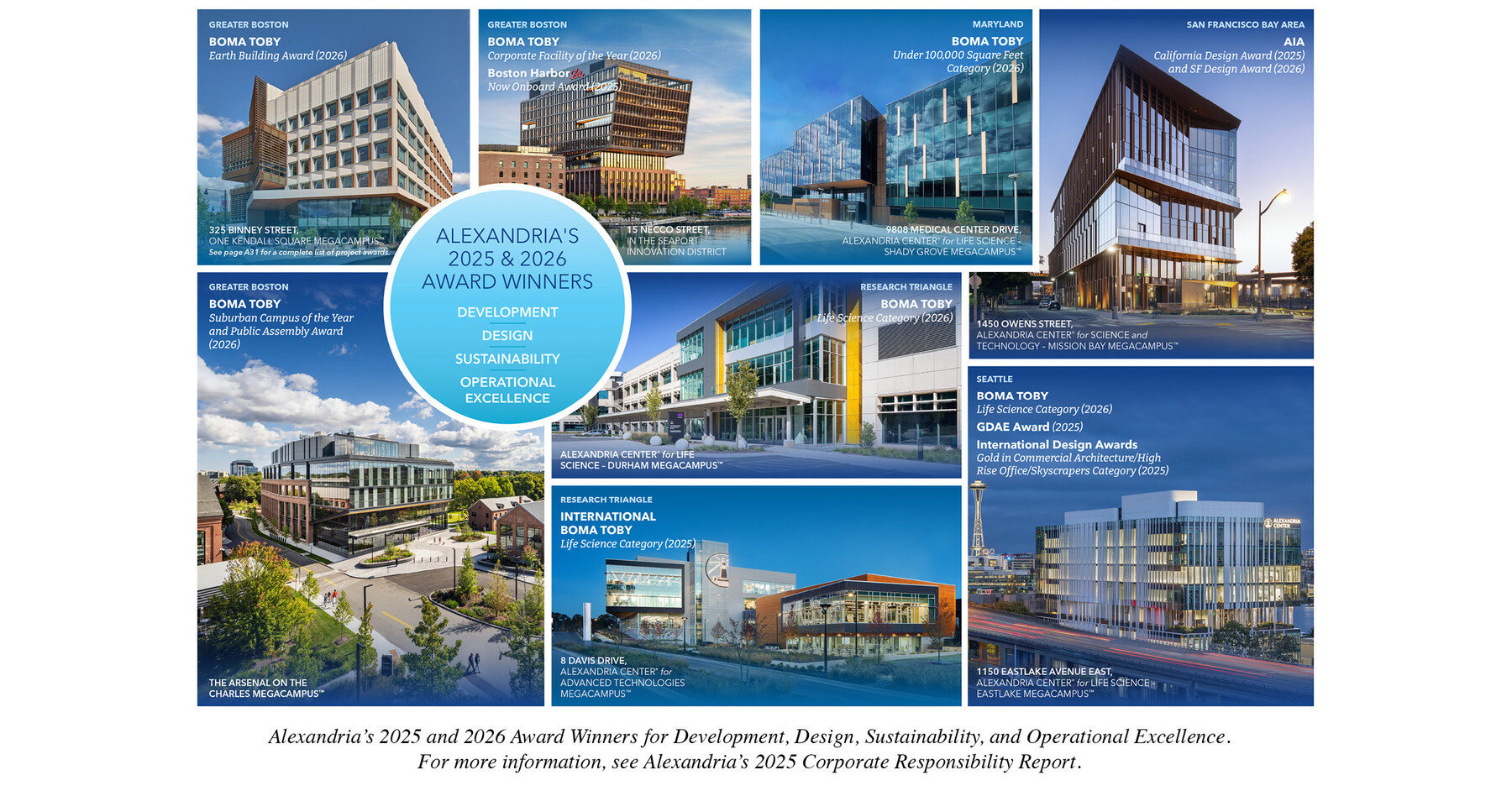
Alexandria Real Estate Equities (NYSE: ARE) released its 2025 Corporate Responsibility Report, highlighting life-science tenant impact (nearly half of FDA novel therapies approved since 2013 have been marketed by Alexandria tenants) and ESG progress, including a 16% reduction in operational greenhouse-gas emissions intensity from 2022. The company also reports renewable electricity at 32% of total electricity consumption in 2025 and continued industry recognition for sustainability and talent initiatives. Overall, the update is more qualitative than financial, but it reinforces Alexandria’s positioning as an investment-grade life-science REIT tied to long-dated tenant demand.
This is not a near-term earnings catalyst; the economic value is mostly optionality around cost of capital, tenant retention, and permitting friction. For ARE, sustainability branding matters less as an ESG scorecard and more as a way to defend premium rents and financing terms when lab demand is soft and lenders are discriminating. In a weak leasing tape, the landlords that can credibly argue lower operating costs and better tenant recruitment keep pricing power longer than commodity office owners.
The second-order winner is the balance sheet: investment-grade REITs with repeat access to unsecured debt and green-capital pools can outlast weaker private competitors if the life-science funding cycle stays subdued. That said, this does not solve the core issue for the sector — biotech funding and pharma right-sizing drive absorption, not marketing language. If vacancy and sublease space remain elevated, the market will treat this as noise unless it is followed by visible same-store NOI stability and renewed leasing spreads.
Contrarian view: the market may be overvaluing the reputational moat here and undervaluing the supply-demand cycle. The report helps reinforce ARE’s premium multiple versus lower-quality life-science landlords, but the bigger question is whether campus density still translates into pricing power if tenants keep shrinking footprints. The thesis breaks if upcoming earnings show slower lease signings, weaker renewals, or cap-rate pressure from higher-for-longer rates.
Over 1-3 months, watch for leasing commentary, occupancy, and financing spreads; over 6-18 months, the real test is whether ARE can translate ESG differentiation into FFO growth rather than just narrative durability.
AI-powered research, real-time alerts, and portfolio analytics for institutional investors.
Request DemoOverall Sentiment
mildly positive
Sentiment Score
0.12
Ticker Sentiment
