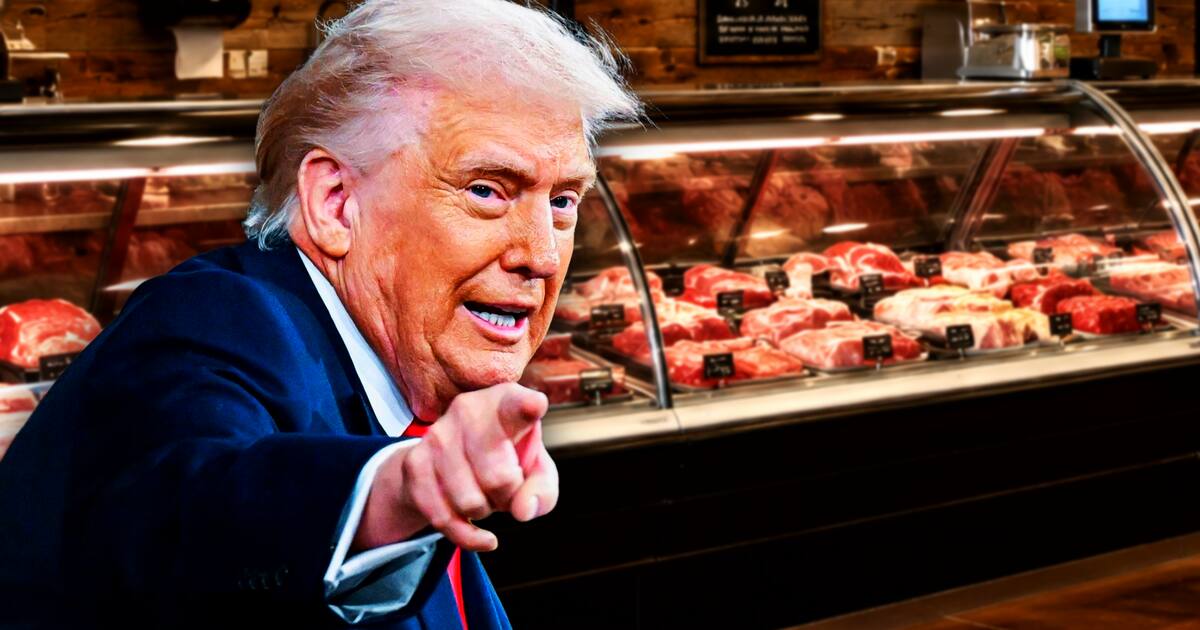
U.S. April inflation came in at 0.6% month over month, lifting the year-over-year rate to 3.8% from 3.3% in March, while food prices rose 0.5%. Meat, poultry, fish and eggs increased 1.3% in April, led by beef at +2.7%, and the White House is considering temporarily suspending taxes on foreign meat imports to ease record prices. The combination of hotter inflation and a potential import-tax change could matter for food, retail, and trade-sensitive markets.
The market is getting a classic second-order inflation impulse: not just sticky food prices, but an energy-to-grocery pass-through that keeps headline CPI from cooling even if core shelter starts to decelerate. That matters because supermarket inflation is one of the few categories consumers notice immediately, so it can anchor inflation expectations higher and make wage-setting more defensive over the next 1-2 quarters. If policy responds with tariff relief, the near-term disinflation impulse is likely to show up faster in wholesale beef and foodservice margins than in shelf prices, creating a lagged headline benefit but immediate margin pressure for domestic producers.
The potential suspension of import taxes is a clear relative winner for foreign livestock exporters and U.S. import/logistics intermediaries, while domestic ranchers face a squeeze from a demand substitution shock layered on top of already tight herd economics. The bigger hidden risk is that an import-driven price reset may not persist if feed and transport costs remain elevated; in that case, the policy only compresses margins temporarily without solving the structural shortage. That makes this more of a months-long trade than a durable regime shift.
Consensus may be underestimating how politically asymmetric this is: consumers get a visible price break quickly, while producers absorb the adjustment over a longer horizon. If the White House leans into this, the first market reaction should be relative underperformance of domestic beef exposure and modest relief in restaurant input-cost expectations, especially in casual dining and food-away-from-home chains with weaker pricing power. Conversely, if imports fail to move the needle because processing capacity or biosecurity constraints slow the flow, the market will rapidly refocus on sticky food inflation and the policy will be seen as symbolic rather than effective.
AI-powered research, real-time alerts, and portfolio analytics for institutional investors.
Request DemoOverall Sentiment
mildly negative
Sentiment Score
-0.15
