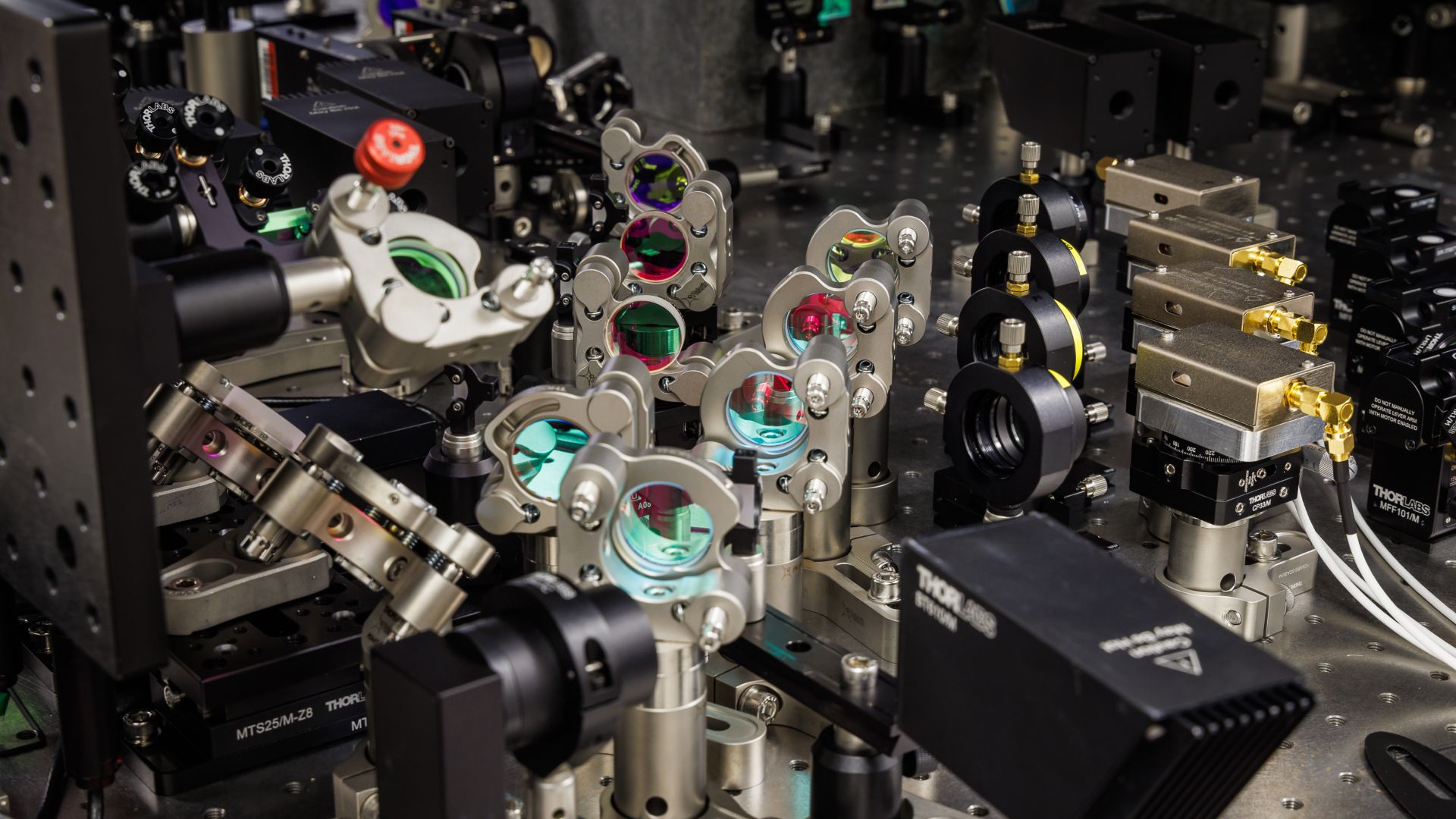
Microsoft's Project Silica team demonstrated laser-written data storage on ordinary borosilicate glass, encoding 4.8 TB across 301 layers in a 2 x 120 mm piece at a write rate of 3.13 MB/s and showing data stability beyond 10,000 years using accelerated-aging tests. The paper in Nature describes technical advances — pseudo-single-pulse birefringent voxel writing, parallel writing, and new phase-voxel encoding/reading — that reduce dependence on expensive fused silica and address commercialization barriers of cost and media availability, positioning the technology as a long-term archival storage alternative despite current write-speed limitations versus HDDs/SSDs.
Market structure: Microsoft (MSFT) is the direct strategic winner — the breakthrough removes a materials bottleneck and creates optionality to offer ultra-long‑term archival services that could undercut tape/HDD economics over a multi‑year horizon. Beneficiaries also include optical/laser equipment vendors (e.g., IPGP, LITE, COHR) and borosilicate glass producers (GLW, SCHW/Schott exposure) that may see capex pull‑through; incumbents in tape (QMCO, to a lesser extent STX/WDC) face slow secular pressure. Expect pricing power to shift to cloud providers able to integrate one‑time write, low‑maintenance media rather than high OPEX recurring tape/HDD models.
Risk assessment: Tail risks are technical (failure to scale write/read throughput), ecosystem (reader obsolescence or lack of open standards), regulatory/IP disputes, and slower-than‑expected commercial adoption; any of these could render the advance academic. Time horizons: days — modest MSFT sentiment bump; weeks–months — pilots/partnerships and pricing disclosures; 3–7 years — potential measurable demand erosion for tape/HDD (estimate potential archival market share shift of 10–30% in favor of glass solutions if commercialized and priced <50% of current total cost of ownership). Hidden dependency: availability of high‑precision lasers and reader standards; catalyst list: MSFT commercial product announcement, pricing/TB cost disclosure, or large government/archival contract.
Trade implications: Tactical positions: modestly overweight MSFT (1–2% portfolio) to capture strategic optionality, add exposure to IPG Photonics (IPGP) and Corning (GLW) 0.5–1% pockets for supply‑chain upside, and consider a small short/underweight in Quantum (QMCO) or HDD leaders (STX) sized 0.5–1% as hedge. Options: use a 6‑month MSFT call vertical (buy ~35‑delta, sell ~20‑delta) to express upside around product/commercialization catalysts with defined cost. Pair trade: long MSFT vs short STX (size neutral) to capture cloud premium vs hardware decline. Entry/exit: initiate small positions now, add on a commercial launch or government pilot within 1–3 months; take profits/reevaluate on a 15–25% move or if no commercialization within 12 months.
Contrarian angles: Market likely overestimates immediate revenue impact for MSFT and underestimates the necessary ecosystem build (readers, formats, migration tools) — real enterprise adoption typically takes 3–7 years, not months. Conversely, the market underprices supplier wins: optical/laser OEMs and mainstream glassmakers could see earlier, high‑margin OEM orders; archival service providers (IRM) might become partners/acquirers, creating licensing/recurring revenue for MSFT rather than cannibalizing service providers. Historical parallel: tape→disk migration was multi‑year and left niche tape demand; plan for slow, non‑linear adoption and optionality‑weighted positions rather than binary bets.
AI-powered research, real-time alerts, and portfolio analytics for institutional investors.
Request DemoOverall Sentiment
moderately positive
Sentiment Score
0.35
Ticker Sentiment
