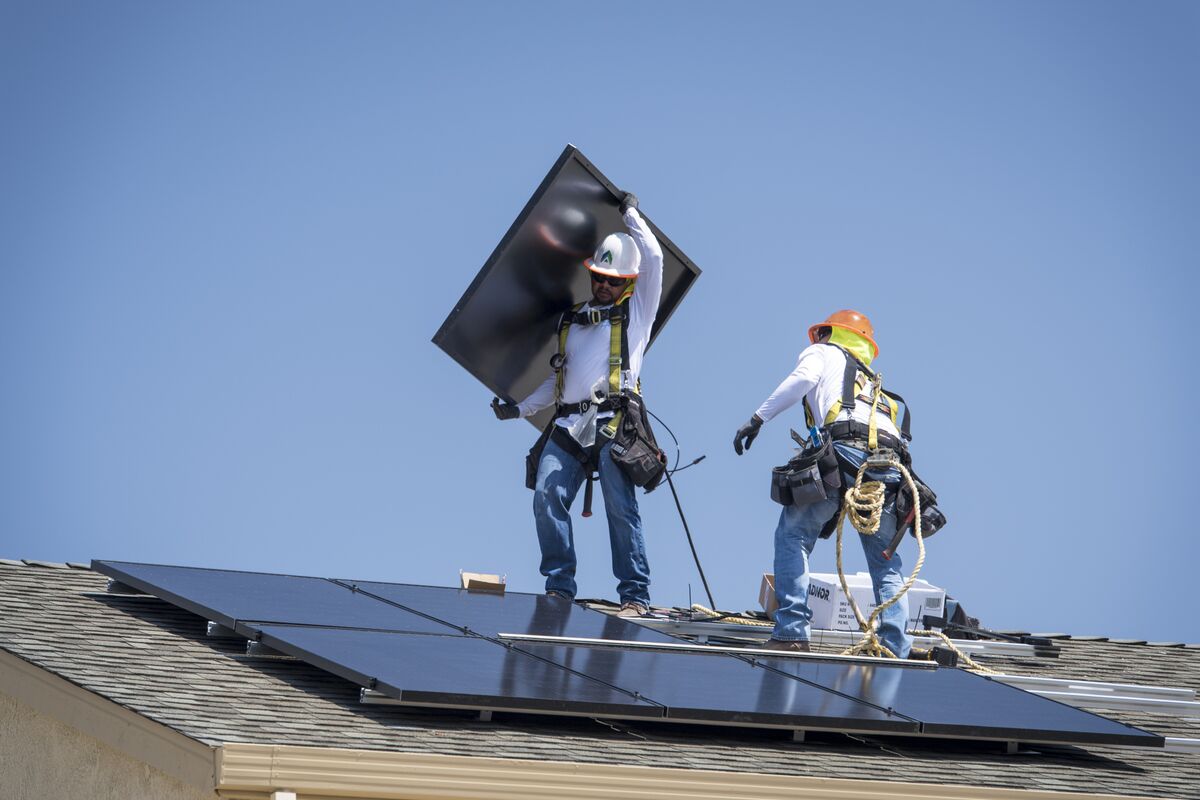
Sunrun shares jumped as much as 31% after announcing a partnership with Tesla and Renew Home to build a platform supplying 16 gigawatts of electricity for data centers and utilities. The project will aggregate hundreds of thousands of home batteries and 8 million thermostats, positioning Sunrun in AI-related power demand and the broader energy transition. The deal is a material positive catalyst for Sunrun and could drive sector interest in distributed energy and grid flexibility.
This is less a solar-equity rerating story than a validation of distributed generation as grid capacity. If the platform actually scales, the economic value migrates from rooftop installation margins to dispatchable flexibility, which should raise the strategic value of aggregated behind-the-meter assets relative to incumbent peaker capacity and some utility capex plans. The first-order winner is RUN because it controls a large installed battery base and can monetize the same hardware multiple times: customer retention, grid services, and potentially higher lifetime gross profit per household.
The second-order implication is pressure on utility-scale batteries and fast-response gas peakers if customer-sited assets can be contracted at meaningful scale. That said, the near-term bottleneck is not technology; it is interconnection, telemetry, ISO market access, and customer participation rates, so the monetization curve is likely back-end loaded over 6-18 months rather than immediately reflected in revenue. TSLA benefits reputationally and strategically by making Powerwall an enterprise platform rather than a consumer product, but the equity impact is probably smaller than RUN because the battery business is still a subscale earnings contributor.
The consensus may be overestimating how much of the announced capacity is economically firm versus opt-in and weather-dependent. The market will likely chase the headline gigawatts, but the real question is contract duration, availability guarantees, and who bears degradation and dispatch risk; if those terms are weak, the valuation uplift can fade after the initial squeeze. Near term, the setup is better for a momentum trade in RUN than a durable fundamental re-rate unless there are follow-on disclosures showing signed load-serving agreements or utility procurement wins.
AI-powered research, real-time alerts, and portfolio analytics for institutional investors.
Request DemoOverall Sentiment
strongly positive
Sentiment Score
0.72
Ticker Sentiment
