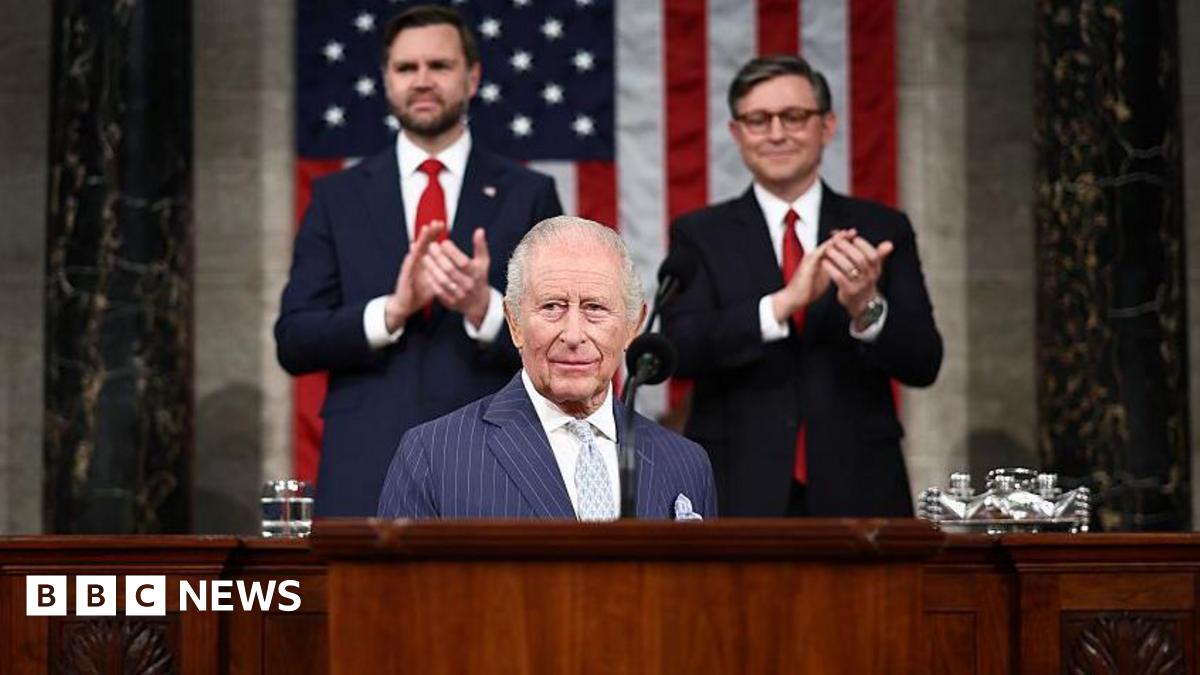
King Charles III used his historic address to Congress to stress UK-US reconciliation amid strained transatlantic ties, the war in the Middle East, and broader geopolitical uncertainty. He also highlighted checks and balances, NATO, and climate cooperation, while notably avoiding any direct reference to Jeffrey Epstein or his victims. The speech was largely symbolic and diplomatic, with limited direct market impact.
The market implication is not the speech itself; it is the signal that the UK is trying to de-risk a diplomatic fracture without making a substantive policy concession. That lowers, but does not remove, the probability of near-term US retaliation on trade, intelligence cooperation, or defense procurement. For UK assets, the key second-order effect is not broad beta but dispersion: defensives and multinational earners are insulated, while domestically levered names tied to government contracts, permitting, or consumer confidence remain vulnerable to any spillover in Westminster-Washington relations.
The more important read-through is for defense and security infrastructure. Any improvement in transatlantic tone supports procurement continuity, joint exercises, cyber/intelligence sharing, and incremental budget flexibility across NATO-linked supply chains. That favors prime contractors and selected UK defense adjacencies over pure domestic UK cyclicals; the real economic benefit is timing certainty on multi-year programs, not an immediate revenue bump. If tensions re-escalate, the first-order damage would likely show up in delayed awards rather than headline spending cuts.
The contrarian point is that the market may be overestimating the durability of a symbolic reset. This is a low-commitment de-escalation that can reverse quickly if Middle East policy or election rhetoric hardens, so any uplift in UK equities tied to ‘special relationship’ headlines should be fadeable on a 1-3 month horizon. The domestic political undertone also matters: rhetoric around checks and balances increases the odds of louder institutional conflict in the US, which is usually negative for risk appetite but supportive for volatility and defense exposure.
Bottom line: treat this as a sentiment event, not a regime change. The likely tradable effect is a modest narrowing of the UK political risk premium and a relative bid for defense/intelligence-linked names, but the asymmetric risk is that the next substantive geopolitical headline overwhelms the charm offensive and re-prices the entire narrative.
AI-powered research, real-time alerts, and portfolio analytics for institutional investors.
Request DemoOverall Sentiment
neutral
Sentiment Score
0.05
Ticker Sentiment
