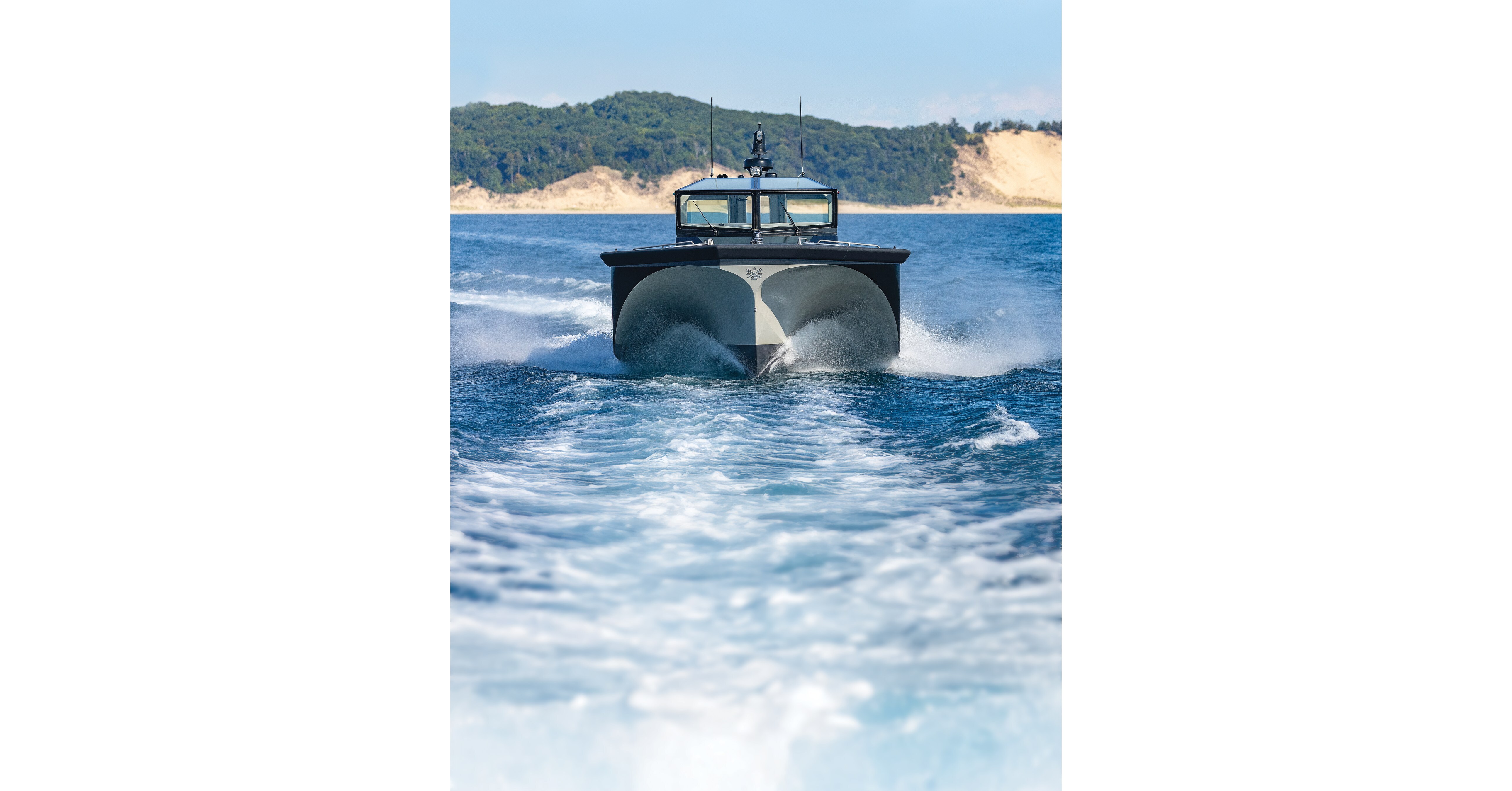
Ghostworks unveiled MRLN (Multirole Remote Logistics Node) at the 2026 Pennsylvania Defense and Innovation Summit, positioning it as a human-in-the-loop autonomy layer that lets one vessel handle multiple mission types. The system was developed with General Atomics Aeronautical Systems and Mercury Marine and is presented as breaking the traditional speed–range–payload tradeoff, including a Minerva-class example capable of carrying 17,500 lbs at 30 knots with sea state 4 handling. With MRLN enabling missions such as ISR and littoral resupply from one platform, the update is more capability/innovation focused than a direct financial catalyst, implying limited near-term price impact.
The real signal is not a product launch; it is that autonomy is moving from demoware to mission packaging. That shifts value creation away from hull builders and toward the layer that makes distributed maritime systems usable: sensing, comms, propulsion control, and C2 resiliency. Public-market beneficiaries are more likely to be the primes and electronics stacks that can integrate and certify these systems than the boutique shipyard itself; BC gets a minor validation halo via Mercury Marine, but the P&L impact is likely immaterial.
Near term, this is mostly narrative until there is funded adoption. The key risk is that contested maritime autonomy remains fragile under GPS denial, EW, cyber, and sea-state stress, which means procurement will likely start with ISR/relay and only later expand into logistics and mine warfare. The market will overread this if it assumes rapid fleet conversion; the first real catalyst is a contract award, OTA, or Navy budget language that puts dollars behind distributed littoral operations.
Contrarian view: consensus may be too bullish on the speed of adoption and too bearish on the implementation bottleneck. If human-in-the-loop certification and comms redundancy prove harder than advertised, the winner may be whoever supplies the sensors, radios, and mission software rather than the vessel OEM. The six- to eighteen-month question is whether this displaces manned small-craft and legacy MCM spend, which would be a larger budget implication than the headline itself.
AI-powered research, real-time alerts, and portfolio analytics for institutional investors.
Request TrialOverall Sentiment
mildly positive
Sentiment Score
0.35
