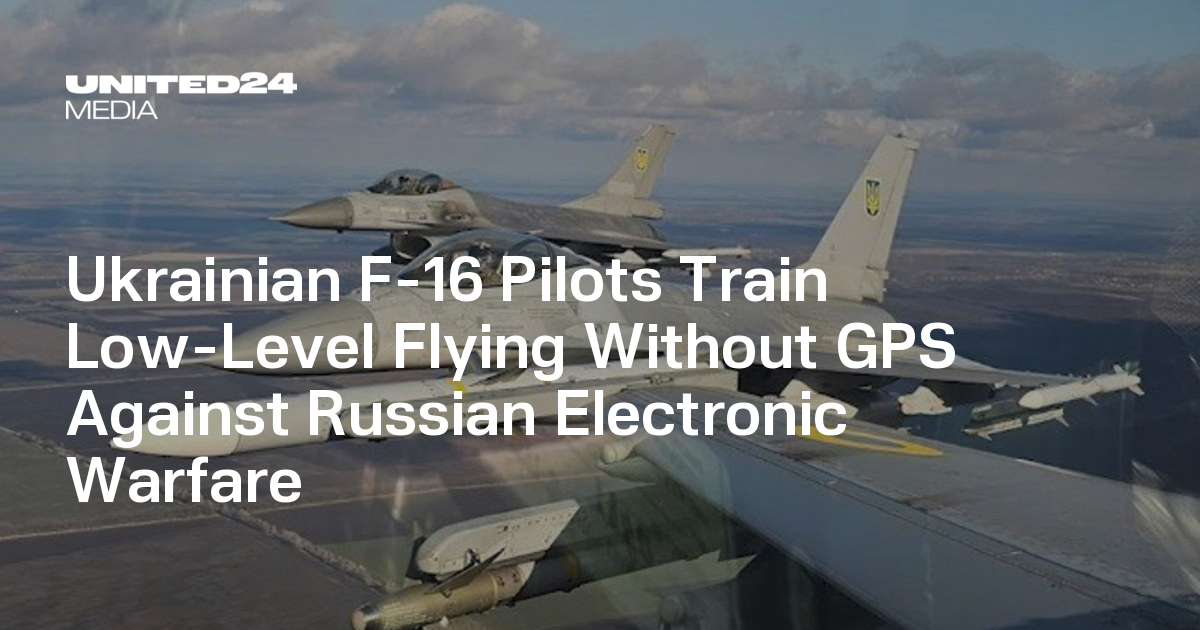
Ukrainian F-16 pilots are increasingly training to fly low-level missions without GPS as Russian electronic warfare has made signal denial a routine combat condition. More than 50 Ukrainian trainees have completed basic flight training in the U.K. and are moving on to advanced jet training before transitioning to F-16s, while new simulators are helping accelerate preparation. The article highlights broader battlefield adaptation, including more jam-resistant drones and tactics, but contains no direct financial or corporate catalyst.
The market implication is not the aircraft story itself, but the forced migration of air combat doctrine toward low-cost, distributed survivability. Electronic warfare is effectively taxing every platform in the battlespace, which should accelerate procurement of jam-resistant GNSS alternatives, inertial navigation upgrades, terrain-mapping software, fiber-optic drones, and EW hardening across NATO-adjacent defense supply chains. The beneficiaries are likely to be the “picks and shovels” names rather than airframe OEMs: mission systems, secure comms, sensors, and simulation/training vendors see demand pull-forward as GPS-denied training becomes standard rather than exceptional.
Second-order, this is a validation event for Western force design: if Ukrainian pilots can operationalize without satellite reliance, the same playbook becomes relevant for Taiwan, the Baltics, and any future conflict where GPS is the first target. That supports a multi-year re-rating of companies exposed to anti-jam navigation, electronic countermeasures, and training infrastructure. It also argues for higher spending on simulators and synthetic training, because the cheapest way to train for contested-spectrum operations is to compress real-flight hours into high-fidelity synthetic environments.
The main risk is not reversal but escalation: battlefield adaptation can outpace procurement cycles, so near-term winners may be under-earnings pressure even as backlog improves. The contrarian miss is that investors may overweight aircraft deliveries and underweight the systems that make those aircraft usable in a denied environment; in a contested-spectrum war, capability is increasingly software-defined and upgrade-driven, not platform-defined. If jamming intensity subsides, urgency fades, but the training and doctrine shift is durable because once pilots learn to operate degraded, peacetime assumptions rarely fully return.
AI-powered research, real-time alerts, and portfolio analytics for institutional investors.
Request DemoOverall Sentiment
neutral
Sentiment Score
0.00
