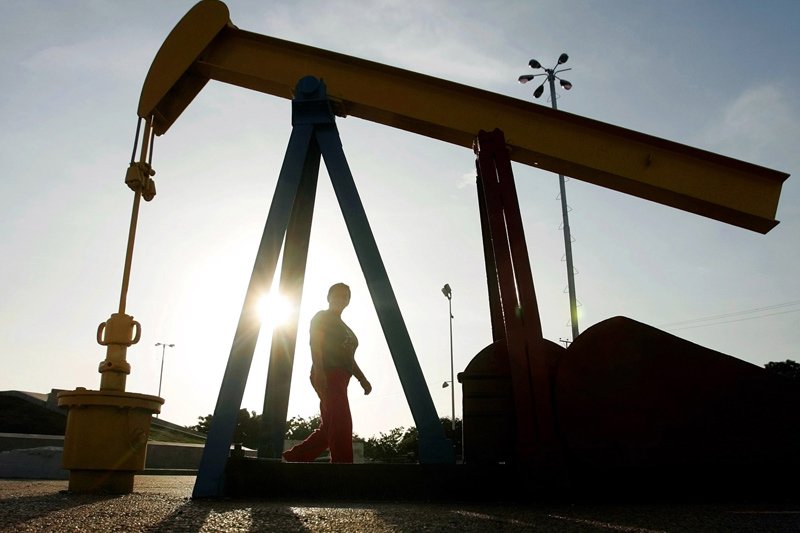
Bank of Canada officials held the policy rate at 2.25% in April and said future changes are likely to be small, but they emphasized unusually elevated uncertainty. Policymakers flagged two key risks: new U.S. tariffs on Canadian goods, which could prompt rate cuts, and persistently high oil prices from Middle East conflict, which could force hikes. The deliberations point to a highly data-dependent, scenario-based policy path with meaningful implications for rates and the Canadian dollar.
The market implication is less about the base case and more about dispersion: policymakers are explicitly signaling that the next move is path-dependent on either a tariff shock or an energy-driven inflation shock. That creates a classic cross-asset regime split where duration-sensitive assets rally on growth fear while energy and inflation hedges outperform if the oil shock dominates. In practice, the probability-weighted outcome is not one directional trade but higher volatility in rates and FX, with CAD likely underperforming on trade-war headlines and outperforming only if energy inflation forces a hawkish repricing.
The second-order effect is that a tariff response would likely hit Canadian cyclicals before it hits headline growth data, because exporters face margin compression immediately while domestic demand tends to lag. Financials are a subtler loser: if markets start pricing cuts, bank NIM compression can offset any credit benefit, especially in a slowing growth scenario over the next 1-2 quarters. On the other side, energy-linked names become a hedge against the inflation branch, but only if crude remains elevated long enough for expectations to re-anchor; otherwise the move stays a tactical commodity spike rather than a durable earnings tailwind.
The contrarian read is that consensus may be overestimating the speed of policy transmission and underestimating the central bank’s tolerance for temporary data noise. A single tariff announcement is more likely to widen risk premia than force immediate easing, while an oil spike needs persistence to change the policy reaction function. That makes the cleanest trade not a directional macro bet, but owning volatility and relative value in the sectors most exposed to a delayed but asymmetric policy response.
AI-powered research, real-time alerts, and portfolio analytics for institutional investors.
Request DemoOverall Sentiment
neutral
Sentiment Score
-0.05
Ticker Sentiment
