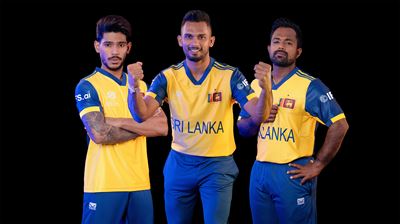
IFS, a global provider of Industrial AI and Sri Lanka’s largest technology employer, has signed on as the Official Team Sponsor of the Sri Lanka cricket team for the ICC Men’s T20 World Cup 2026 (co-hosted with India, 7 Feb–8 Mar 2026), securing prominent branding on match-day and training kits. The sponsorship targets up to an estimated 2.5 billion global viewers and reinforces IFS’s regional employer and brand positioning; while it may boost marketing reach and talent recruitment in South Asia, it is unlikely to materially affect near-term financials or investor valuations.
Market structure: The sponsorship is a targeted brand-visibility play that benefits industrial-AI and industrial-software vendors able to point to real-world regional deployments (PTC, AZPN, ROK, HON). Expect a modest re-rating: public sponsors with credible sales channels could see 3–5% upside to revenue multiples over 12–18 months as pipeline conversion accelerates, while pure-play consumer ad/branding houses see only transient gains. FX/commodities impact is second-order: Sri Lanka rupee (LKR) could see a <1–3% cyclical bid if tourism and broadcasting flows spike during Feb–Mar 2026; sovereign bonds unlikely to move materially.
Risk assessment: Tail risks include negative PR, regional political instability, or an AI regulatory shock in major markets that compresses multiples by 10–25%. Immediate effects (days) are limited to branding noise; short-term (weeks–months) sees marketing-to-pipeline conversion and measurable bookings in 3–9 months; full revenue impact likely 12–24 months. Hidden dependencies: long enterprise sales cycles (6–18 months), local talent retention, and contractual service delivery—misses here flip positive sentiment to downside quickly.
Trade implications: Favor selective overweight in industrial-software and automation hardware: AZPN, PTC, ROK, HON for 3–12 month plays (target 10–25% upside, stop −8–12%). Use relative-value: long industrial-AI (AZPN) vs short broad SaaS (CRM) to capture rotation into operational AI. Options: prefer 3–6 month call spreads with long-delta ~0.35 and short strikes 15–25% out to cap premium and achieve 20–50% ROI if thesis executes.
Contrarian angles: The market underestimates conversion lag—brand placements rarely shift top-line in <6 months; consensus may overpay for “AI” narratives in pure SaaS. Historical parallels (sports sponsorships by tech firms) show median sales uptick <5% annually; downside comes from execution failures and regulatory headlines. Consider idiosyncratic downside insurance (cheap puts) on names dependent on emerging-market delivery hubs if local disruptions exceed 5–10% headcount loss.
AI-powered research, real-time alerts, and portfolio analytics for institutional investors.
Request DemoOverall Sentiment
mildly positive
Sentiment Score
0.32
