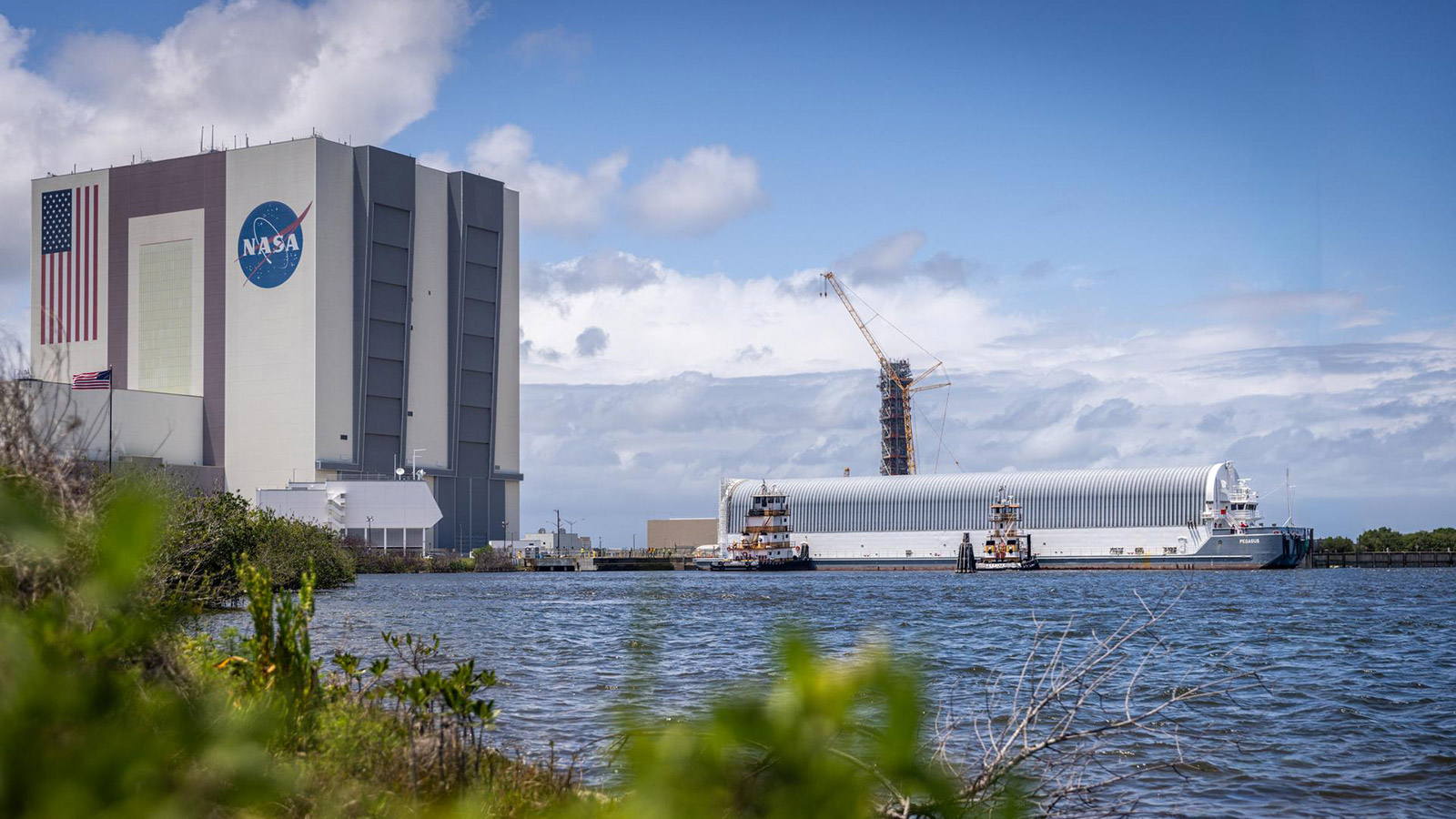
NASA’s Core Stage 3 top four-fifths traveled 900 miles from Michoud Assembly Facility to Kennedy Space Center, where teams will prepare it for vertical integration with the engine section. The move shifts final assembly to the launch site, supporting Artemis III schedule acceleration and Boeing’s delivery-efficiency efforts. The stage is slated to power Artemis III, a mission intended to validate systems and docking capabilities in low Earth orbit ahead of an Artemis IV moon landing in 2028.
This is modestly constructive for BA because it signals a schedule discipline narrative rather than a one-off manufacturing update. Moving more work to the launch site should reduce rework, handoff friction, and transit-related delays, which matters more for cash conversion than for headline revenue. The second-order benefit is that every incremental proof point on execution helps de-risk BA’s defense/space franchise at a time when the market is paying for operational reliability, not just backlog size.
The cleaner read is that the value accrues upstream to the supply chain and integration ecosystem: companies providing propulsion, tooling, precision logistics, and quality assurance get more consistent throughput if final assembly becomes less geographically fragmented. For competitors, the bigger implication is that NASA’s schedule compression raises the bar on industrialization, favoring suppliers with mature program management and penalizing firms that depend on late-cycle fixes. If this cadence holds for 2-3 quarters, it can gradually improve BA’s margin optics through lower disruption costs even before any revenue uplift is visible.
The main risk is that the market may be too willing to extrapolate a logistics milestone into a broader execution inflection. Space programs still carry binary schedule risk, and any engine-section or vertical-integration issue would push the benefit out by months, not weeks. In that case, the positive read reverses quickly because the stock is already sensitive to evidence of process slippage; the catalyst path is asymmetric and the downside comes from a single program miss rather than gradual deterioration.
Contrarian angle: consensus likely underweights how much of this is about manufacturing flow, not Artemis headline optionality. BA does not need perfect mission success to create value here; it only needs a credible reduction in cycle time and integration risk to support better working-capital turns and lower program penalties. That makes the stock more tradable on execution beats over the next 1-2 quarters than on the distant moon-landing narrative.
AI-powered research, real-time alerts, and portfolio analytics for institutional investors.
Request DemoOverall Sentiment
mildly positive
Sentiment Score
0.18
Ticker Sentiment
