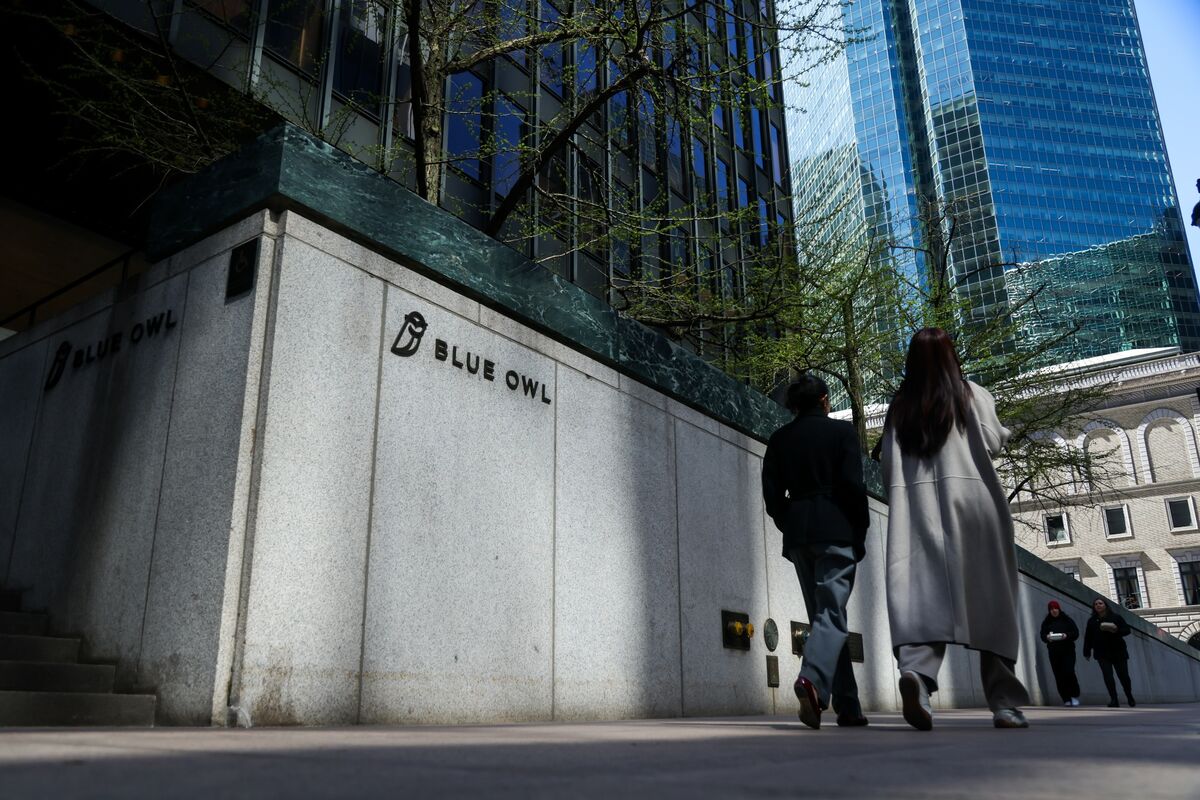
The University of California investment fund added almost 30 million shares of Blue Owl Technology Finance Corp. in Q1 and now owns more than 6% of the company, making it one of the stock’s largest shareholders. The move signals institutions are taking advantage of volatility in the private credit market. The article is primarily a flow and positioning story rather than a fundamental change for the issuer.
This is less a single-name endorsement than a signal that large, patient capital is stepping into private-credit duration/mark-to-market volatility while underwriting a normalized carry story. The second-order winner is the whole listed BDC complex: if a marquee university endowment is willing to add aggressively on weakness, it narrows the implied stigma discount across the group and can pull in other institutional allocators that have been waiting for confirmation. That said, the flow is supportive only if credit marks stay orderly; if public-market risk appetite fades, listed BDCs can re-rate just as quickly as they re-rated up.
For OTF, the setup is a mix of technical support and narrative validation, but the real driver from here is NAV confidence, not headline ownership. Heavy institutional accumulation can reduce float and improve near-term price action, yet it also increases the chance of crowded ownership if the name becomes a consensus 'quality carry' trade. The key risk is that private-credit spreads can look stable even as underlying borrower fundamentals lag by one or two quarters, so the market may be paying for low volatility right before credit losses surface.
The contrarian angle is that this may be a late-cycle signal dressed as a quality signal: institutions often scale into yield vehicles when volatility compresses, but that is precisely when forward returns tend to get capped. If the broader risk market rallies, OTF likely participates; if recession odds rise, listed BDCs can underperform despite decent current income because NAV sensitivity overwhelms dividend optics. The trade is therefore best viewed as a tactical flow beneficiary, not a buy-and-forget allocation.
AI-powered research, real-time alerts, and portfolio analytics for institutional investors.
Overall Sentiment
neutral
Sentiment Score
0.15
Ticker Sentiment
