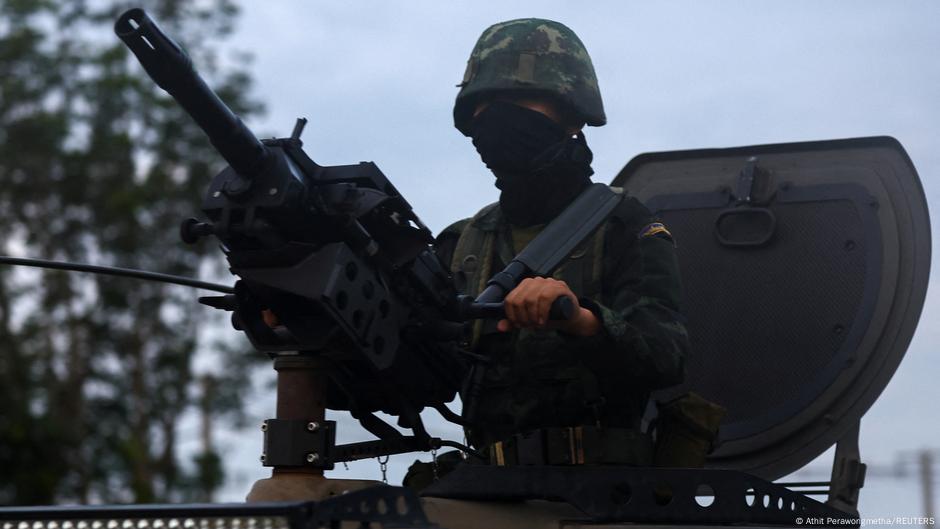
Thailand has declared martial law in eight districts bordering Cambodia amid a second day of intense cross-border fighting, escalating fears of an extended conflict. The crisis, marked by Cambodian rocket and artillery fire met with Thai F-16 air strikes, has prompted the UN Security Council to schedule an emergency meeting, underscoring significant regional instability and potential geopolitical risk.
Thailand has declared martial law in eight districts bordering Cambodia, a significant escalation following a second day of intense military clashes. The conflict has advanced beyond a simple border dispute, now involving Cambodian rocket and artillery fire and retaliatory Thai F-16 air strikes, tanks, and ground troops. This development has created a humanitarian issue, with tens of thousands seeking refuge, and has pushed bilateral relations to their lowest point in over a decade. The scheduling of an emergency UN Security Council meeting underscores the international gravity of the situation and the perceived risk of a prolonged conflict, signaling heightened geopolitical instability in the region which could disrupt cross-border economic activity.
AI-powered research, real-time alerts, and portfolio analytics for institutional investors.
Request DemoOverall Sentiment
strongly negative
Sentiment Score
-0.80
