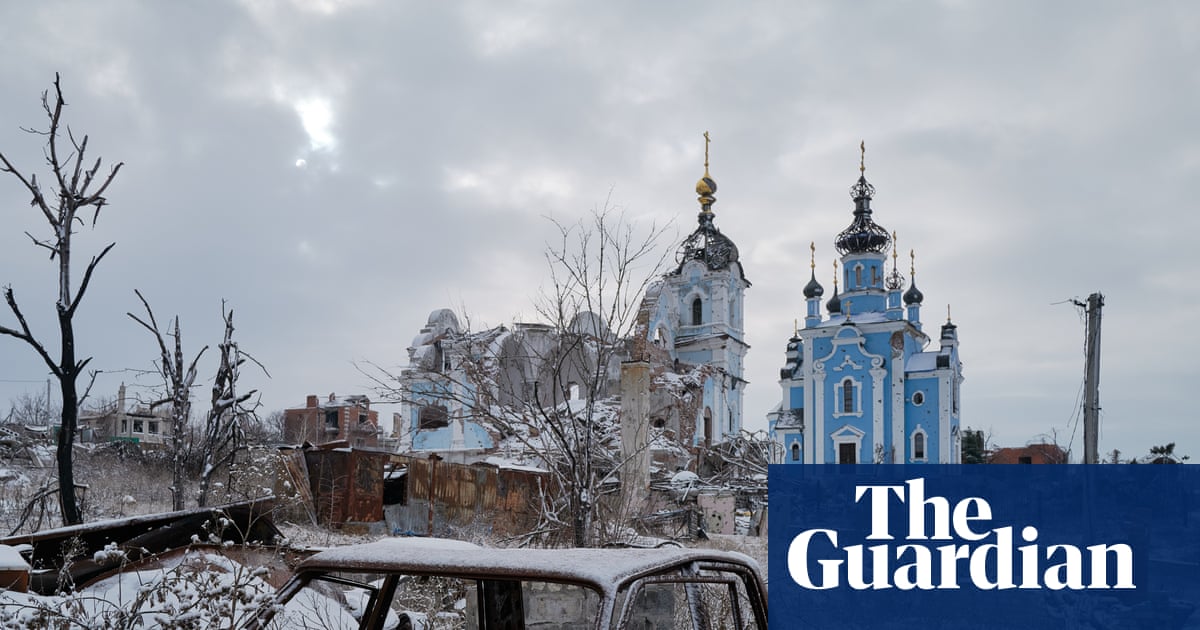
Russian President Putin, at last week's Alaska summit, demanded full control of Ukraine's Donbas region, specifically the withdrawal of Ukrainian forces from Donetsk and Luhansk, as a precondition for ending the war. This demand, which Ukrainian President Zelenskyy and 75% of Ukrainians firmly reject, establishes Donbas as the central, intractable faultline in peace negotiations. Russia currently controls approximately 88% of the region, including all of Luhansk, underscoring the significant territorial gains made since the 2014 conflict escalation and the 2022 full-scale invasion, signaling prolonged geopolitical instability.
The recent Alaska summit has solidified the Donbas region as the central and most intractable point of contention in the war, signaling a prolonged period of geopolitical instability. Russia's demand for full control over Donetsk and Luhansk, which it already controls by approximately 88%, is a maximalist position that is fundamentally irreconcilable with Ukraine's stance. The Ukrainian position is not merely political but is heavily reinforced by domestic sentiment, with polling from the Kyiv International Institute of Sociology showing 75% of the population opposes ceding any territory. This deep-seated public opposition severely constrains President Zelenskyy's negotiating flexibility. The result is a diplomatic impasse, where Russia's significant territorial gains since 2014 and 2022 create a de facto reality that Ukraine and its population refuse to accept formally. This dynamic points toward a continued war of attrition focused on the remaining Ukrainian-held territory in Donetsk, rather than a near-term resolution, maintaining a moderately negative and uncertain outlook for regional stability.
AI-powered research, real-time alerts, and portfolio analytics for institutional investors.
Overall Sentiment
moderately negative
Sentiment Score
-0.50
