
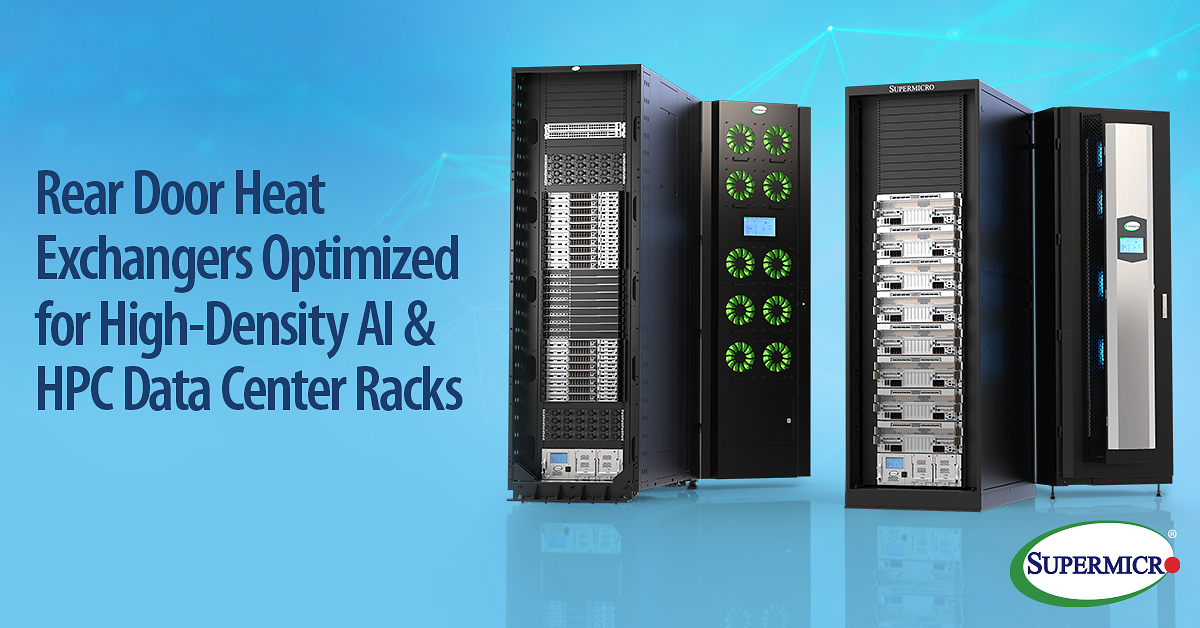
Supermicro (SMCI) breidt zijn Data Center Building Block Solutions® uit met een RDHx-portfolio (Rear Door Heat Exchangers) voor AI- en HPC-infrastructuur met hoge dichtheid. De koelcapaciteit loopt van 10 kW tot 120 kW per “door”/rack-niveau en tot maximaal 240 kW per rack, met inzetbaar ontwerp voor zowel nieuwe datacenters als retrofits. De aankondiging positioneert RDHx als rack-scale-infrastructuur met geïntegreerde software (Redfish/SNMP/webbeheer, SuperCloud Composer®) en implementatiediensten om time-to-online en TCO te verlagen. Marktimpact is naar verwachting beperkt aangezien dit een product-/portfolio-uitbreiding betreft zonder expliciete financiële guidance of orderaankondiging.
The incremental value here is not the thermal SKU itself; it is whether SMCI can use it to keep more of the rack budget in-house. In AI infrastructure, attach rate matters more than headline product breadth: if liquid cooling comes bundled with systems, software, and deployment, SMCI can defend share and potentially lift wallet share per rack, but the margin pool is still likely captured by whoever owns the facility layer and long-cycle service contracts.
The near-term market reaction is likely to overrate the strategic novelty. Liquid-cooling breadth is becoming table stakes across the AI stack, so the stock only gets durable upside if this converts into measurable backlog, better mix, or lower integration friction in the next 1-2 quarters. Competitively, the bigger beneficiaries of broader adoption may be Vertiv and nVent, which monetize thermal spend with cleaner recurring service and less server-cycle volatility than SMCI.
Contrarian view: the consensus may be treating every AI cooling announcement as moat expansion when it is often just feature parity. The right question is whether this improves SMCI’s pricing power or merely adds another low-margin component to a crowded BOM. Falsifiers: no improvement in gross margin, no acceleration in rack-scale orders, or continued working-capital drag over the next 1-3 quarters. Structurally, if hyperscalers standardize more of the design in-house, SMCI’s advantage narrows even if liquid-cooling adoption grows.
AI-powered research, real-time alerts, and portfolio analytics for institutional investors.
Request TrialOverall Sentiment
mildly positive
Sentiment Score
0.15
Ticker Sentiment
