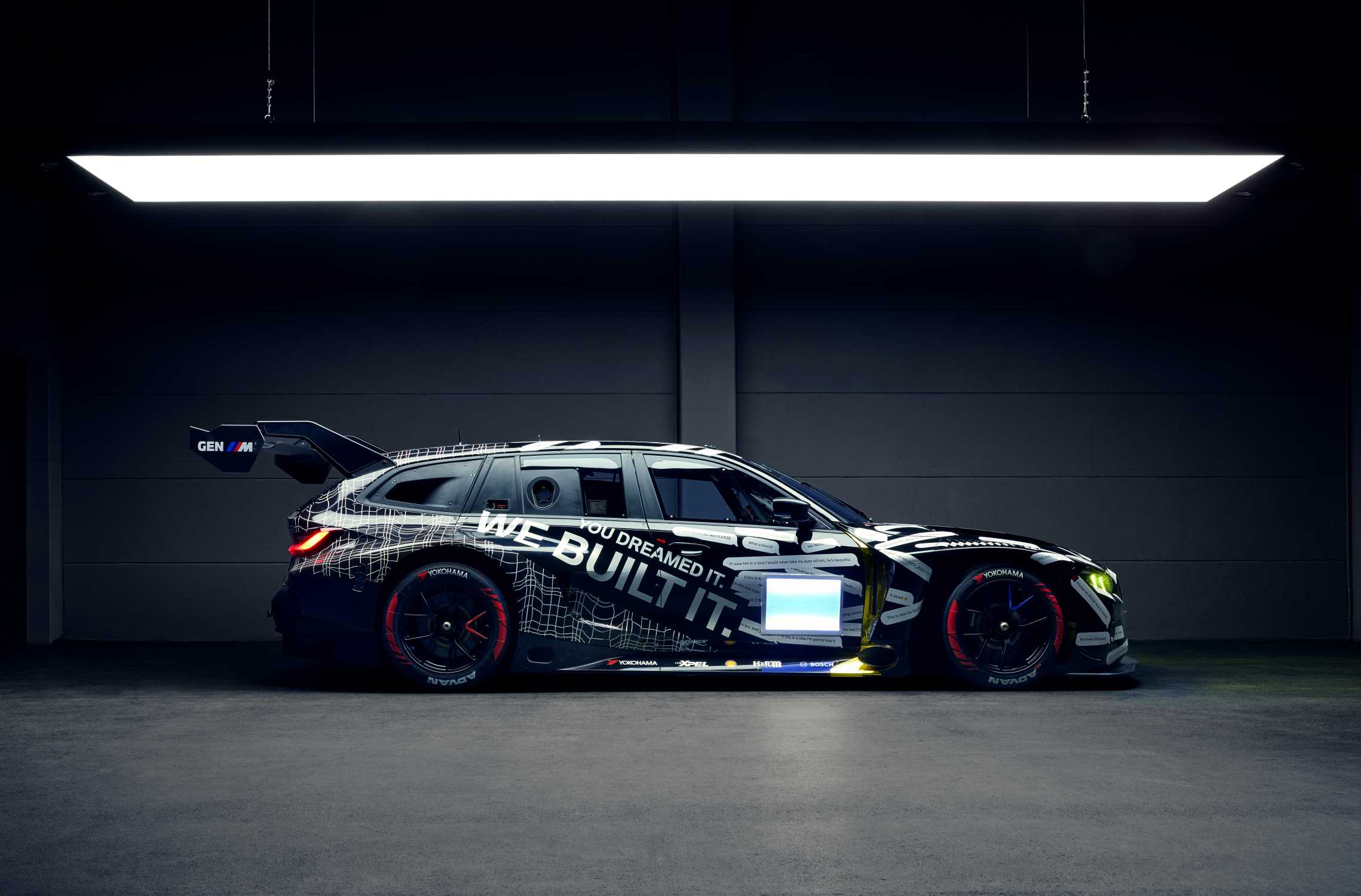
BMW will field the BMW M3 Touring 24H at the 24h Nürburgring on 16–17 May 2026, making its racing debut at the Nürburgring Langstrecken Serie second round. The car was developed in eight months on the technical base of the BMW M4 GT3 EVO, is 200 mm longer and 32 mm higher (including rear wing) than the M4 GT3 EVO, and will compete in the SPX class for Schubert Motorsport with four BMW works drivers: Jens Klingmann, Ugo de Wilde, Connor De Phillippi and Neil Verhagen. The project was accelerated by strong fan engagement (post reached >1M users and >1.6M views), and Yokohama is the tyre partner for the programme.
This is a brand-first, engineering-second initiative that functions primarily as a halo and marketing lever rather than a material volume driver. Expect a measurable uplift in M-division brand equity that translates into higher retail premiums and slower depreciation on enthusiast-focused models (we estimate a 2–5% tailwind to used-price realizations for M-line cars over 12–24 months), rather than immediate OEM-margin expansion.
The program’s compressed development timeline signals BMW’s ability to reuse modular GT3 architecture and supplier relationships quickly; that favors suppliers with flexible production and rapid prototyping capabilities (aero, brakes, race-spec electronics, specialty tyres). Tire partner visibility is the obvious marketing win and could convert into engineering contracts, but OE tyre sourcing cycles are 12–36 months — this is a staged opportunity, not instantaneous revenue.
Key risks are asymmetric: a high-visibility on-track failure or reliability issue could erode the halo effect within weeks and amplify negative social coverage, while a strong showing at Nürburgring can accelerate commercial benefits within 6–12 months. Watch for secondary signals — formal OE tyre contracts, expanded customer racing programs, or homologation moves into chargeable customer motorsport kits — these would move the needle from PR to P&L.
From a competitive standpoint, rivals are unlikely to cede the enthusiast halo, so expect limited follow-on capex competition in niche customer racing; that creates a multi-year “boutique” arms race that benefits specialist suppliers more than volume OEMs.
AI-powered research, real-time alerts, and portfolio analytics for institutional investors.
Request DemoOverall Sentiment
mildly positive
Sentiment Score
0.35
