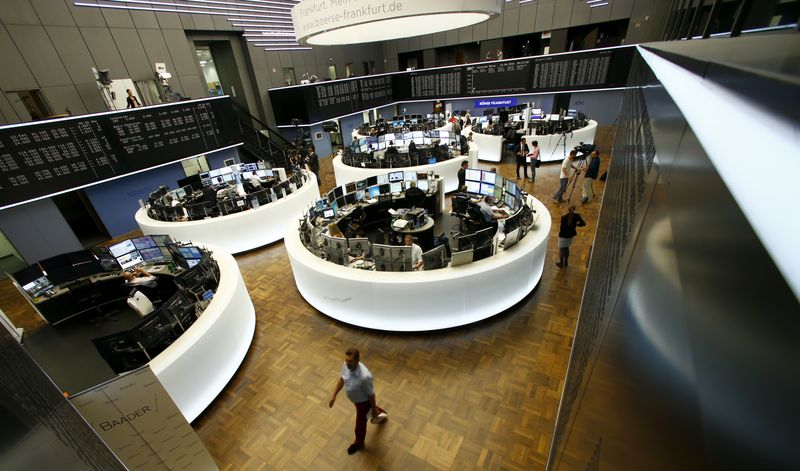
European markets opened sharply lower, with the Stoxx 600 down 0.8%, the DAX off 1.2%, the CAC 40 down 1.0%, and the FTSE 100 lower by 0.6% as investors reacted to renewed U.S.-Iran tensions and the threat of an Iran port/Strait of Hormuz blockade. Brent crude climbed back above $100 a barrel, reflecting heightened supply risk through a waterway that carries roughly one-fifth of global oil flows. The article also flags possible Eurozone inflation pressure and a more hawkish ECB backdrop, while travel shares weakened and energy/defense names outperformed.
The market is still pricing this as an energy shock first, but the bigger medium-term setup is a policy-volatility regime where the initial headline is less important than the credibility gap between political rhetoric and operational reality. If the effective restriction is limited to Iranian-linked traffic, the immediate supply loss may be far smaller than the headline implied, which argues for fading the most aggressive oil spike once the opening gap is absorbed. That said, even a partial choke-point premium can persist because shippers, insurers, and charterers will re-price not just physical barrels but delay risk, rerouting, and convoy requirements. The second-order beneficiary set is broader than the obvious integrated energy names. European defense should see a more durable bid than travel should see a drawdown, because investors tend to overweight direct demand destruction while underweighting the fiscal impulse from higher security spending and munitions replenishment. For airlines, the issue is not just jet fuel beta; it is margin compression combined with booking hesitation, which usually shows up first in forward guidance rather than spot traffic data. The inflation angle matters because this is a bad shock for Europe: imported energy pressure can arrive before growth numbers weaken enough for the ECB to blink. That pushes rate-cut expectations out and supports the front end of the EUR curve, but only if the oil move sustains for several sessions. If the blockade language keeps softening or no physical disruption materializes, the market likely unwinds the risk premium quickly, leaving energy and defense with asymmetric upside and travel with a short-lived selloff. Contrarian read: the consensus is treating this as binary, but the more tradable path is a muddled, partial disruption that keeps volatility elevated without fully breaking supply. In that regime, long vol in energy and selective defense beats outright index shorts, while the biggest loser may be crowded macro shorts in Europe if higher oil keeps inflation sticky enough to delay easing rather than trigger recession panic.
AI-powered research, real-time alerts, and portfolio analytics for institutional investors.
Request DemoOverall Sentiment
moderately negative
Sentiment Score
-0.45
Ticker Sentiment
