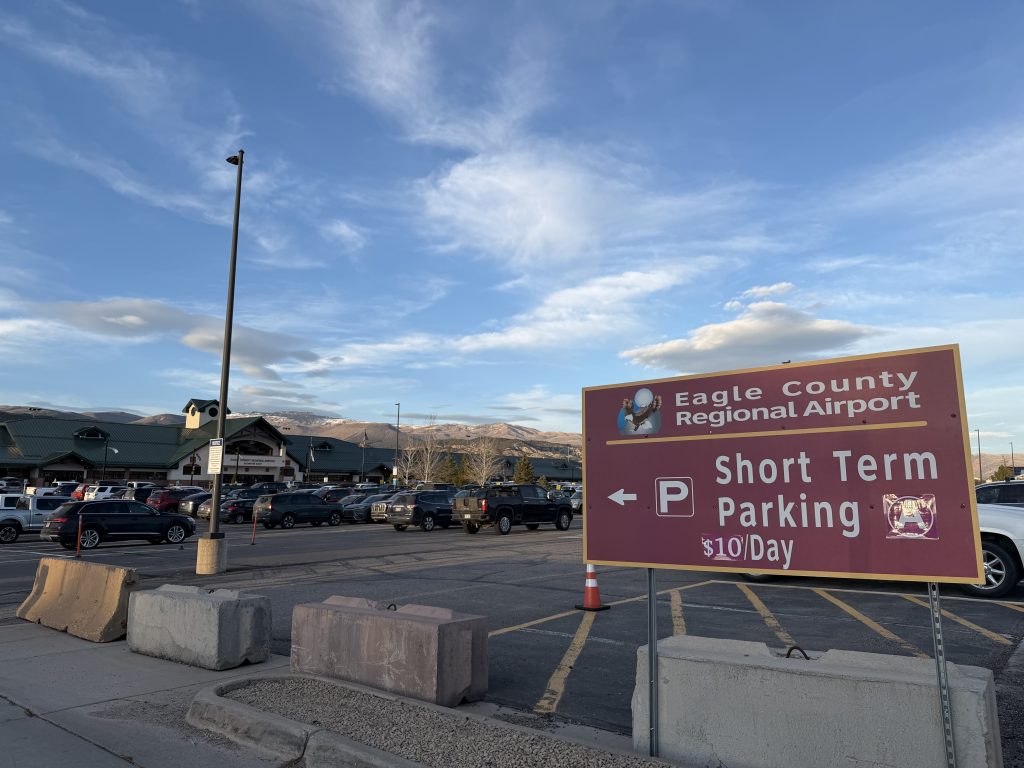
Eagle County Regional Airport says summer traffic is holding steady despite jet fuel prices nearly doubling during the Iran War and broader airline nervousness. United and American remain committed to the summer schedule, with EGE seeing stable or rising demand, including Chicago and Houston routes that averaged about 75% load factor and helped keep fares down roughly $50 per ticket year over year. Local lodging occupancy is pacing up 9.5% for summer versus last year, suggesting resilient travel demand despite geopolitical and fuel-cost headwinds.
The clean read-through is not “airlines weak,” but “capacity discipline is becoming more valuable than price leadership.” Higher jet fuel compresses the economics of ultra-low-cost carriers first because their fare mix has the least room to absorb input shocks; legacy carriers and airport-specific franchises with loyal origin-destination demand can pass through more of the cost. That creates a likely second-order shift toward larger network airlines and away from marginal leisure routes where pricing power is weakest.
The more important near-term catalyst is that fuel is hitting at the exact point when summer schedules are still flexible. That means the risk is less about immediate cancellation and more about deferred capacity growth, softer promotional activity, and reduced seat supply into late summer and early fall. If that persists for 1-2 quarters, unit revenue may look artificially supported even while demand is flat, which can mask a broader slowdown until earnings guidance resets.
The market may be underestimating the asymmetry between fuel beta and balance-sheet resilience. A carrier with weak ancillary revenue and high leverage can see equity value re-rate quickly if fuel stays elevated for 60-90 days, while stronger network carriers may actually gain share as consumers trade up for reliability and schedule certainty. The contrarian point is that a localized destination market holding up does not equal industry health; it can simply mean demand is being reallocated away from the weakest operators and toward incumbents with better network breadth and premium exposure.
AI-powered research, real-time alerts, and portfolio analytics for institutional investors.
Overall Sentiment
neutral
Sentiment Score
0.05
Ticker Sentiment
