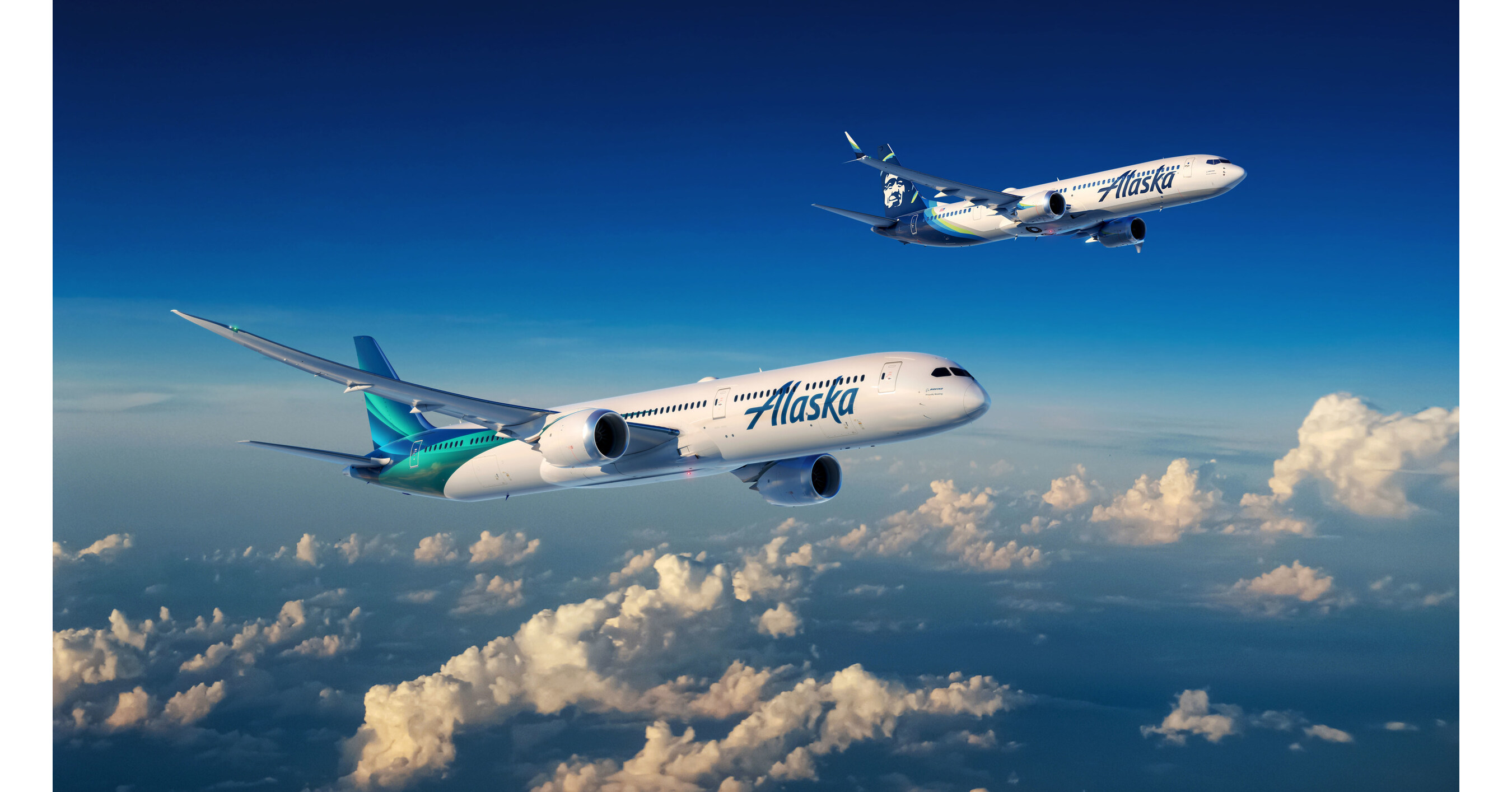
Alaska Airlines placed its largest-ever airplane order with Boeing for additional fuel-efficient 737-10 single-aisle jets and 787 Dreamliners to support domestic growth and international expansion; the airline currently operates 248 737s, has 174 737 MAX jets on order, and will have 12 787s on order (five already in service). Management says the aircraft will lower cost per seat, modernize the fleet and enable service to at least 12 international destinations, a development that should support Alaska's long‑term unit-cost profile and bolster Boeing's commercial backlog.
Market structure: Boeing (BA) is the clear direct beneficiary — the Alaska order expands Boeing’s commercial backlog and underwrites production visibility over the next 3–7 years, while Alaska (ALK) benefits from lower cost-per-seat on single-aisle routes and expanded long‑haul capacity (ALK now targeting ≥12 international destinations). Competitors on overlapping transpacific and West‑Coast routes (regional carriers and joint‑venture partners of DL/UA) face margin pressure as ALK ramps higher‑density 737‑10s; suppliers (composites, engines, interiors) also gain forward revenue. Cross-asset: expect modest positive pressure on BA equity and aerospace supplier credit spreads, slight uplift to jet‑fuel demand that can support oil prices (+0.5–1% medium term) and a short‑term compression in BA/ALK equity IV. Risk assessment: Tail risks include FAA/ETOPS certification delays for 737‑10/787 variants, a production mishap at Boeing, or a macro travel demand shock; any of these could wipe 15–30% off forward revenue expectations for affected delivery years. Timeline: immediate (days) = sentiment/IV moves; short (1–6 months) = guidance updates, investor days; long (1–4 years) = deliveries, route rollout and capex/lease funding effects. Hidden deps: ALK’s financing terms, Boeing supplier bottlenecks, and jet‑fuel price volatility; catalysts to watch: FAA announcements, Boeing monthly production rates, ALK investor day and 10‑K. Trade implications: Tactical: establish small, size‑controlled exposure — BA long for 6–12 months to capture backlog re‑rating, ALK long for 12–24 months to capture network upside; use options to cap downside. Relative trades: long ALK vs short a domestically focused low‑cost carrier to isolate international premium capture. Hedging: cap exposure if BA safety headlines or ALK net leverage (Net Debt/EBITDAR) >4.0x. Contrarian angles: Market may be underpricing execution risk — backlog headlines often front‑load sentiment while cash flows are backloaded over years; if deliveries slip 12–24 months, BA suppliers and ALK financing costs could reprice and create buying opportunities on >15% pullbacks. Historical parallel: large launch orders in 2010s that initially lifted OEMs but delivered earnings shocks when production problems surfaced; plan to add into confirmed FAA/production milestones rather than headline day.
AI-powered research, real-time alerts, and portfolio analytics for institutional investors.
Request DemoOverall Sentiment
moderately positive
Sentiment Score
0.45
Ticker Sentiment
