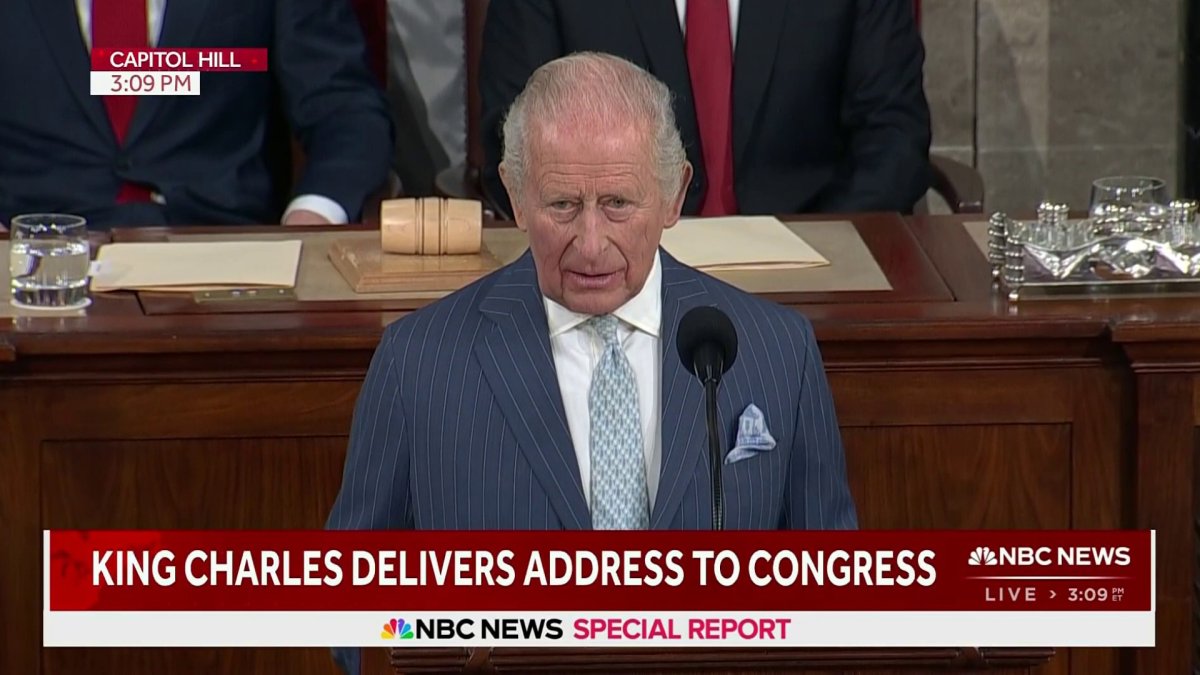
King Charles III is on a four-day U.S. state visit, meeting President Trump at the White House, addressing Congress, and attending a state banquet this evening. The trip includes stops in Virginia and New York City, but the article contains no direct market or economic policy developments. Overall impact on financial markets appears minimal.
This visit is less about diplomacy theater and more about signaling continuity in the U.S.-UK security architecture at a moment when markets are pricing a fragmented West. The incremental beneficiaries are not the obvious ceremonial names, but defense primes, intelligence-adjacent contractors, and industrials tied to transatlantic procurement, because high-visibility state events often precede quieter working-level commitments on munition replenishment, air defense interoperability, cyber, and Arctic/Atlantic surveillance.
The second-order effect is on expectations, not cash flow: any language around burden-sharing or joint industrial base resilience can steepen the probability of follow-on orders over the next 1-3 quarters, especially for firms exposed to NATO stockpile rebuilds and command-and-control upgrades. Conversely, if the visit is interpreted as largely symbolic, the trade will fade quickly; the market is likely to overprice headline risk for 1-2 sessions and then revert unless there is a concrete communiqué or procurement announcement.
The contrarian read is that the bigger opportunity may be in under-owned defense supply chain names rather than the obvious large-cap primes. If policymakers use the platform to emphasize domestic production and allied sourcing, niche manufacturers of energetics, precision components, and communications equipment can see disproportionate multiple expansion because their order books are smaller and more capacity-constrained.
Tail risk is geopolitical: if the rhetoric sharpens around Ukraine, trade, or election legitimacy, volatility can spill into defensives and the dollar while leaving aerospace/defense relative strength intact. The key catalyst window is the next 24-72 hours for headline-driven moves; the medium-term setup is 1-3 months if this visit is followed by concrete procurement or joint statements that translate into budget line items.
AI-powered research, real-time alerts, and portfolio analytics for institutional investors.
Request DemoOverall Sentiment
neutral
Sentiment Score
0.00
