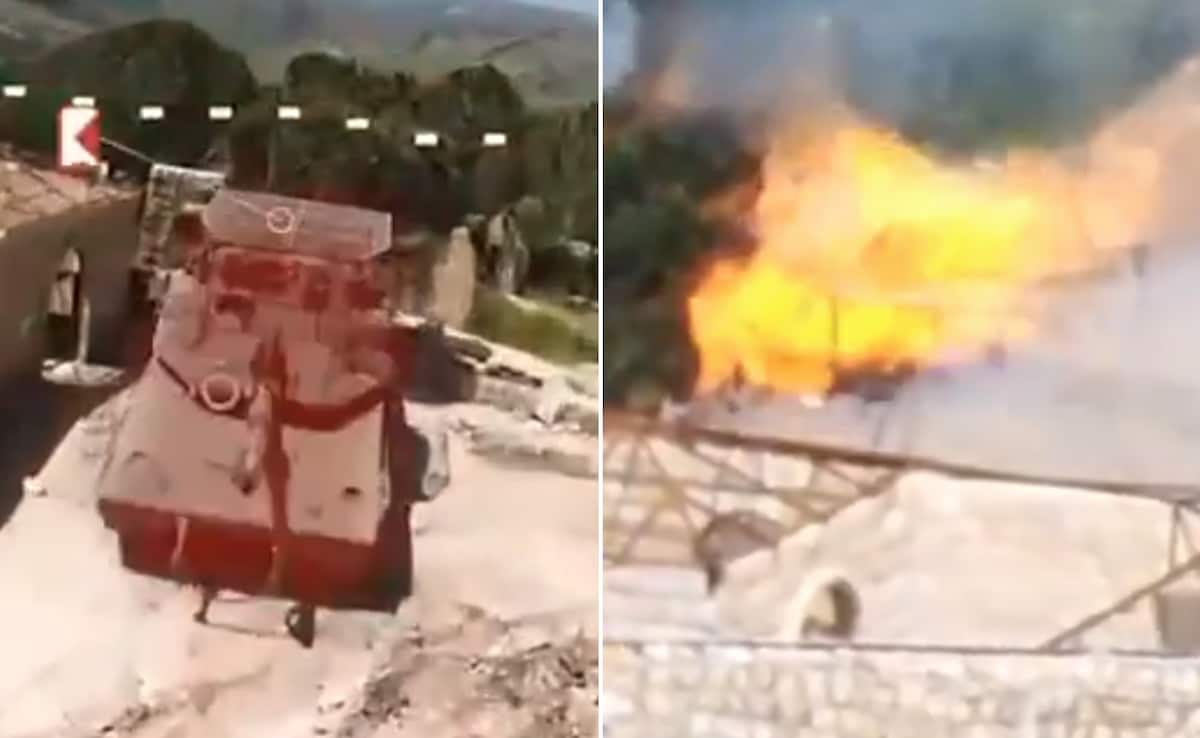
Hezbollah's fibre-optic drones are bypassing Israeli jamming systems and have already killed at least one Israeli soldier, with the IDF confirming 19-year-old Sergeant Idan Fooks was killed and several others wounded. The drones can reportedly operate over cables up to 15 kilometers long, making them difficult to detect or disrupt and forcing Israel to deploy nets and physical barriers instead. The development raises the operational threat level in southern Lebanon and northern Israel and highlights a tactical escalation in the conflict.
This is a classic forcing function for the counter-drone market: it validates that EW-centric defenses can be bypassed by a low-cost adaptation, which shifts procurement from software-led jamming toward layered physical interception, sensors, and point-defense. The immediate beneficiaries are the vendors that sell “last 200 meters” defenses rather than networked EW systems — especially those with deployable nets, cage systems, radar/EO fusion, and autonomous cueing. The second-order effect is that every infantry vehicle, forward operating base, and evacuation corridor in contested terrain now has a higher per-unit protection burden, which should extend the budget cycle for force protection capex.
The more important market implication is that this is not a niche tactical story; it widens the perceived survivability gap between cheap drones and expensive armored platforms. If a few-kilogram drone can defeat a multimillion-dollar vehicle or helicopter with simple adaptation, then armies will accelerate purchases of active protection, overhead cover, and short-range air defense, while delaying less tangible EW refreshes. That is bearish for pure-play electronic warfare names that depend on spectrum dominance assumptions, and bullish for integrated defense primes with diversified counter-UAS portfolios and manufacturing scale.
The risk horizon is weeks to months: adoption can spread quickly because the innovation is cheap, easy to copy, and hard to attribute until after impact. The main reversal catalyst would be a successful fielded countermeasure that restores stand-off by combining detection, kinetic interception, and doctrine changes; if that happens, the urgency premium fades. But absent that, the procurement response should persist into 2026 because the threat specifically exploits the gap between current doctrine and battlefield reality.
The contrarian angle is that the market may already be pricing “drone war” as a generic theme, but underpricing the distributional effect: not all defense suppliers benefit equally. The winners are likely to be companies selling interceptors, vehicle protection, and integrated base defense; the losers are vendors whose value proposition is primarily jamming, spectrum management, or software-only autonomy claims. This argues for a more discriminating basket rather than a broad defense beta trade.
AI-powered research, real-time alerts, and portfolio analytics for institutional investors.
Request DemoOverall Sentiment
strongly negative
Sentiment Score
-0.70
