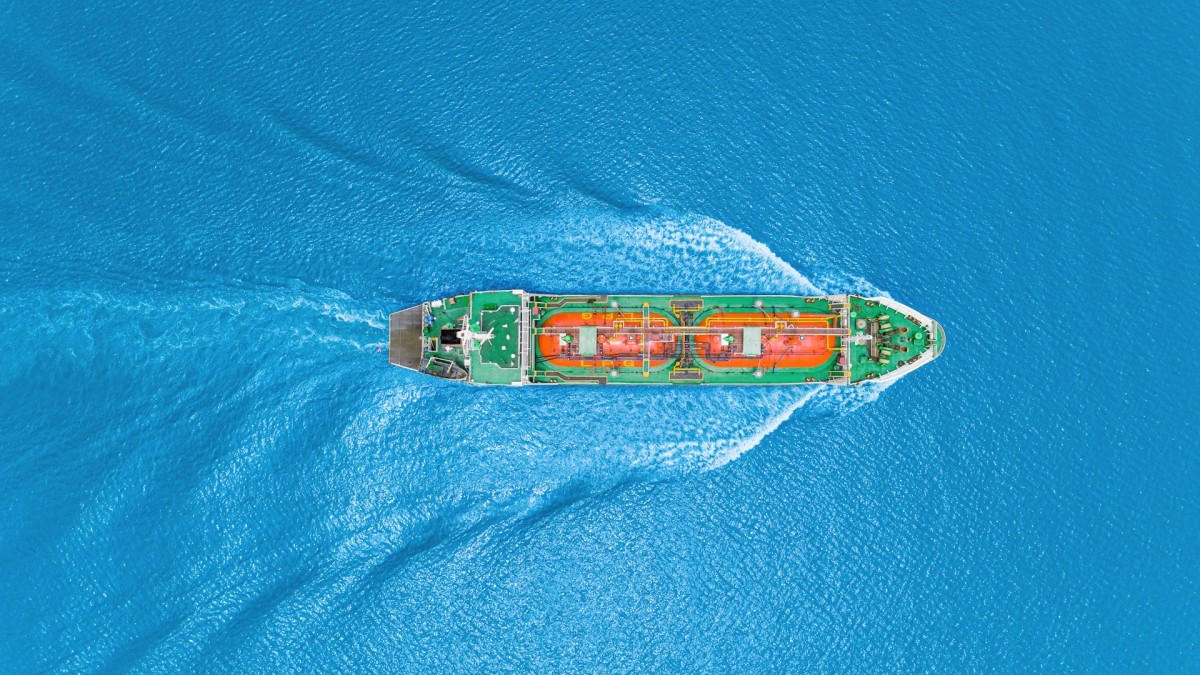
Two LNG carriers and one supertanker have traversed the Strait of Hormuz, with cargoes including Qatari gas and Iraqi Basrah crude en route to Pakistan, China, and China respectively. The article signals a partial easing in the de facto closure of the chokepoint, but hundreds of vessels remain stranded and more ships are reportedly moving through in dark mode to avoid detection. The developments are relevant for global energy flows and shipping risk, with at least 19 Gulf tankers having crossed since March 1 and around 100 still paralyzed in the strait.
The key market implication is not a clean “all-clear,” but a shift from binary chokepoint risk to a bifurcated logistics regime. Cargoes that can move are increasingly doing so via protected or opaque routing, which effectively raises the cost of compliance, insurance, and fleet coordination for everyone else; that cost pressure is most punitive for smaller regional shippers and spot-exposed carriers, while state-linked or vertically integrated exporters can internalize the friction. The result is a widening dispersion between “can move under stress” barrels and “stuck inventory” barrels, which should show up first in differentials and freight rates before it fully hits headline flat prices.
The second-order effect is on price formation: if the market sees a trickle of cargoes exiting while a large tail remains immobilized, prompt physical supply can loosen even as forward geopolitical risk premium persists. That tends to flatten nearby backwardation less than a normal de-escalation would, because traders will price a lower probability of immediate shortage but a non-trivial chance of renewed disruption. In other words, the move is likely more disinflationary for prompt Middle East crude and LNG differentials than for benchmark volatility; the right hedge is often volatility or regional spread exposure, not outright directional beta.
The underappreciated risk is that “managed transit” can become the new normal, which is operationally bullish for integrated national oil companies and their logistics partners, but bearish for independent charterers, insurers, and anyone relying on transparent AIS tracking. If the pattern persists for weeks, shipping behavior adapts, inventories outside the Gulf drain unevenly, and refiners in Asia may be forced to pay up for reliability rather than barrels. That creates a delayed squeeze in freight and insurance even if the physical supply shock never fully materializes.
Consensus likely overstates the immediate supply-loss thesis and understates the probability of a slow-burn logistics tax. The next catalyst is not necessarily another headline on naval activity; it is whether insurers, charterers, and refiners begin repricing route certainty into delivered-cost assumptions over the next 2-6 weeks. If that happens, the biggest winners are the players with captive fleets and low-cost balance sheets, while the losers are exposed shipping and midstream logistics names with no pricing power.
AI-powered research, real-time alerts, and portfolio analytics for institutional investors.
Request DemoOverall Sentiment
mildly negative
Sentiment Score
-0.15
