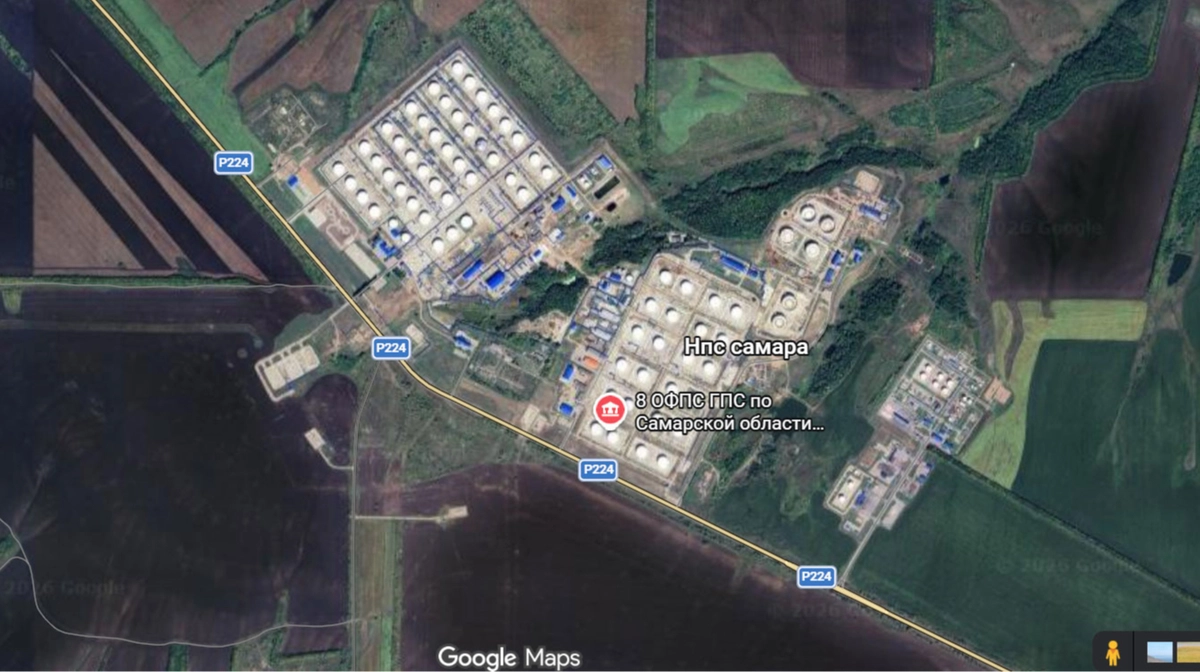
Ukrainian drones reportedly struck the Samara line production and dispatch station in Russia's Samara Oblast, damaging five 20,000-cubic-meter crude oil storage tanks and causing a fire. The facility is part of Transneft Druzhba and helps produce the Urals export blend, so the attack could disrupt Russia's export oil preparation and shipment capacity. The incident adds fresh risk to Russian energy infrastructure and may have modest implications for crude logistics and regional supply flows.
This is less about a single barrel disruption and more about the fragility of Russia’s export-quality crude assembly system. When the bottleneck is blending, not just pumping, the market impact can show up as a widening discount for Russian grades relative to benchmarks even if headline export volumes hold up for a few days. The first-order move is usually contained; the second-order risk is that traders demand a bigger reliability premium for Urals-linked cargoes, which can quietly erode realized pricing over weeks.
The market tends to underprice the optionality of repeated infrastructure hits because each incident increases the probability of precautionary rerouting, maintenance deferrals, and logistics bottlenecks. That matters most for European refiners that still rely on pipeline economics and for Asian buyers evaluating whether Russian supply is worth the operational and sanction-compliance hassle. If the station’s blending function is impaired, the discount pressure can persist longer than the physical outage, since restoring confidence takes longer than restoring throughput.
The bigger medium-term consequence is that Russia may respond by hardening defenses around energy infrastructure and pushing more crude into less efficient export channels, raising transport costs and lowering netbacks. That is mildly bullish for non-Russian crude differentials and for shipping complexity, but the move is not an immediate global supply shock unless attacks broaden to multiple nodes. The contrarian view is that this can be a fade if repairs are quick and if there is no follow-through on adjacent facilities; in that case, the market may be overpaying for a one-off headline risk rather than a durable supply impairment.
AI-powered research, real-time alerts, and portfolio analytics for institutional investors.
Request DemoOverall Sentiment
mildly negative
Sentiment Score
-0.35
