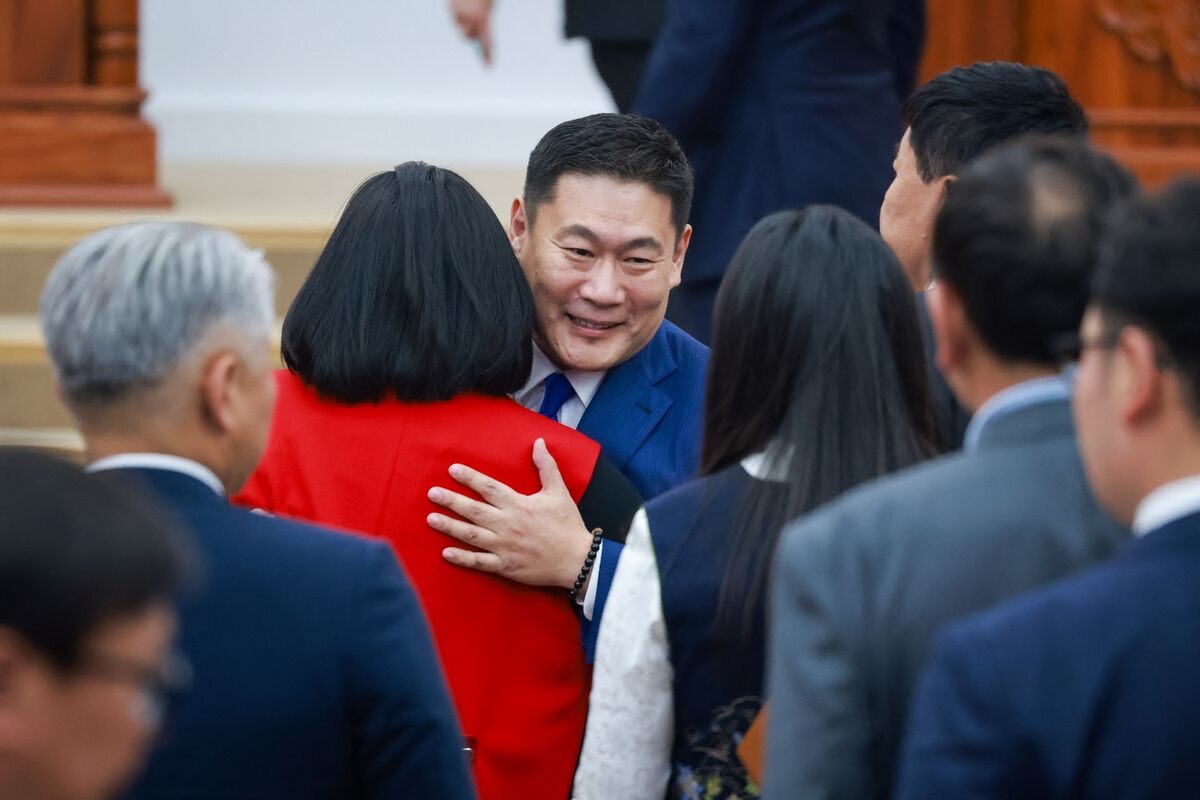
Mongolia's ruling party will form a new government after Prime Minister Oyun-Erdene Luvsannamsrai was ousted in a no-confidence vote, supported by only 44 of the required 64 lawmakers. This political shift introduces uncertainty for Mongolia's economy, which is already facing challenges due to weakening demand from China for its raw materials.
The ousting of Mongolian Prime Minister Oyun-Erdene Luvsannamsrai, following a no-confidence vote where he secured only 44 of the required 64 lawmaker votes, introduces significant political instability. Although the Mongolian People’s Party, to which he belongs, will form the new government, this leadership transition occurs as the nation's economy faces considerable strain from decelerating Chinese demand for its raw materials. This political development exacerbates existing economic uncertainties, reflected in a moderately negative sentiment and an uncertain market tone. The situation highlights the vulnerability of Mongolia's commodity-dependent economy to both internal political shifts and external demand shocks, particularly from China.
AI-powered research, real-time alerts, and portfolio analytics for institutional investors.
Request DemoOverall Sentiment
moderately negative
Sentiment Score
-0.60
