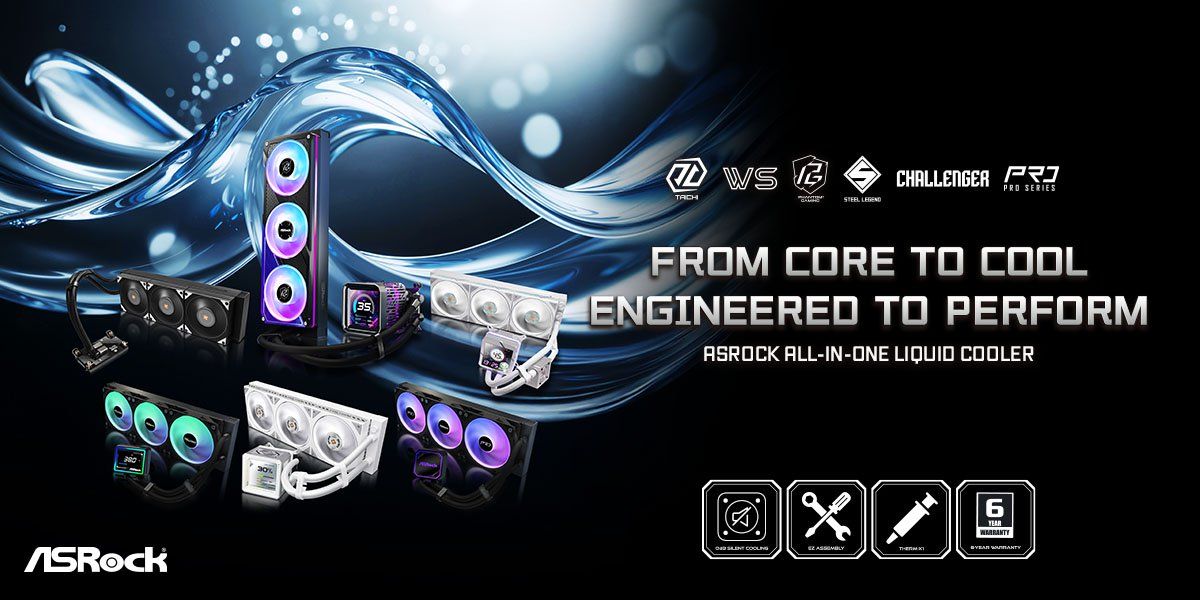
ASRock is entering the all-in-one (AIO) liquid cooler market at CES 2026 with a range spanning Taichi, Phantom Gaming, Steel Legend, Challenger, Pro and workstation models, including high-end units with large LCDs and an intriguing 'pumpless' design alongside conventional pump architectures. The move represents a strategic product-line expansion that increases competition in the AIO cooling segment and could affect OEM/ODM supplier dynamics, though details on licensing versus in-house designs and financial implications remain unspecified; the products will be shown January 6–9 in Las Vegas.
Market structure: ASRock’s entry into AIO liquid coolers increases competitive pressure in a concentrated premium segment dominated by a few OEMs and pump-IP holders. Winners: motherboard/mini‑PC ecosystem partners (benefit from bundled SKUs) and consumer‑facing peripheral brands that can cross‑sell; losers: pure‑play pump/IP licensors and high‑end AIO incumbents if price compression >5–10% within 12 months. Cross‑asset: modest negative for specialty component suppliers (small downward pressure on small-cap supplier credit spreads) and negligible macro FX/commodity impact given low raw‑material intensity.
Risks: tail risks include patent litigation from pump-IP holders (Asetek-like) or a failed “pumpless” reliability rollout causing large recalls; both can move shares ±20–40% for exposed small caps within weeks. Time horizons split: immediate (CES buzz, days–weeks), short (product reviews and channel listings, 1–3 months), long (market share migration and pricing, 6–24 months). Hidden dependency: OEMs’ choice to license vs in‑house manufacture will decide royalty flows and margin trajectories.
Trade implications: tactical long in consumer peripheral/gaming stocks that can absorb SKU cannibalization (e.g., CRSR) and selective long on AMD (benefit from higher enthusiast spend) versus avoiding/shorting pump‑IP pure plays if tradeable. Use event windows: enter 0–7 days before CES to capture reveal, trim on first professional reviews (7–21 days), and reassess after 90 days of channel inventory signals. Options: prefer directional calls on winners sized small (0.5–1% notional) and buy protection on short exposures.
Contrarian angles: market may underprice IP risk — a single successful pumpless design could render legacy pump royalties structurally impaired (30–50% margin erosion for licensors over two years). Conversely, the pumpless claim could be marketing noise; if independent reviews show <5% performance gain, incumbents’ premium pricing survives. Watch early channel sell‑through and professional thermal benchmarks for decisive signals.
AI-powered research, real-time alerts, and portfolio analytics for institutional investors.
Request DemoOverall Sentiment
mildly positive
Sentiment Score
0.28
Ticker Sentiment
