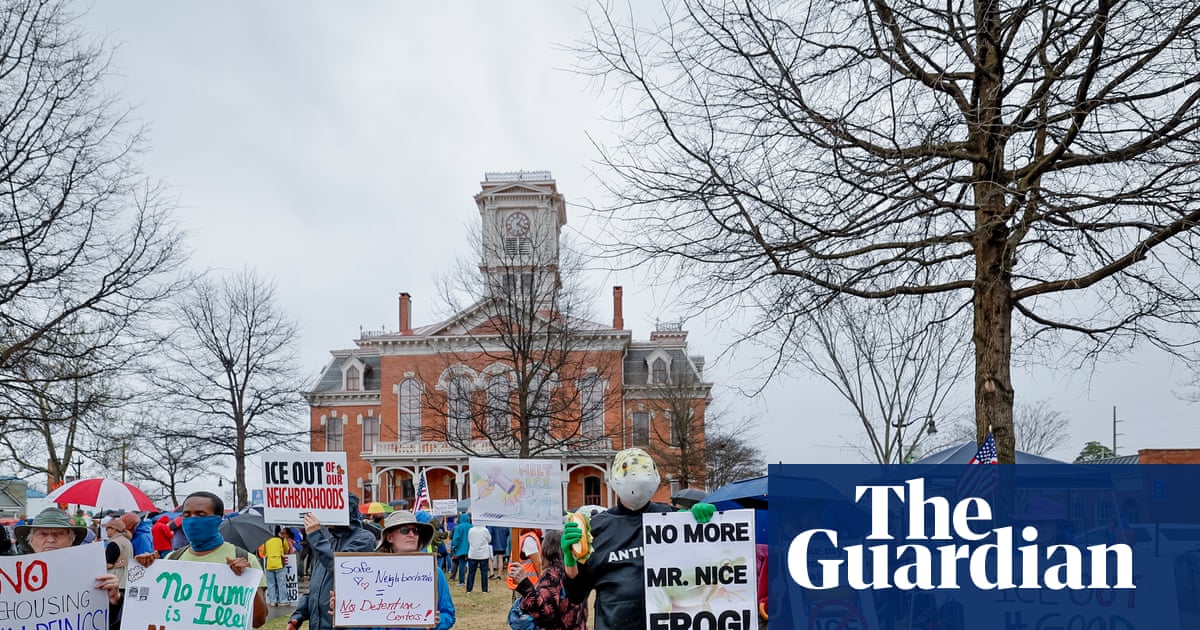
The Department of Homeland Security has cancelled plans for a Social Circle, Georgia warehouse detention center that would have housed up to 10,000 people and cost $128 million, nearly 5x the site’s $29 million assessed value. The reversal follows local resistance, a water shutoff, engagement from federal lawmakers, and a lawsuit by the town. The property’s next use remains unclear, including whether DHS will transfer or sell it.
The immediate signal is not about a single warehouse but about a policy regime losing operational coherence. When a federal buyer pays a steep premium for an asset and then reverses course within months, it implies procurement, siting, and local-asset control are being repriced as political rather than economic decisions. That tends to favor local governments and incumbent private owners with optionality on land use, while creating a discount on any federal real-estate footprint that depends on discretionary agency execution.
Second-order, this is bearish for the broader detention-capacity trade because the bottleneck is no longer just money; it is local opposition, litigation, and utility access. Even if funding remains intact, the time-to-capacity expands materially as every site now carries a higher probability of legal delay, bond-like carrying costs, and stranded acquisition risk. That should widen the gap between headline authorization and actual deployable beds, which is the metric that matters for contractors and REIT-like warehouse intermediaries.
The contrarian point is that cancellations may ultimately improve the economics for the next wave of purchases if the administration shifts from one-off conversions to more disciplined, lower-profile placements. In that scenario, the worst assets are the politically salient, oversized rural facilities; the better ones are smaller brownfield conversions near existing federal logistics corridors. So the near-term read is negative for execution, but not necessarily for long-run detention demand—just for the capex efficiency of how it gets delivered.
From a market perspective, the clearest reaction is in the legal-services and municipal-services ecosystem rather than traditional listed equities. The relevant trade is to expect more spending on litigation, zoning defense, water/sewer infrastructure, and local emergency response where federal projects are contested. The risk is that the issue remains a headline-only political fight unless it starts blocking multiple sites for months, which would convert this from a reputational problem into a budget reallocation problem.
AI-powered research, real-time alerts, and portfolio analytics for institutional investors.
Request DemoOverall Sentiment
neutral
Sentiment Score
0.10
