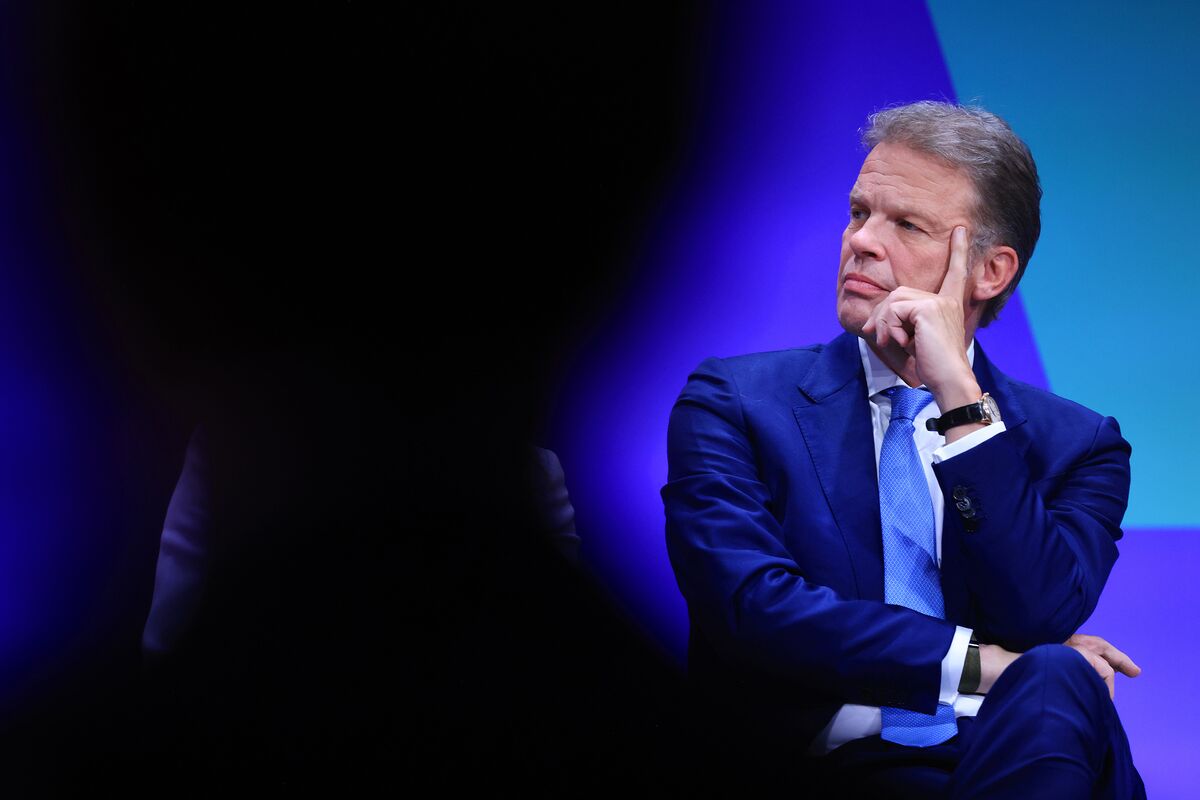
Deutsche Bank CEO Christian Sewing expects bond yields to remain elevated for months, asserting the recent selloff is not a mere 'flare-up' but a reflection of political uncertainty, lack of reforms, and rising government indebtedness. This outlook from a major financial institution CEO signals a potentially sustained higher interest rate environment, driven by structural fiscal and governance challenges.
Deutsche Bank CEO Christian Sewing has signaled a pessimistic outlook for the sovereign bond market, asserting that the recent selloff and corresponding rise in yields are not a temporary 'flare-up' but a structural shift. He attributes this to persistent fundamental weaknesses, including widespread political uncertainty, a lack of substantive government reforms, and continuously rising sovereign indebtedness. This perspective from the head of a major global financial institution suggests that elevated interest rates are likely to be a sustained feature for the 'coming months.' The negative sentiment reflects a broader concern about deteriorating fiscal discipline globally, implying that higher borrowing costs for governments and corporations could weigh on economic activity and asset valuations. Notably, while the macro commentary is decidedly cautious, the sentiment specific to Deutsche Bank (DB) remains neutral, indicating these remarks are a market-wide assessment rather than a reflection on the firm's specific condition.
AI-powered research, real-time alerts, and portfolio analytics for institutional investors.
Request DemoOverall Sentiment
moderately negative
Sentiment Score
-0.50
Ticker Sentiment
