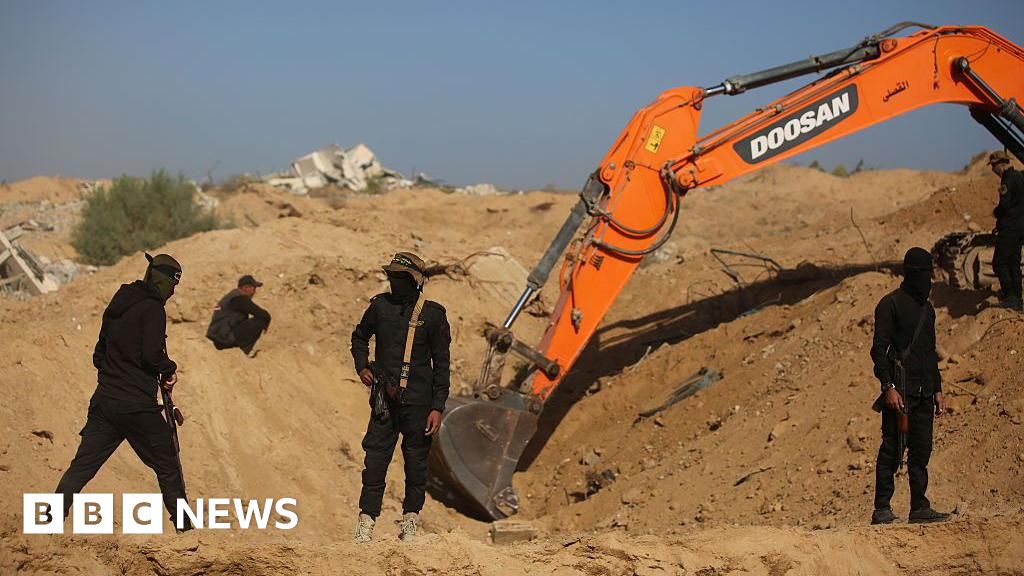
The ICRC has received a coffin from Palestinian Islamic Jihad and Hamas that they say contains one of the last three deceased hostages still in Gaza; remains will be transferred to Israel’s National Institute of Forensic Medicine for identification. Under the US-brokered ceasefire of 10 October, Hamas agreed to return 20 living hostages and 28 dead within 72 hours; 22 Israeli and three foreign dead have been handed over so far while Israel has transferred 330 Palestinian bodies. The slow recovery of remains — including two named Israelis (Ran Gvili, Dror Or) and one Thai (Suthisak Rintalak) — has delayed progress on the second phase of the Gaza plan covering governance, Israeli withdrawal, disarmament and reconstruction; the conflict has produced large casualty figures and continued operational uncertainty in the region.
Market structure: Immediate winners are defense contractors (US and Israeli primes) and upstream oil/services firms; losers are travel & leisure, regional airlines and tourism-exposed EMs. Pricing power shifts to firms tied to sustained defense procurement and to energy producers if shipping or Strait-of-Hormuz risk rises; commercial insurers/reinsurers can raise premiums, tightening supply of affordable coverage for shipping and construction in the region.
Risk assessment: Tail risks include Iran or Lebanon opening a second front (low-probability, high-impact) that could push Brent >$120 and knock equity markets down 15–25% within weeks; medium-term (0–6 months) scenarios include protracted ceasefire delays entrenching defense demand and reconstruction cycles lasting years. Hidden dependencies: US political calendar and aid/authorization votes could accelerate or starve defense/outlay flows; supply-chain impacts on energy and heavy equipment depend on route closures and insurance rates rather than direct asset availability.
Trade implications: Expect short-term (days–weeks) risk-off flows into USD, JPY and 10y Treasuries (TLT), and safe-haven gold (GLD); medium-term (1–12 months) overweight defense (LMT, NOC, RTX, ESLT) and select oil services (SLB, HAL) while underweight/short airlines/cruise (AAL, UAL, CCL). Use options to control drawdowns: buy 3-month call spreads on LMT/NOC and 1–2 month put spreads on AAL/CCL; size positions 1–3% of portfolio and trim on >20% rally or if ceasefire becomes durable.
Contrarian angles: Consensus risk-off could be overdone if hostages return and diplomatic momentum resumes — defense and oil rallies may mean-revert over 3–6 months. Historical parallels (1991, 2003) show oil spikes compress over quarters once logistics reopen; consider relative-value pairs (long LMT, short small-cap industrials) to capture defense re-rating while hedging macro reversion risk.
AI-powered research, real-time alerts, and portfolio analytics for institutional investors.
Request DemoOverall Sentiment
moderately negative
Sentiment Score
-0.45
