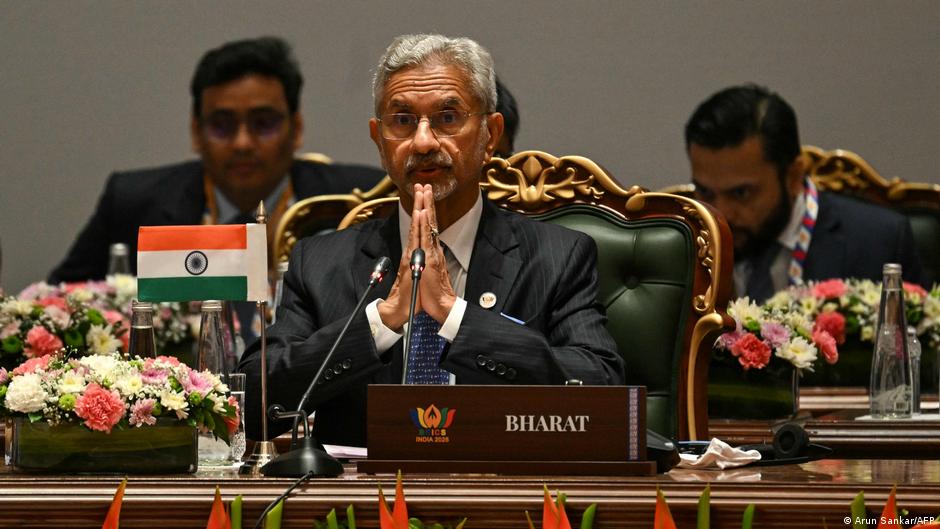
BRICS foreign ministers met amid escalating Iran war tensions, with India urging safe maritime flows through the Strait of Hormuz and discussions centered on energy security, local-currency trade, and sanctions. The conflict has disrupted global supplies of oil, gas, and raw materials, while internal BRICS divisions and Iran-UAE disputes complicate any unified response. The geopolitical risk to energy markets and shipping routes is significant and could drive broader risk-off moves.
The market should treat this less as a headline geopolitical event and more as a widening probability distribution around energy logistics. The first-order move is higher implied volatility in crude and tanker routes, but the second-order effect is a renewed premium for supply chains with low Middle East transit dependence: US shale, North Sea-linked refiners, and non-Gulf freight corridors. The real risk is not a permanent embargo; it is intermittent disruption that forces buyers to pre-hedge inventories, which can lift prompt barrels disproportionately versus deferred contracts and steepen backwardation.
Currency and policy spillovers may matter more than spot oil after the initial shock. India and other import-sensitive EMs face a harsher mix of weaker terms of trade, wider current accounts, and pressure to use local-currency settlement, which can be modestly supportive for USD and negative for high-beta EM FX and sovereign credit. If shipping insurance and rerouting costs persist for weeks, the inflation impulse will show up in freight, petrochemicals, and power generation before headline CPI fully catches up, pressuring rate-sensitive sectors even if crude retraces.
The consensus is probably underpricing how difficult it is for BRICS to issue a coordinated message when members have directly opposed strategic alignments. That fragmentation reduces the odds of any meaningful diplomatic de-escalation channel emerging from this forum, which keeps tail risk elevated over the next 1-3 months. However, if there is no sustained physical interruption in Hormuz, energy prices could mean-revert faster than positioning suggests; this is a volatility trade, not a clean directional macro bet.
AI-powered research, real-time alerts, and portfolio analytics for institutional investors.
Overall Sentiment
strongly negative
Sentiment Score
-0.55
