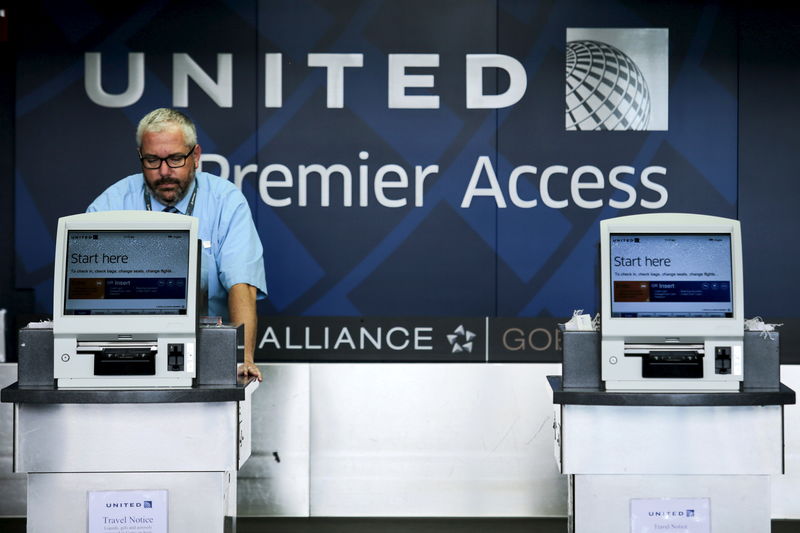
Jefferies cut its price target on United Airlines to $112 from $118 while keeping a Buy rating, implying about 20% upside from the current $93 share price. The firm expects Q2 EPS of $1.90, 2026 EPS of $9.55, and 2027 EPS of $12, supported by schedule reductions, booked yields up more than 20% year over year, and improving fuel-fare recovery. Recent Q1 2026 results beat estimates at $1.19 EPS on $14.6 billion revenue, but investor concerns remain focused on fuel costs and the terminated merger discussions with American Airlines.
UAL is being treated less like a cyclical airline and more like a margin-duration story: the market is discounting the possibility that capacity discipline, loyalty monetization, and premium revenue mix can hold even if broad travel demand softens. The key second-order effect is that pulling schedules is not just a supply move — it can improve unit revenue across the industry if competitors don’t immediately fill the gap, which would indirectly support the entire domestic network carrier complex. But if peers add capacity into the vacated lanes, UAL’s pricing benefit gets competed away quickly and the stock reverts to a fuel-beta name.
The bigger setup is that consensus appears anchored to near-term earnings beats while underweighting how sensitive 2026–27 estimates are to fuel and fare recovery assumptions. That creates a fragile equity story: if fuel stays elevated for another quarter or two, the market can tolerate it; if yields roll over before the cost base resets, the multiple can compress faster than EPS grows. In that scenario, the lowest-quality beneficiaries will be the carriers with less loyalty-driven revenue and less flexibility to trim capacity.
A nuance the market may be missing is that the ending of merger optionality reduces strategic support for UAL while increasing relative pressure on AAL, which loses the latent “takeout floor” narrative. For UAL, the upside case is still intact if management can convert schedule discipline into durable pricing power, but the stock likely needs evidence over the next 1–2 quarters, not just optimistic 2027 math. The trade is therefore less about owning a cheap airline outright and more about expressing conviction in relative operating discipline versus peers.
AI-powered research, real-time alerts, and portfolio analytics for institutional investors.
Request DemoOverall Sentiment
neutral
Sentiment Score
0.15
Ticker Sentiment
