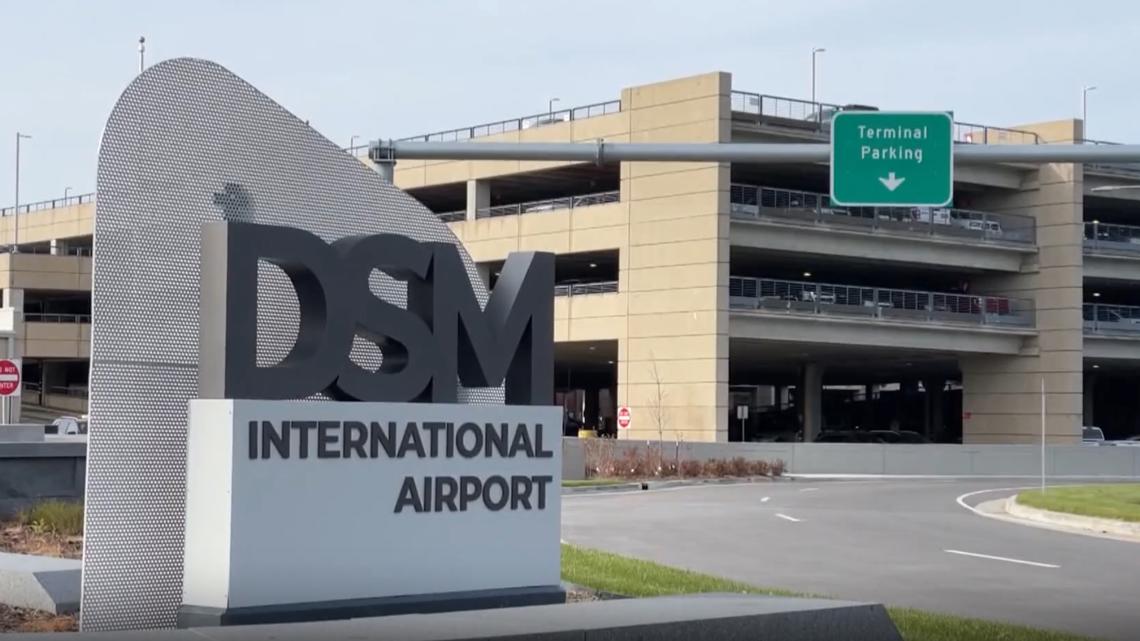
A Delta Connection CRJ-900 (flight 5087 operated by Endeavor Air) slid off the paved surface at Des Moines International Airport around 9:30 p.m. after landing from Detroit due to icy conditions; all 54 passengers and four crew were uninjured and were transported by bus to the terminal. The aircraft remains on the pavement pending a National Transportation Safety Board investigation, DSM was closed with at least two inbound flights rerouted, and the event is expected to cause localized operational disruptions and modest incremental costs to Delta but is unlikely to have material market impact.
Market Structure — Direct losers are Delta Air Lines (DAL) and its regional operator Endeavor Air (operational reputational hit); immediate passenger disruption is localized to DSM with likely <1–3% intraday share reaction for DAL and negligible industry demand destruction. Winners are nearby carriers or airports that absorb diversions (OMA, MCI) and insurers/ground-handling firms that may see short-term claims/service demand. Long-term pricing power for network carriers is largely intact absent systemic safety findings.
Competitive Dynamics & Supply/Demand — This incident marginally reduces short‑term Midwest capacity (hours to days) and can lift near-term point-to-point fares on diverted itineraries by low-single-digit % regionally; repeated winter incidents would have larger RASM implications. Options/volatility: expect DAL IV to spike +10–25% intraday, terming down in 1–2 weeks unless regulatory noise persists; airline credit spreads could widen a few basis points if incident triggers broader scrutiny. FX/commodities impact is immaterial.
Risk Assessment — Tail risks: NTSB finding of procedural failures could trigger FAA bulletins/fines or mandated de‑icing procedures raising winter operating costs ~1–3% (margin pressure) within 30–90 days. Hidden dependencies include regional partner SOPs, insurance coverage limits, and winter storm frequency; a cascade of similar incidents across hubs would be the primary market-moving scenario. Catalysts: NTSB report (30–90d), FAA advisory (14–60d), near‑term winter storms (0–30d).
Trading Implications & Timing — Tactical moves should be event-driven and size-limited: expect a 1–2 week horizon for IV reversion and a 1–3 month horizon for any regulatory cost realization. Use option structures to limit downside while leaving room to buy on overreaction: act if DAL moves >3–5% or if DAL 30d IV rises >15% vs 60d. Rotate 1–2% risk away from highly hubbed carriers into point-to-point resilient names if winter storm probability in Midwest exceeds 40% over next 14 days.
AI-powered research, real-time alerts, and portfolio analytics for institutional investors.
Request DemoOverall Sentiment
neutral
Sentiment Score
-0.15
Ticker Sentiment
