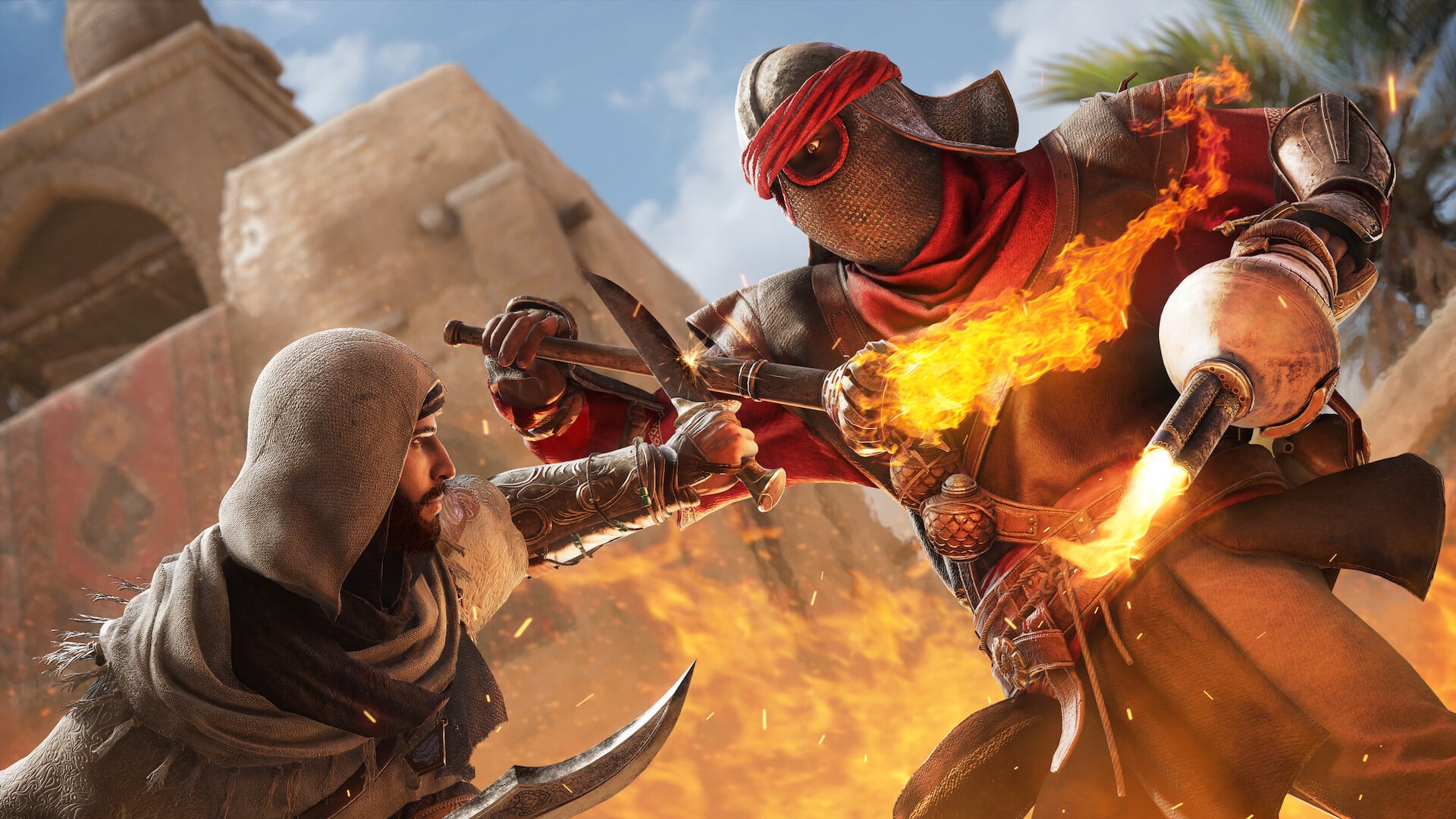
Ubisoft said the leaked Assassin’s Creed multiplayer screenshot was “heavily altered,” while confirming the project remains in development and that more details will be shared later. Assassin’s Creed Invictus is being developed at Ubisoft Montreal, and management reiterated it is taking a test-and-learn approach with player feedback. The news is largely a reputational clarification rather than a material product or financial update.
This is less about a single game leak and more about Ubisoft trying to preempt narrative drift around a franchise extension that clearly matters to the company’s longer-dated monetization mix. The key signal is the company’s willingness to publicly correct a community post, which suggests management is unusually sensitive to perception risk around quality, art direction, and AI authenticity. That matters because for live-service or multiplayer launches, first impressions can compress or extend adoption curves by quarters, not weeks.
The second-order effect is on Ubisoft’s optionality, not current earnings: if the project is genuinely test-and-learn, it implies management is still searching for a scalable multiplayer format rather than executing a locked production template. That raises execution risk but also reduces blow-up risk versus a fully committed budget. The market should treat this as a governance/credibility signal rather than a fundamental catalyst today; the real P&L sensitivity will show up only when marketing ramps and preorders become visible.
The AI angle is more important than the screenshot itself. Once a franchise acknowledges “heavily altered” assets, it invites scrutiny over how much generative tooling is used in dev pipelines, which can become a reputational issue if fans interpret it as quality dilution. At the same time, this is a reminder that AI increases both speed and misinformation risk, so publishers with stronger community management and verification discipline may gain share of trust over the next 12-24 months.
Contrarian view: the crowd may be overestimating near-term downside from the leak because the company’s response effectively neutralized the story before it became a prelaunch narrative. The larger risk is not the screenshot; it is whether Ubisoft can convert franchise breadth into a credible multiplayer product without cannibalizing premium brand equity. If that fails, the stock likely de-rates on multiple compression long before unit economics are visible.
AI-powered research, real-time alerts, and portfolio analytics for institutional investors.
Request DemoOverall Sentiment
neutral
Sentiment Score
0.05
