
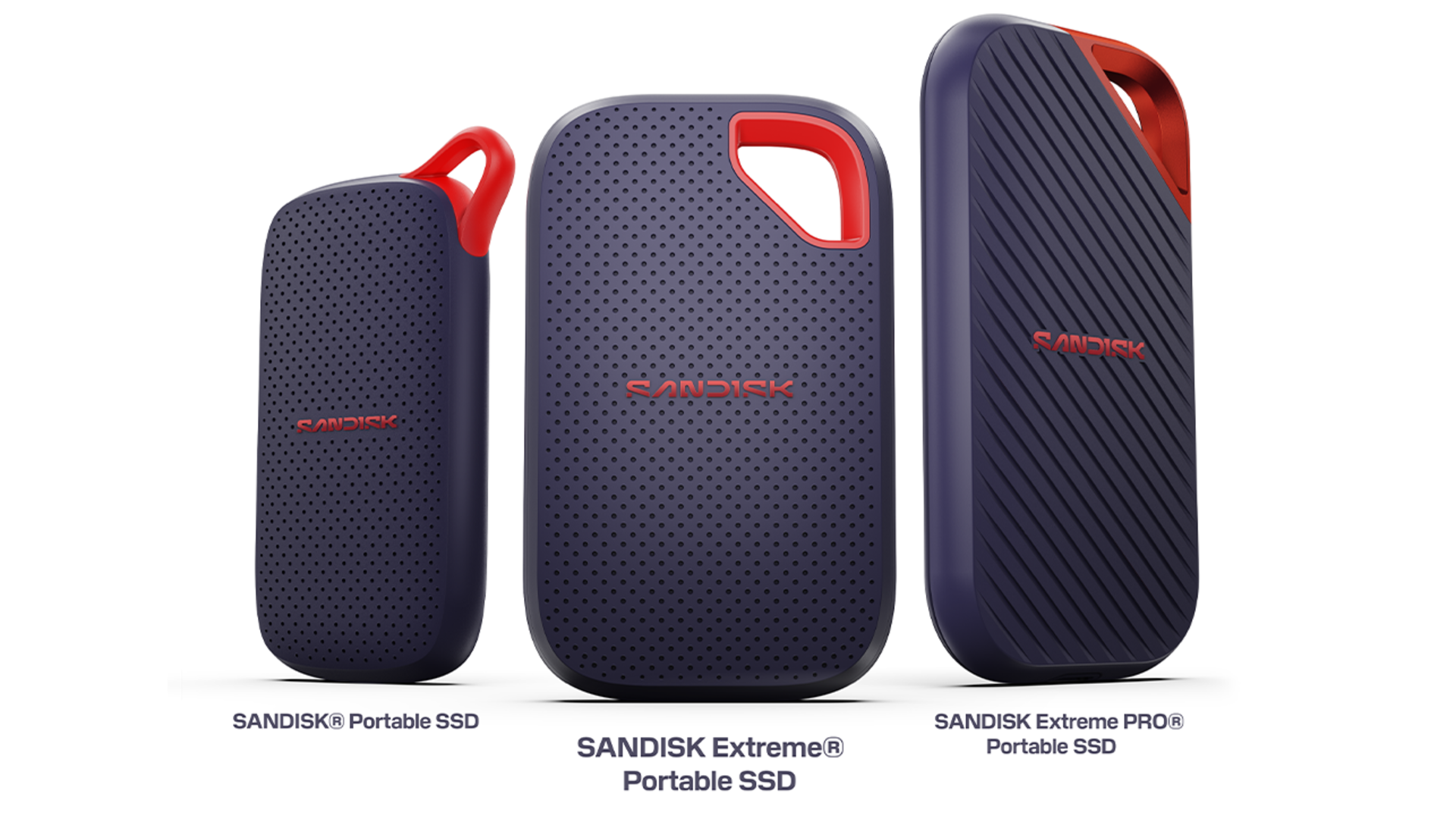
SanDisk launched a three-tier portable SSD lineup: Sandisk Portable SSD (up to 1,000 MB/s), Sandisk Extreme Portable SSD (up to 2,000 MB/s, IP65, 3m drop resistance) and Sandisk Extreme Pro Portable SSD (up to 4,000 MB/s) with 256-bit AES hardware encryption on the higher tiers. The products target photographers, video editors and general consumers by addressing larger file sizes and AI-generated content with higher throughput, durability and security; commercially this is a feature-driven competitive product refresh with modest near-term revenue implications but potential to preserve market share in high-performance portable storage.
Market structure: The launch favors flash-centric suppliers and controller/IP owners — think Western Digital (Sandisk assets, ticker WDC / legacy SNDK), Micron (MU), Marvell (MRVL) — while accelerating secular downside for HDD specialists like Seagate (STX). Top-tier Pro SKUs (4,000MB/s) support ASP premium in the high-end segment but broad mid-market SSD commoditization keeps pricing pressure; expect meaningful share shifts over 12–24 months rather than immediate disruption.
Risk assessment: Tail risks include a NAND oversupply cycle (spot price decline >20%), China export controls on storage components, or sudden warranty/recall issues from higher-speed thermal failures; any of these could invert the trade quickly. Timeline: immediate PR-driven bounce (days), measurable sell-through and retailer inventory moves (weeks–months), profit-cycle and margin impact crystallize over 2–4 quarters. Key hidden dependencies are controller supply, wafer fab utilization and retail channel inventories.
Trade implications: Direct plays: overweight WDC/WDC-SNDK legacy exposure and MU for NAND, underweight STX. Use 3-month call spreads on MU or WDC to express upside with defined risk and a 2–3% portfolio weight in equities or 0.5–1% in option premium. Rotate 2–4% from HDDs into SMH/XLK or select NAND names; enter on <10% pullbacks and reassess after two earnings cycles or if NAND spot falls >15%.
Contrarian angles: Consensus may overvalue product launches as durable margin drivers — historically SSD cycles see 20–40% YoY ASP deflation during oversupply, which could push down valuations despite feature upgrades. If NAND spot prices fall >15% in 60 days, flip bias to neutral/short memory suppliers; conversely, a sustained spot recovery + inventory drawdown over 3 months would validate sustained upside beyond the PR lift.
AI-powered research, real-time alerts, and portfolio analytics for institutional investors.
Request TrialOverall Sentiment
mildly positive
Sentiment Score
0.35
Ticker Sentiment
