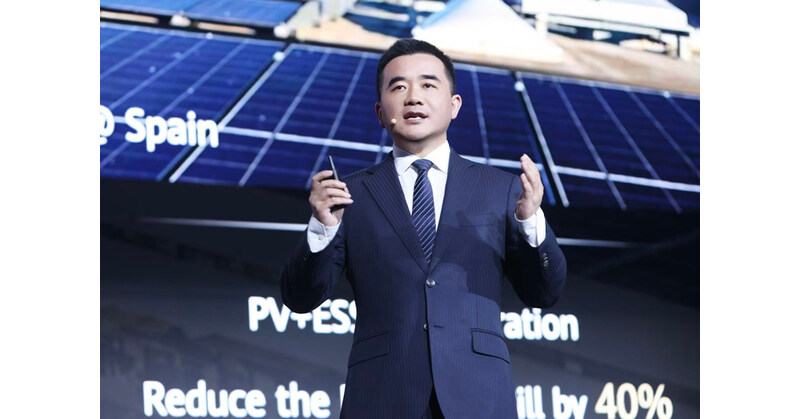
Huawei Digital Power, Münih’teki The Smarter E 2026’da Avrupa’da PV + BESS entegrasyonuyla şebeke istikrarını artırmayı hedefleyen “şebeke oluşturma” odaklı entegre çözümler stratejisini tanıttı. Sunulan örneklerde Almanya’daki AHS iş parkında gelir %10 artarken, İspanya’da bir Carrefour süpermarketinin elektrik faturası yaklaşık %40 azaldı ve yatırım geri ödeme süresi 5 yıl olarak verildi. Haberin odağı ürün/teknoloji yeniliği olduğundan piyasalara muhtemel etkisi sınırlı (sektör/demonstrasyon bazlı) görünüyor.
This is less about Huawei itself and more about a signal that grid-forming capability is moving from engineering novelty to procurement requirement. That shifts value away from standalone PV hardware and toward vertically integrated storage platforms, grid software, and EPCs that can monetize ancillary services, black-start, and frequency support rather than only kWh arbitrage. In Europe, the first-order winners are likely utility-scale BESS integrators and grid equipment vendors with credible power-electronics depth; the second-order losers are pure solar developers and merchant batteries whose economics weaken if grid services become the real margin pool.
The near-term catalyst is policy, not technology. If European grid codes increasingly require grid-forming validation, procurement standards could force project repricing over the next 1-3 quarters, but the earnings impact will lag until contract wins flow through backlog. The bigger 6-18 month effect is margin compression in commoditized inverter/PV channels as more value accrues to software, controls, and warranty-backed performance guarantees.
The contrarian view is that the market may be overestimating how quickly these capabilities translate into revenue. Utility buyers move slowly, certification is fragmented by country, and many projects will still clear on capex per MW before ancillary-service sophistication matters. If ancillary service prices fall or interconnection queues stay the bottleneck, this remains a narrative trade rather than a durable demand inflection.
Watch for evidence that European grid-forming requirements show up in tender documents and backlog mix, not just conference-stage demos. The thesis is falsified if BESS contract margins fail to expand over the next two reporting cycles or if utility-scale storage bookings decelerate despite supportive policy rhetoric.
AI-powered research, real-time alerts, and portfolio analytics for institutional investors.
Request TrialOverall Sentiment
mildly positive
Sentiment Score
0.25
