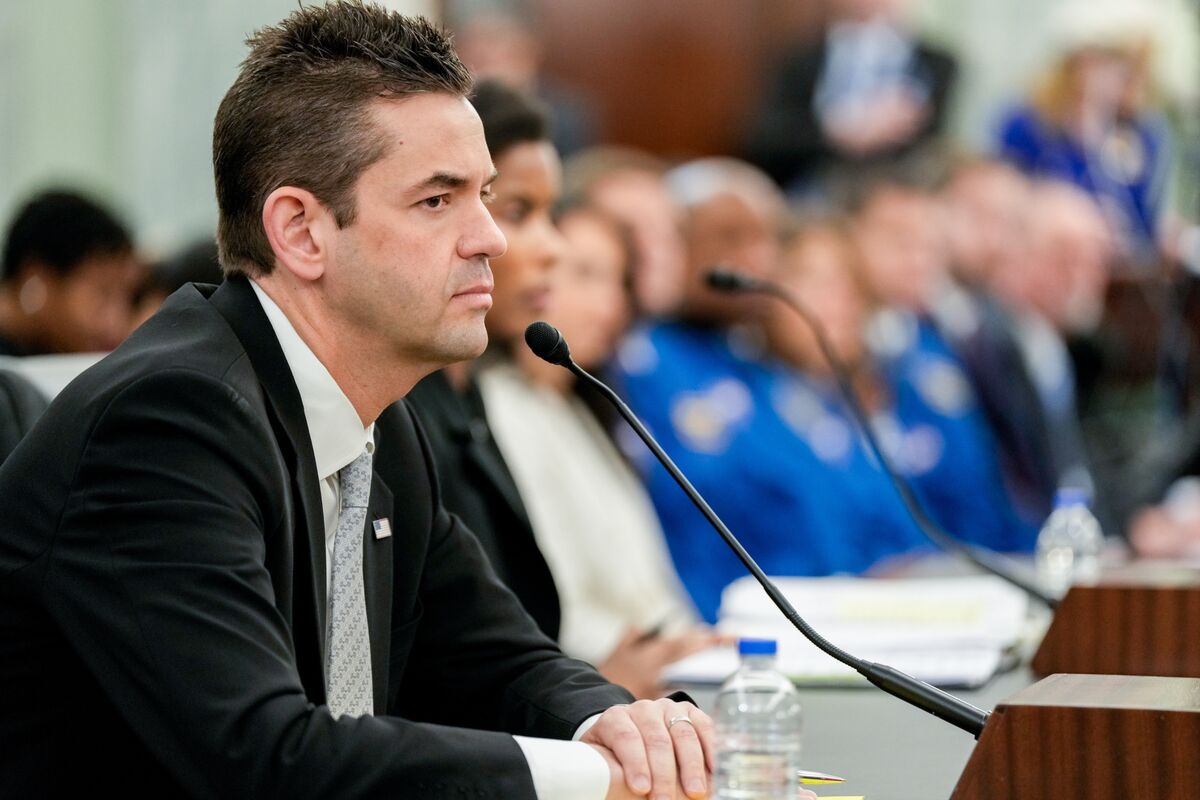
Jared Isaacman is preparing for a second congressional confirmation hearing to become NASA administrator, with lawmakers expected to press him on his contentious 'Project Athena' manifesto to transform the agency. The focus on Athena and the anticipated grilling highlights political and governance risk around potential shifts in NASA priorities and procurement, which could have longer-term implications for aerospace contractors and federal budgets, but presents limited immediate market-moving information.
Market structure: Isaacman’s “Athena” push signals a tilt toward commercialization of NASA missions, favoring commercial launch/satellite service suppliers and systems integrators (e.g., LHX, MAXR, RTX) while pressuring legacy civil-focused program suppliers (BA, to a lesser extent LMT). If federal procurement shifts 10–20% of traditional NASA civil spend into competitive commercial contracts over 3 years, expect mid-single-digit revenue lift for public commercial-space suppliers and margin pressure for incumbents that rely on cost-plus civil work.
Risk assessment: Immediate (days): confirmation hearing next week creates event risk and 5–10% headline volatility in aerospace names; short-term (30–180 days): budget proposals and initial contract awards will drive directional flows; long-term (3–5 years): structural reallocation risk and supply-chain bottlenecks (specialty alloys, avionics) could produce 15–25% swings in winners/losers. Tail risks include congressional rejection of Athena, a high-profile mission failure, or export-control shifts that could re-route business and widen credit spreads in lower-rated suppliers.
Trade implications: Prioritize a tactical overweight to public commercial-space exposures and defense primes with diversified civil/commercial franchises—suggest 2–3% longs in LHX and MAXR and 1–2% defensive longs in LMT/RTX; consider 1% short in BA for program execution and civil-contract risk. Use options: buy 3-month calls on MAXR and LHX ahead of contract windows, and 3-month puts on BA as asymmetric protection; enter within 7–14 days and trim at +10–15% or on budget clarity in 90 days.
Contrarian angles: The market underestimates reinsurance/insurance impacts and specialty-material suppliers (ATI, AA) that could see multi-year demand upticks—these are non-obvious beneficiaries. Historical parallel: the Commercial Crew era (2010s) created outsized multi-year returns for new entrants; downside is politicization can reverse gains quickly, so size positions <5% of portfolio and hedge tail-risk with 6–12 month puts.
AI-powered research, real-time alerts, and portfolio analytics for institutional investors.
Request DemoOverall Sentiment
neutral
Sentiment Score
-0.15
