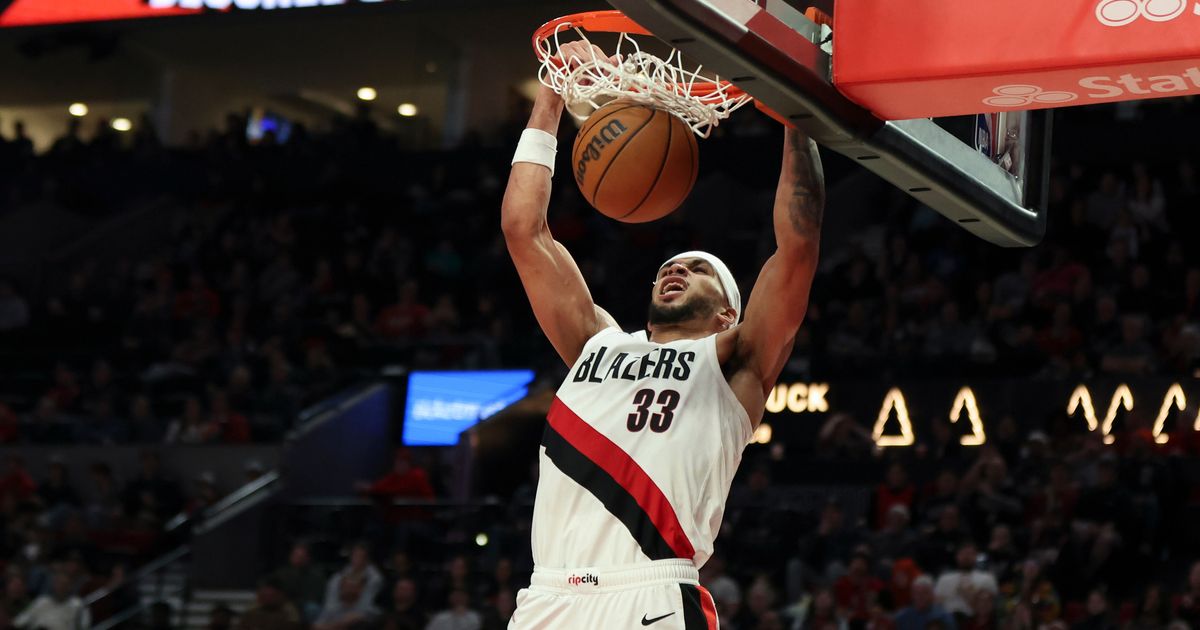
Tom Dundon’s agreed purchase of the Portland Trail Blazers values the franchise at more than $4 billion and has triggered Oregon lawmakers to propose up to $600 million in public funding to renovate the aging Moda Center amid credible relocation concerns. Dundon has reportedly discussed selling part of the Carolina Hurricanes to help finance the purchase; by contrast, Raleigh and Wake County are financing a $300 million Lenovo Center renovation and granted Dundon long-term lease and development rights for up to 80 acres, highlighting how arena upgrades and land development drive leverage in team relocation and municipal negotiations.
Market structure: The primary winners if Portland funds a $300–$600M Moda Center renovation will be engineering/construction firms, materials suppliers and arena-adjacent real estate developers; expect 6–18 months of elevated local construction demand pushing aggregate and concrete suppliers volumes up ~5–15% regionally. Losers include small hospitality/retail businesses if the franchise relocates and municipal credit if Oregon assumes new debt; bargaining power shifts markedly toward franchise owners who can extract public subsidies because NBA franchises are fixed-supply, high-demand assets.
Risk assessment: Tail risks include an abrupt relocation decision (low probability, high impact) that could remove $40–120M/year in direct local economic activity and widen local muni spreads by 50–150bps; regulatory/political backlash that kills the deal is a ~30–50% short-term risk. Time horizons: immediate (0–60 days) watch legislative votes and NBA approval; short-term (3–9 months) construction contracts and muni issuance; long-term (1–3 years) realized uplift or decay in west-Portland real estate values. Hidden dependencies include state budget deficits, naming-rights private financing, and Dundon’s simultaneous MLB ambitions.
Trade implications: Direct plays: long civil/engineering exposure (Jacobs Solutions J) and materials (Vulcan Materials VMC) to capture 6–18 month construction tail; hedge with short local-bank Umpqua (UMPQ) to capture local economic bleed if team exits. Fixed income: buy intermediate munis (iShares MUB) sized 2–3% for expected Oregon issuance, target pickup of 20–60bps; use 3–6 month call spreads on J to express construction upside while capping cost.
Contrarian angles: Consensus fear of relocation may overprice local downside—owners typically leverage assets rather than move when public funding is credible; historical parallels (Seattle Sonics) show relocation is messy, politically costly, and uncommon after purchase approvals. If legislation fails, muni spreads widen and create a buying opportunity; if passed, equity beneficiaries re-rate quickly—trade with binary sizing and event triggers (legislative vote within 30–60 days).
AI-powered research, real-time alerts, and portfolio analytics for institutional investors.
Request DemoOverall Sentiment
mildly negative
Sentiment Score
-0.35
