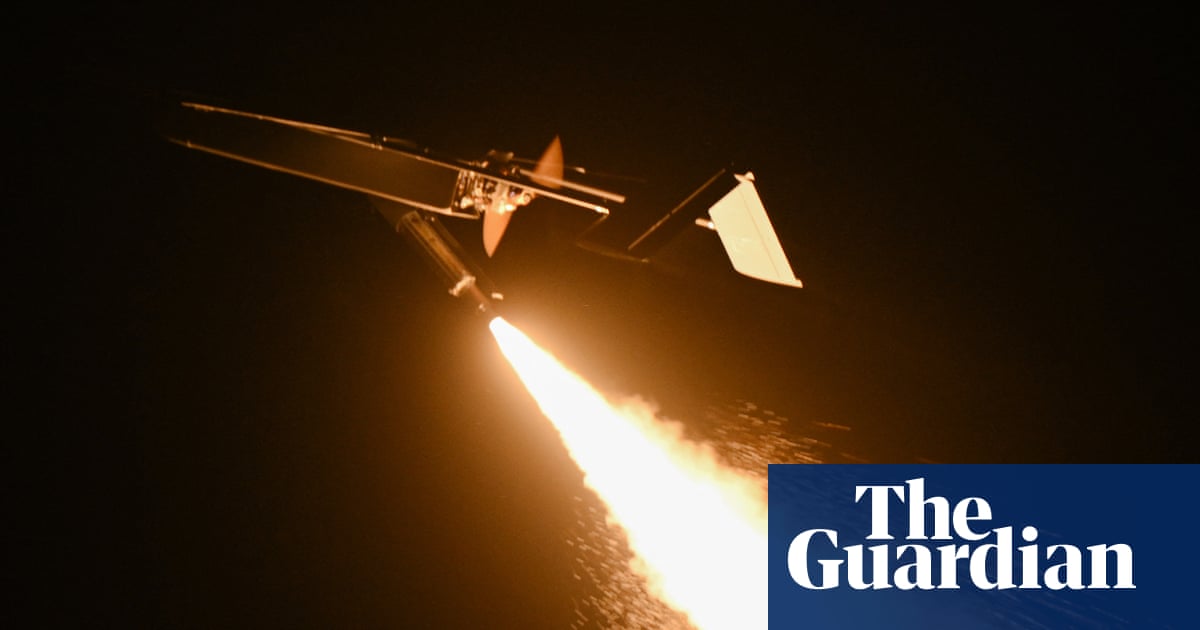
Ukraine said it launched more than 600 drones into Russia over the weekend, striking the Angstrom microelectronics plant in Zelenograd and the Solnechnogorskaya pumping station near Moscow, while Russia said at least four people were killed and 3,124 Ukrainian drones were downed over the past week. The attacks also hit targets in occupied or contested Ukrainian regions, and Russian drone activity caused casualties and damage in Odesa, Kherson and Zaporizhzhia. The escalation raises geopolitical and infrastructure risk, with potential implications for energy logistics and defense-related industrial capacity.
The market implication is not just “more drones,” but a widening asymmetry between low-cost strike capacity and high-cost defensive/supply infrastructure. Ukraine is demonstrating that it can hit multiple layers of Russia’s war economy at once: electronics inputs, fuel logistics, command nodes, and air-defense saturation points. That raises the marginal cost of operating in the Moscow region and should force Russia to divert scarce interceptors, EW assets, and maintenance bandwidth away from the front, which is a second-order benefit to Ukraine’s battlefield tempo over the next 2-8 weeks.
The bigger economic read-through is on Russian domestic logistics and military-industrial throughput. Even limited disruptions to fuel pumping and microelectronics/optics production are meaningful because they create bottlenecks that are hard to replace quickly under sanctions; the substitution path is longer for high-spec components than for bulk munitions. That argues for higher variance in Russia’s ability to sustain both drone production and armored vehicle repair, with the first-order effect likely showing up in more erratic regional fuel availability and higher military logistics overhead rather than an immediate nationwide energy shock.
For Europe, the near-term risk is not oil price direction alone but the increase in airspace and infrastructure incident frequency near NATO borders. Repeated stray drones and alert events can lift defense readiness spending, insurance premia, and cross-border transport friction in the Baltics, even without a direct escalation. The contrarian view is that markets may be underpricing how quickly this normalizes into a standing deterrence burden: if drone penetration continues, the trade becomes less about a one-off headline and more about a multi-quarter reallocation toward air defense, EW, and hardened infrastructure.
AI-powered research, real-time alerts, and portfolio analytics for institutional investors.
Request DemoOverall Sentiment
moderately negative
Sentiment Score
-0.45
