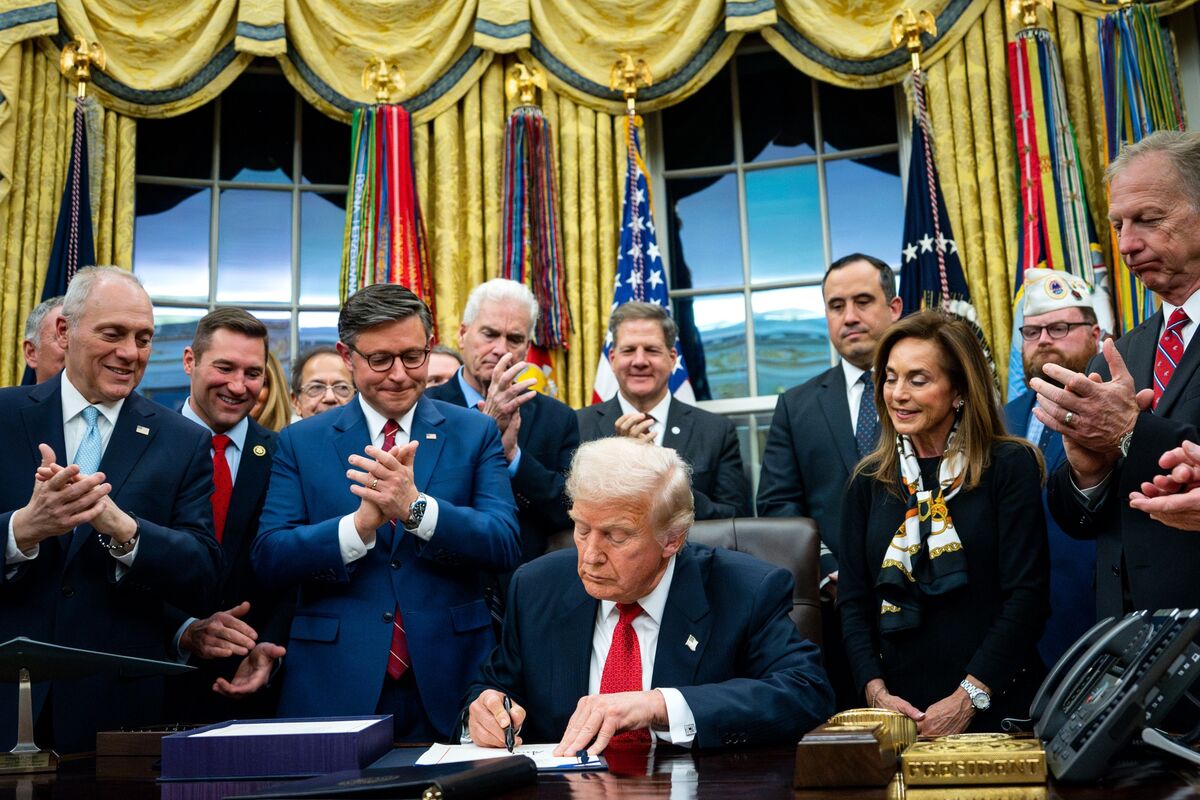
President Trump signed an interim spending bill, ending the 43-day US government shutdown, though funding is only secured until January 30th, raising prospects of future instability. The shutdown severely impacted the economy, with the Congressional Budget Office estimating a 1.5 percentage point hit to quarterly GDP growth and causing delays in critical economic data, leaving markets uncertain. While federal operations will resume, a full economic recovery is anticipated to be gradual.
The 43-day US government shutdown concluded with President Trump signing an interim spending bill, allowing federal operations to resume immediately. However, this resolution is temporary, as the bill only funds the government through January 30, raising the prospect of renewed fiscal uncertainty early next year. Agencies are expected to take days or weeks to clear backlogs, despite federal workers receiving back pay by the weekend.
The shutdown significantly impacted the US economy, with the Congressional Budget Office estimating a 1.5 percentage point reduction in quarterly GDP growth. This economic toll manifested in lost airline revenue, delayed food aid for low-income households, and over a month of unpaid wages for federal employees.
Beyond direct economic costs, the pause in government reporting, including key jobs and inflation figures, created market uncertainty, leaving investors "flying blind." While the immediate cessation of the shutdown is a positive, the "mixed" sentiment and "uncertain" tone reflect concerns over the short-term funding horizon and the anticipated gradual nature of a full economic recovery.
AI-powered research, real-time alerts, and portfolio analytics for institutional investors.
Overall Sentiment
mixed
Sentiment Score
0.10
