


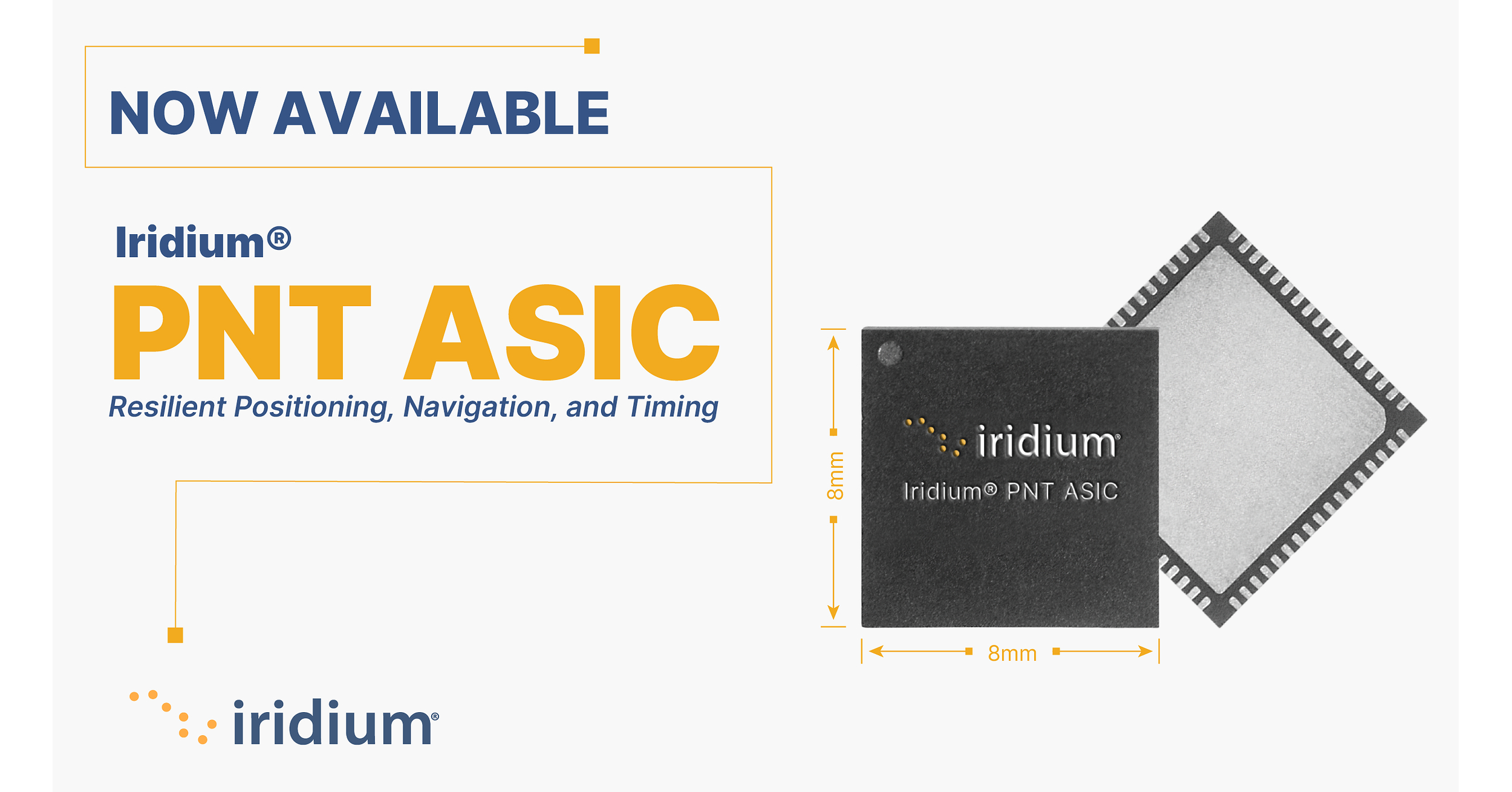
Iridium (IRDM) announced the commercial availability of its Iridium PNT ASIC, a compact 8x8mm (<0.2g) chip aimed at protecting GNSS/PNT-dependent devices from jamming and spoofing. Since its October 2025 unveiling, Iridium reports “unprecedented demand” from 150+ organizations across maritime, aviation, telecom, and critical infrastructure, with partners already integrating the chip into assured PNT solutions (e.g., Solace Communications and Skyband Systems). The news supports a growing market need for resilient, cryptographically secure timing/location—highlighted by rising interference incidents and prior estimates that GPS outages can cost ~$1B/day (>$1.3B/day in 2026 dollars).
This is better viewed as an ecosystem validation event than an immediate earnings catalyst. The commercial chip broadens Iridium’s addressable footprint, but monetization still depends on long certification cycles, OEM design-ins, and whether buyers treat assured timing as mandatory rather than nice-to-have. Near term, the market should mostly price optionality; the revenue impact is likely too small to move the model until partner disclosures convert into shipped units.
The second-order winner set is more interesting than IRDM alone: aviation, maritime, critical infrastructure, and defense integrators that can bundle resilient PNT into higher-margin systems should see pricing power and lower product obsolescence risk. The losers are GNSS-only hardware stacks and low-cost navigation vendors that compete on price but lack a credible anti-jam story; over time, spoofing risk should force a feature premium and widen the gap between commodity receivers and trusted timing platforms. That said, if this becomes a de facto compliance feature, incumbents with distribution and certification can still capture most of the wallet before a pure-play disruptor does.
Contrarian view: the consensus may be overestimating how fast a nice product announcement turns into revenue. The real catalyst is not the ASIC itself but whether a major avionics, telecom, or infrastructure customer publicly standardizes around it within 1-2 quarters; absent that, the stock can fade back to being a satellite-services story. The thesis breaks if there is no measurable design-win cadence by the next earnings cycle or if customers decide multi-band GNSS plus inertial sensing is sufficient without a satellite-based trust layer.
AI-powered research, real-time alerts, and portfolio analytics for institutional investors.
Request TrialOverall Sentiment
mildly positive
Sentiment Score
0.35
Ticker Sentiment
