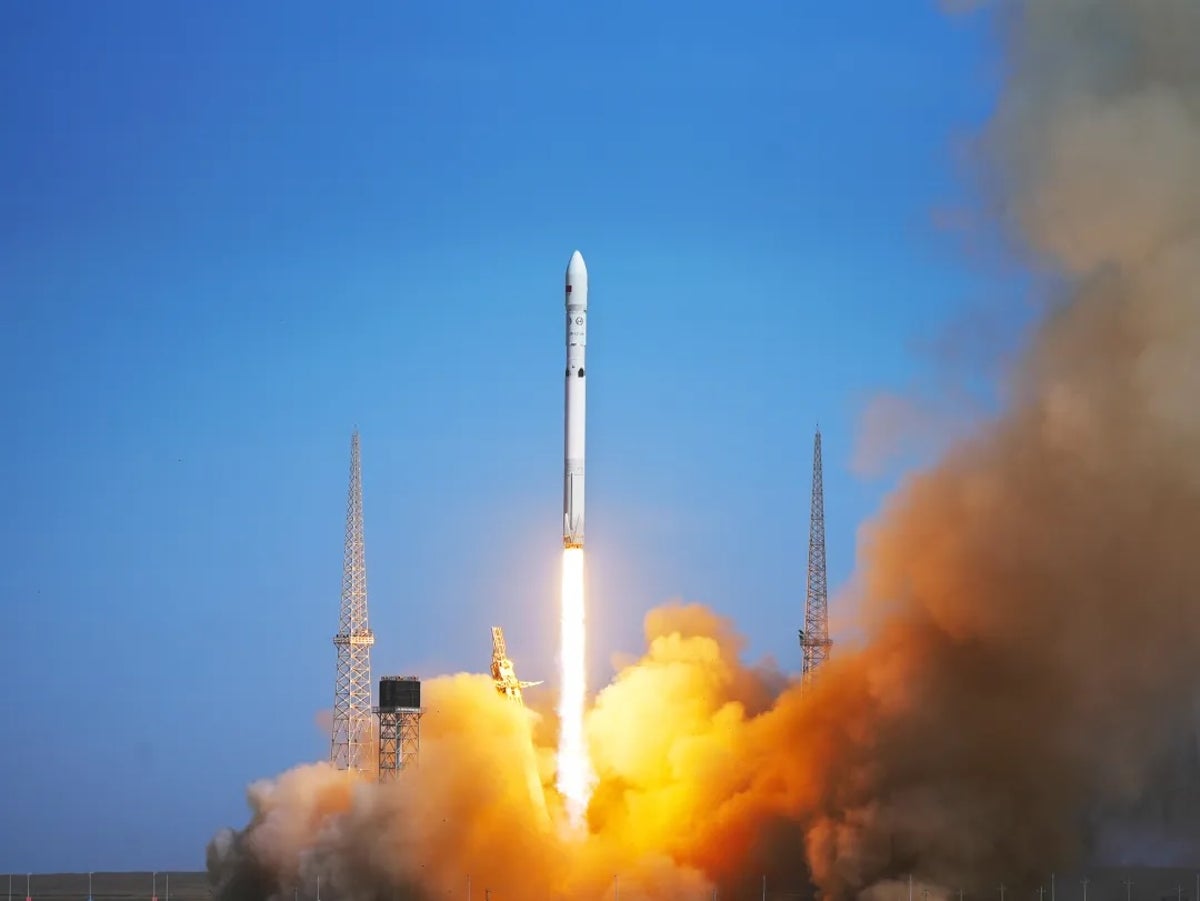
China launched the Long March 12B rocket for the first time with reportedly no advance airspace or maritime warning, despite standard international safety procedures for rocket launches. CASC said the flight was successful and the rocket deployed satellites for China’s Qianfan megaconstellation, but the launch also renewed concerns about debris management and compliance with international norms. The article is largely factual and has limited direct market impact, though it is relevant to China’s space and defense-industrial capabilities.
The market read is less about one launch and more about China signaling it can scale a reusable launch stack while accepting higher operational opacity. That combination matters because it lowers the expected cost curve for sovereign broadband, surveillance, and dual-use payload deployment, which should compress the moat for Western launch providers over the medium term. The first-order beneficiary is China’s domestic space-industrial base; the second-order beneficiary is any supplier chain tied to proliferated LEO capacity, while U.S. commercial launch names face pricing pressure if China keeps cadence high and recovery economics improve.
The more important underappreciated risk is regulatory friction, not engineering failure. An unannounced launch that allegedly bypasses standard notice protocols raises the probability of a diplomatic incident, insurance disputes, or retaliatory tightening around overflight and range access; those are slower-burn catalysts that can hit within weeks via headlines but may take quarters to show up in contract awards or premium pricing. For global insurers and shippers, the real issue is not the launch itself but the precedent that safety norms are selectively followed, which could marginally widen risk premia for activity near Chinese launch corridors.
The contrarian view is that the market may overestimate how directly this threatens SpaceX. Starlink’s advantage is software, launch cadence, and terminal distribution, not just rocket cost, so a Chinese reusable rocket is necessary but not sufficient to close the gap. What is more likely is a bifurcated market: China builds a domestic ecosystem with state support, while Western incumbents remain insulated in export-controlled and allied markets. That argues for trading the policy delta rather than the headline: the near-term winner is not a pure launch competitor, but the broader defense/networking stack that benefits if space becomes more militarized and fragmented.
AI-powered research, real-time alerts, and portfolio analytics for institutional investors.
Request TrialOverall Sentiment
neutral
Sentiment Score
-0.05
