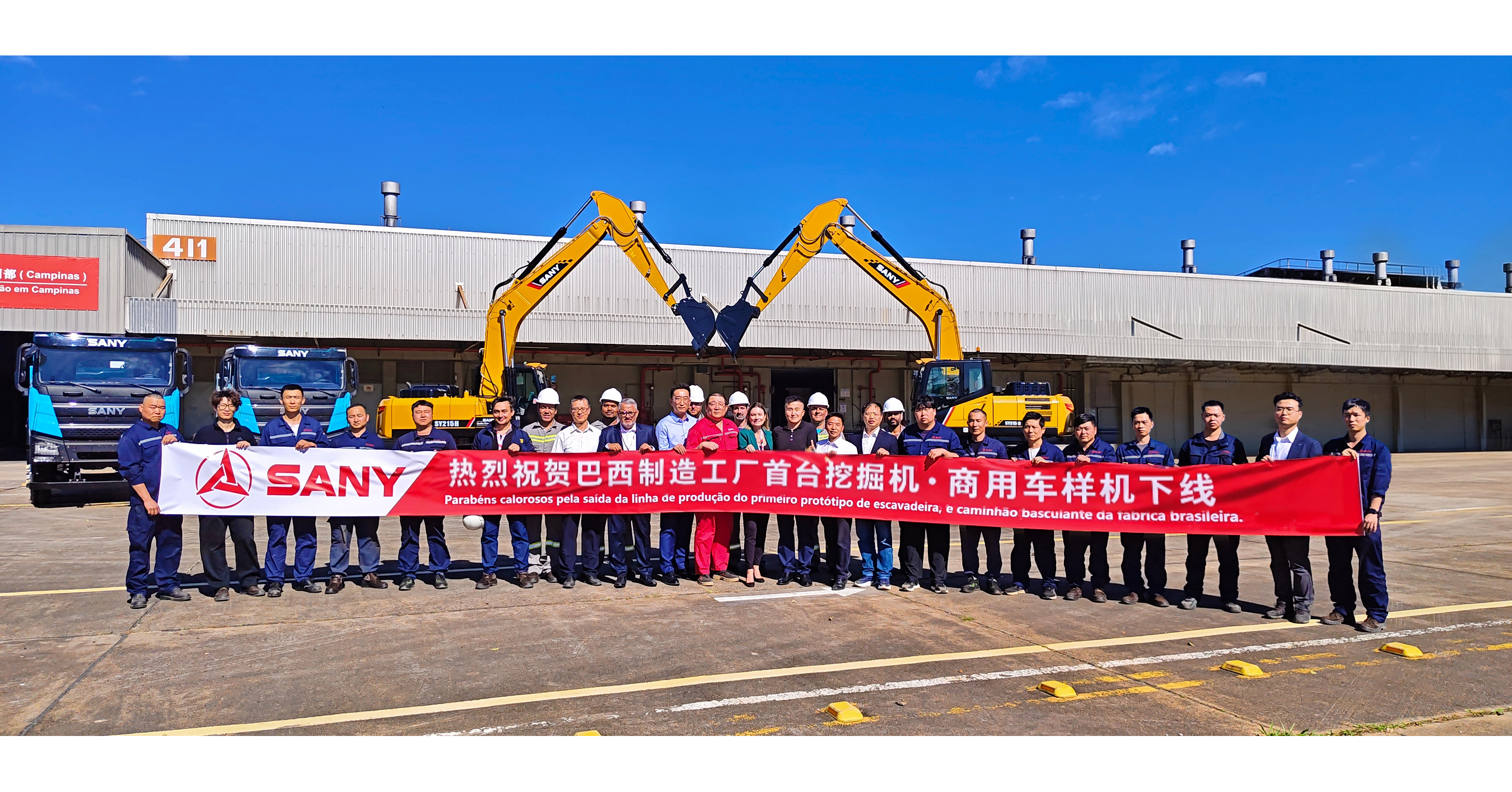
SANY anunció que su planta de Campinas (São Paulo) ya completó el ensamblaje y puesta en marcha de sus primeras excavadoras y vehículos comerciales. La primera fase de 350.000 m² operará con capacidad de 3.500 unidades/año (1.500 excavadoras y 2.000 vehículos), con el objetivo de reducir logística transfronteriza, aranceles e incrementar la rapidez de entrega en Brasil y mercados latinoamericanos. La empresa también destaca que SANY Banco, aprobado por el Banco Central en 2025 y operando desde inicios de 2026, integra financiamiento local para clientes, tras la creación de ~200 empleos directos y la planificación de una segunda fase.
This is more of a competitive-moat expansion than a near-term P&L event. The real mechanism is delivered-price compression: local assembly in Brazil should shrink the all-in cost gap versus imported equipment, which matters most in price-sensitive, uptime-critical segments like construction, mining, and fleet replacement. The first-order losers are import-dependent rivals with weaker dealer/service density in Latin America; the second-order losers are shipping, customs, and cross-border parts intermediaries that monetize friction rather than demand.
The bigger option value is the financing loop. A captive lender can turn a hardware sale into a recurring spread and make the product effectively more affordable, but that only works if Brazilian credit costs and repossession risk stay contained. In a high-rate environment, the constraint is not capacity but funded demand; if end-market utilization or credit approvals slow, the plant becomes a share-defense tool rather than a growth engine. The move is likely underappreciated over 1-3 months, but the 6-18 month outcome depends on localization of parts, dealer uptime, and whether the second phase actually lifts utilization above a subscale level.
Contrarian take: the market may be overestimating how much of the tariff/logistics savings will translate into incremental share. Local production narrows the gap, but it does not solve weak macro demand, FX volatility, or the fact that competitors can respond with localized inventory, rebates, and financing of their own. The thesis breaks if Brazil construction/agri capex softens, if BRL weakens materially, or if the company cannot show margin accretion despite higher regional shipments.
AI-powered research, real-time alerts, and portfolio analytics for institutional investors.
Request TrialOverall Sentiment
mildly positive
Sentiment Score
0.25
