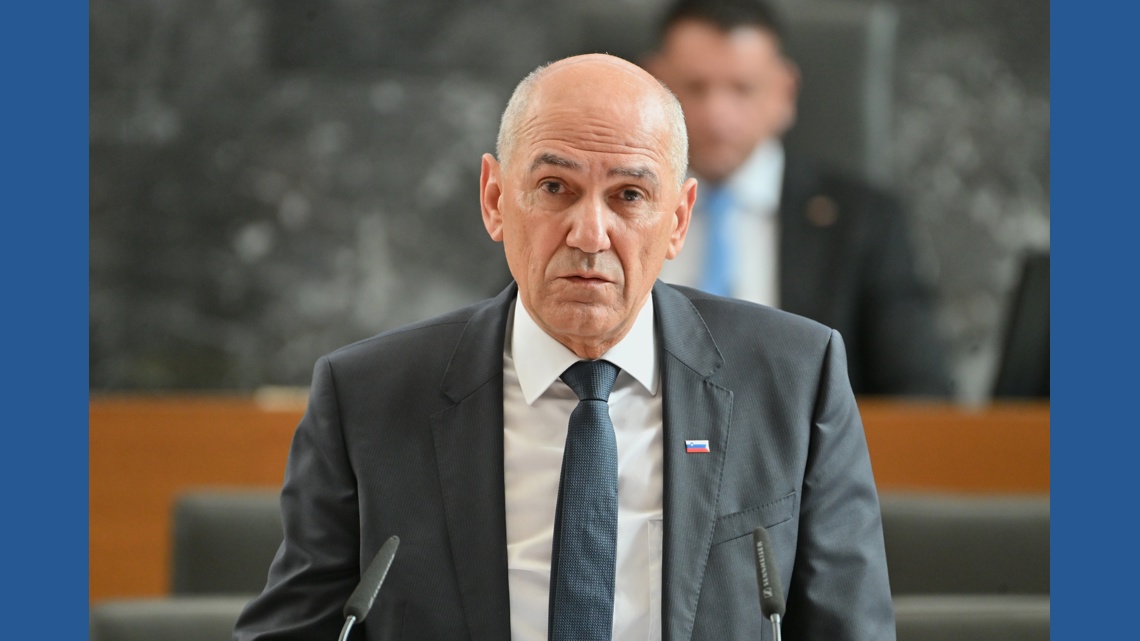
Slovenia’s parliament appointed Janez Jansa as prime minister in a 51-36 vote, ending a postelection stalemate after the recent parliamentary ballot. Jansa, a right-wing populist, said his agenda will focus on the economy, anti-corruption efforts, tax cuts for the rich, and support for private education and healthcare. The development is politically meaningful for Slovenia but is unlikely to have broad immediate market impact.
This is a modestly negative governance signal for Slovenia risk assets, but the larger market effect is through policy credibility rather than immediate macro. A rightward coalition that leans into tax cuts, privatization, and deregulatory messaging should be mildly supportive for domestically exposed banks, builders, and consumer cyclicals in the near term, but the second-order risk is a widening of the policy premium on the country’s sovereign and quasi-sovereign paper if Brussels conflict escalates.
The key catalyst is not the appointment itself but the cabinet confirmation window and the first 30-60 days of rule. If the government moves quickly on judicial/media changes or anti-corruption cleanup framed as political retaliation, expect foreign portfolio inflows into Slovenian risk to stall and the euro-denominated spread complex to cheapen versus peers. The market usually underprices how fast EU institutional friction can bleed into funding costs for small member states when governance headlines become recurring rather than episodic.
Consensus will likely focus on the pro-business tax story, but that is probably the underappreciated part of the trade: any tax relief for high earners is a weak near-term growth lever in a small economy and may be offset by tighter EU scrutiny or softer grant/next-gen funding optics. The more important question is whether policy instability reduces capex visibility for domestic SMEs and consumer confidence, which would show up first in bank loan growth and retail volumes over the next 1-2 quarters.
The contrarian risk is that this ends up being more symbolic than economically material. If Jansa moderates after the confirmation vote and keeps cabinet picks technocratic, the headline risk could fade quickly, making short sovereign or anti-EU positioning expensive. In that case, the better trade is to fade any overreaction in Slovenia-sensitive spreads rather than express a structural bearish view.
AI-powered research, real-time alerts, and portfolio analytics for institutional investors.
Request DemoOverall Sentiment
neutral
Sentiment Score
0.00
